



PETALING JAYA: Visit Malaysia 2026 (VM2026) is shaping up to be more than a branding exercise, with the campaign expected to provide a measurable lift to the country’s tourism economy, provided Malaysia sustains air connectivity and avoids bottlenecks in service capacity.
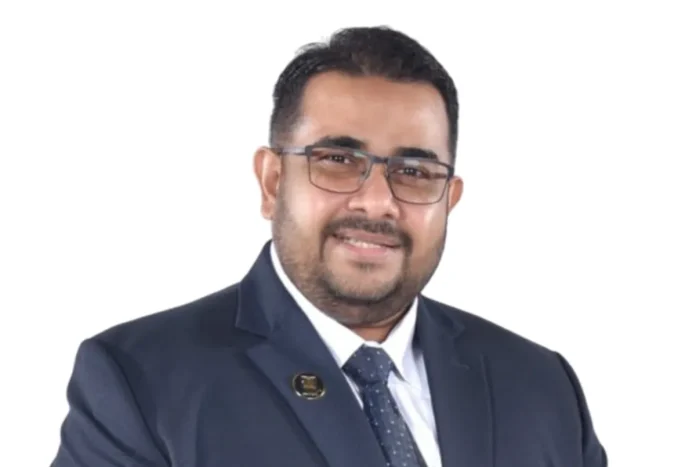
In an exclusive interview with SunBiz, Prof Dr Mohd Hafiz Hanafiah, tourism economics professor at Universiti Teknologi Mara, said Malaysia entered 2026 on a stronger footing than it did in previous tourism campaigns, with inbound traffic already rebounding sharply on the back of reopened borders and improved mobility post-Covid-19 pandemic.
International tourist arrivals in 2024 reached 25.02 million, a 24.2% jump from 2023 and total foreign visitor arrivals, including excursionists, were close to 38 million.
These figures form a “high base” for VM2026 to build on, Hafiz noted, meaning momentum is already in motion rather than needing to be restarted.
“If connectivity continues to improve and the campaign execution is aligned across agencies, 2026 should trend higher than 2024. The demand is there, arrivals are more constrained by capacity and access than appetite,” he said, pointing to the recovery of regional aviation routes and increased flight frequencies.
Hafiz said the top source markets this year are unlikely to shift much, with Singapore, Indonesia, China, Thailand, India and Brunei continuing to anchor visitor flows. Visa-free entry for Indian nationals extended until December 2026 is expected to lock in sustained growth from one of Malaysia’s fastest-rising markets.
“These markets travel frequently, are well-connected to Malaysia, and are familiar with the destination. The opportunity is to get them to stay longer and spend more, not just come more often,” he said.
Hafiz expects greater emphasis on premium experiences and curated itineraries that nudge visitors towards higher daily spending, instead of competing solely on affordability.
Tourism’s economic weight already stands at RM291.9 billion, contributing 15.1% to the national economy, according to the Department of Statistics Malaysia’s Tourism Satellite Account. Hafiz said VM2026 could lift this further by intensifying business activity in hospitality, retail and travel-linked services, the first sectors to benefit from cross-border mobility.
“SMEs feel the impact fastest. Accommodation, food and beverage, transport, retail, attractions, these are the highest-contact points in visitor spending baskets. When visitation rises, these sectors register the early gains,” he explained.
Hafiz expects employment linkages to also strengthen. With more than 2.4 million jobs related to tourism in 2024, he sees the figure trending higher in 2026 if talent shortages are addressed. The challenge, he said, is ensuring that labour constraints do not cap growth or depress service quality during peak periods.
Malaysia is well-positioned to attract higher-spending travellers through business events, eco-nature tourism and Muslim-friendly travel, Hafiz noted, saying that these segments deliver stronger margins than mass tourism.
“MICE (meetings, incentives, conventions and exhibitions) spending per trip easily outpaces standard leisure travel. Eco- and community-based tourism promotes dispersal, meaning income spreads beyond hotspots. And Malaysia already holds credibility in Muslim-friendly tourism – that’s not something you can build overnight,” he said.
Global growth projected at around 3.1% in 2026 suggests travel demand will remain healthy, but the ringgit could influence price perception across markets. Hafiz said a stronger ringgit may temper spending sentiment among price-sensitive travellers, while a weaker currency could stimulate inflows but raise costs for operators.
“We can’t control currency cycles. The focus should be on value creation. When the product is compelling, price becomes less of a choke point,” he said.
Hafiz is firm that Malaysia’s aviation pipeline, not marketing, will decide VM2026’s true upside.
“We need more seats, more routes, more frequencies. It’s not only about Kuala Lumpur; Malaysia must link secondary cities and enable dispersal. Tourists want convenience, and airlines need clarity and confidence to commit capacity.”
He stressed that visa facilitation must remain streamlined, while product packaging should incentivise longer stays rather than one-off stops.
Labour shortages, global macro volatility and uneven domestic implementation are the main risks that could blunt VM2026’s impact, Hafiz said, and he is particularly wary of capacity constraints in peak periods, which could lead to service inconsistencies.
“Tourism is expectations-driven. If service quality dips when demand peaks, brand trust erodes quickly. VM2026 must be cohesive, the campaign can’t be diluted by fragmented execution at state or local levels,” he said.
Overall, Hafiz believes Malaysia is positioned to advance beyond recovery narratives and shift into a growth phase, but only if capacity, connectivity and coordination stay ahead of demand.
“VM2026 is not the starting line. It’s a multiplier. The question is whether we seize the window,” he concluded.



