




While Malaysia’s Online Safety Act 2025 came into force on Jan 1, many children in Penang spent New Year’s Eve planting vegetables. They plunged their hands into dark soil, planted seedlings and reconnected with nature.
The “Grow your own vegetables for future generation” workshop, held on Dec 31 and organised by the Consumers’ Association of Penang (CAP), drew 70 children, 15 parents and 10 teachers.
A 2022 Selangor study found 91.4% of children under five exceeded WHO screen time guidelines, averaging three hours daily. The study identified parental screen habits as the strongest predictor, with children whose parents spent over two hours on screens daily being far more likely to exceed limits themselves. Meanwhile, 65% of Malaysian children are projected to be overweight or obese by 2035, according to the World Obesity Atlas published by the World Obesity Federation.
This prompted CAP senior education officer N.V. Subbarow, who works on health and environmental education, to organise the programme.

“I discovered that many children don’t even know the names of commonly used vegetables like bendi, brinjal, bayam or beans. They may have heard the names, but they don’t know what the vegetables look like,” he told theSun.
Urban lifestyles have disconnected children from food sources. Penang Island City Council mayor Datuk Rajendran P. Anthony, who officiated the programme, pointed out Malaysia imports 54.6% of its vegetables, with prices rising steadily.
During the workshop, Subbarow discussed the “fascinating world of soil, water and sunlight” with the children and explained the challenges faced by local farmers, including rising costs, unpredictable weather, floods and labour shortages that impact food production and prices.
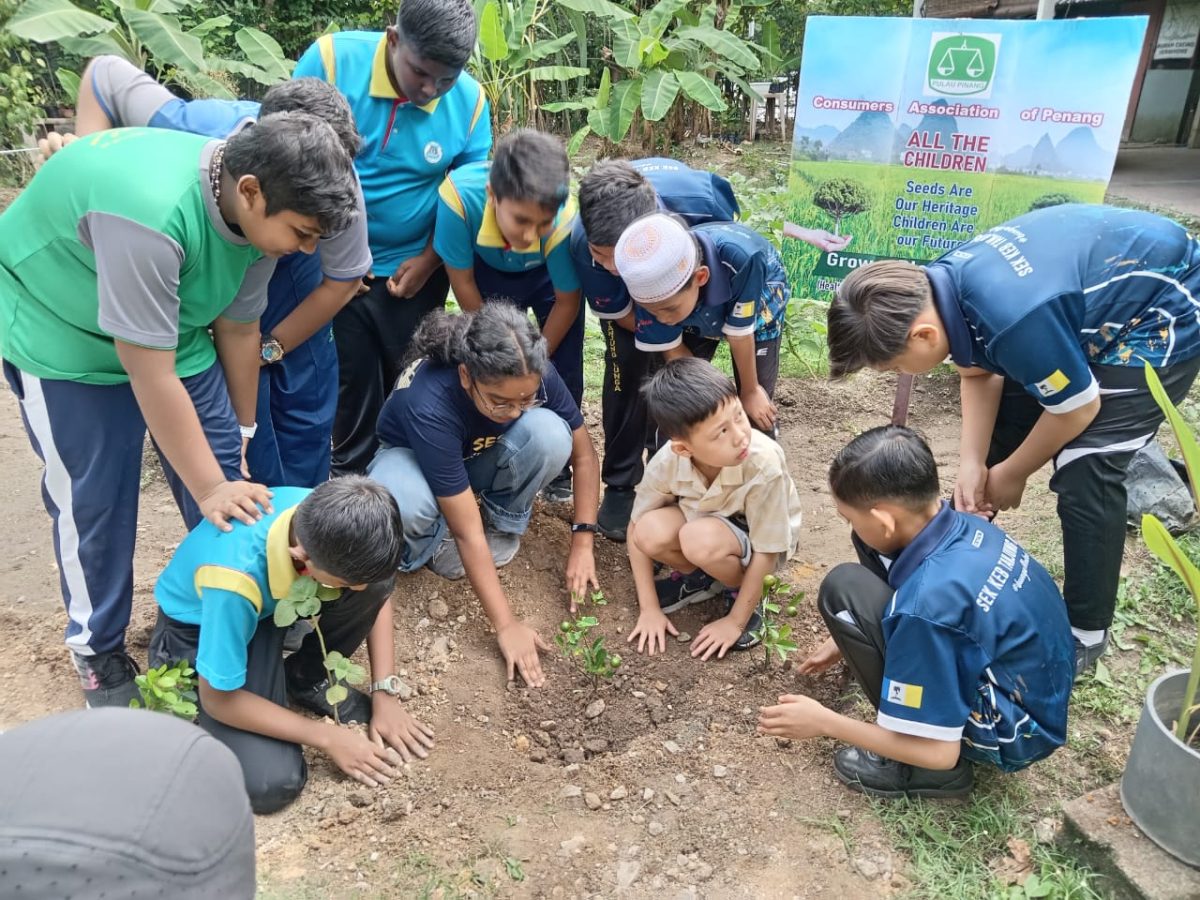
“Teaching children at a young age is essential because gardening keeps them active through digging, planting and watering, instead of spending time on handphones. I also showed them earthworms and how to do composting,” he said.
The impact was immediate. Mohanavathi Arjunan, aunt to two children aged 10 and eight who attended, said the experience shifted their perspective.
“There were certainly positive changes in their perspective towards nature and eating habits,” she said, adding that the children were excited to continue caring for the plants they brought home.
At Ramakrishna Ashrama, an orphanage in Penang, residential matron M. Santha observed how quickly the children took ownership of their plants.

“For a week now, they have been watering them daily. Each child has labelled their pot with their name,” she said.
The ashrama also has a small plot of land specifically for children to grow vegetables. Teacher Shamala N. Krishnasamy from SMK Convent Green Lane, who was also present, emphasised gardening offers something devices cannot.
“Gardening helps to calm the mind. It is quality time spent with the environment rather than devices that damage the eyes and upset emotions,” she said.
Parents who wish to garden with their children do not need extensive space or experience. Starter vegetables such as cherry tomatoes, bayam, ladies’ fingers, spring onions and local herbs such as curry leaves and pandan are easy to grow, with seeds available from DIY or Eco-shop stores.

Container gardening works well for apartments and landed homes. Seedlings can be started in planting trays before being transferred to pots at least six to eight inches deep with drainage holes, filled with quality potting soil and placed in areas that receive four to six hours of sunlight daily. Daily care takes little time, usually five to 10 minutes for watering and basic checks.
The benefits extend across multiple dimensions. Subbarow pointed out through digging, planting and daily care, one learns patience and responsibility. As the children eat what they grow, they cultivate a love for healthy eating habits.
“Farming integrates science, maths and environmental studies into practical, hands-on learning. Growing their own vegetables also teaches children to eat healthier and avoid junk food and sugary food,” he said.

Meanwhile, Rajendran highlighted that the city council has set up greenhouses to teach hydroponics and aquaponics farming.
“Urban farming, whether done collectively or at home, can help with food security,” he said.
He added that modular systems to grow vegetables in apartments or house compounds are available and training sessions have been held at the city council’s urban farming grounds in Lebuhraya Rose.
Subbarow expressed hopes that the workshop model will spread.
“I hope more schools, communities and families would turn unused land, school grounds or small home spaces into green learning environments to cultivate curiosity, responsibility and care for the environment,” he said.



