




More than a movie: Dear You revives the forgotten history of qiaopi
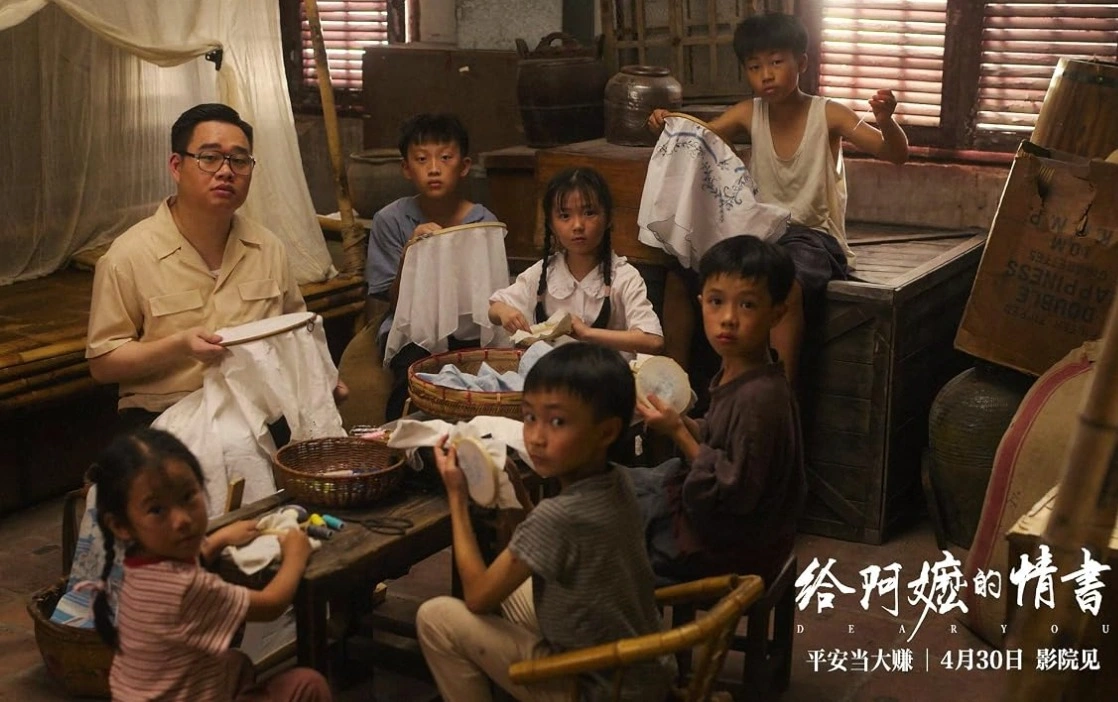
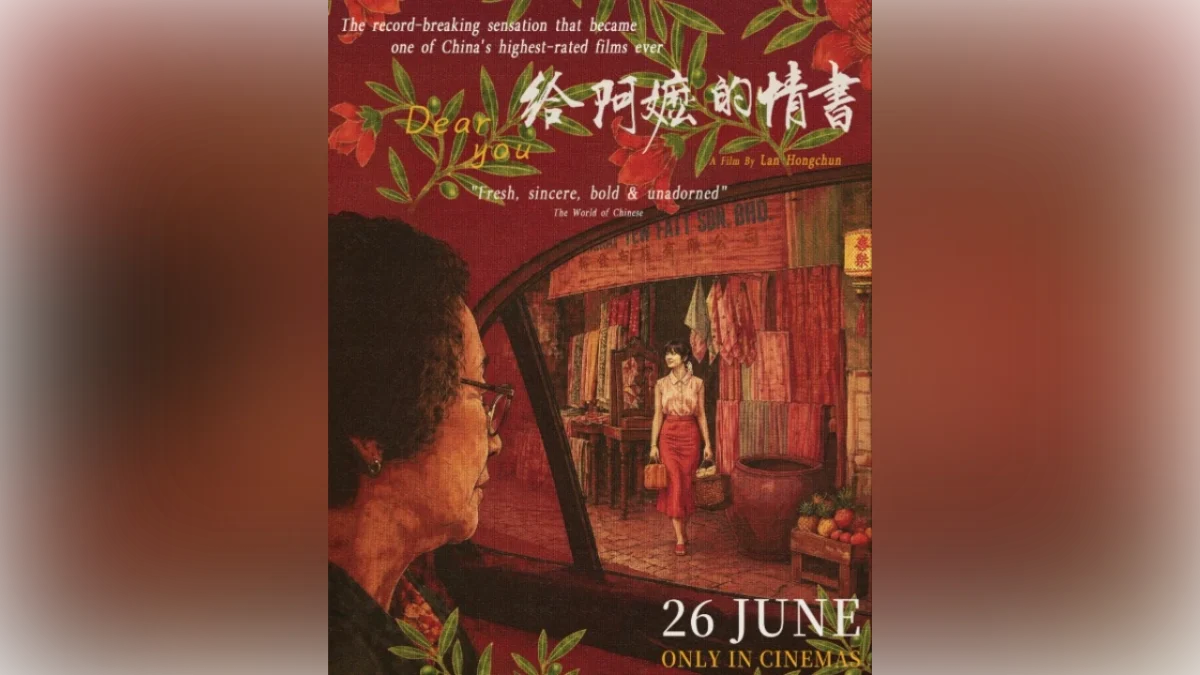
THE title Dear You does not reveal much. It sounds like a love story. Perhaps a romantic one. But the Chinese film, originally titled A Love Letter to Grandma, is not about lovers separated by fate.
It is about something far older and perhaps more fragile – memories, family ties and the stories carried across generations.
READ MORE: Where to stay in Koh Samui: SAii Koh Samui Villas or Santiburi?
Made on a modest budget of less than US$2 million (RM8.15 million), the film has become one of Southeast Asia’s most unexpected cinematic successes, moving audiences not through grand production or famous stars, but through a simple story that feels deeply personal.
For many viewers, especially among overseas Chinese communities, Dear You is not merely a film. It is a reflection of a world they once knew. A world of handwritten letters, dialects spoken around family tables, grandparents with stories of distant hometowns, and generations shaped by migration and sacrifice. The emotional connection has been unmistakable.
After one screening, an 87-year-old viewer turned to his daughter after the credits rolled and asked why the movie had ended so quickly.
She told him gently that it had already been two hours. Perhaps it felt shorter because, for many, the film had transported them somewhere else – back to childhood homes, forgotten conversations and memories of people who are no longer around. For overseas Chinese communities across Southeast Asia, Dear You serves as a window into a shared past.
A story that crosses borders
The film’s greatest strength is its portrayal of diaspora communities that, despite being separated by geography, continue to share similar traditions, values and histories. Many Malaysian Chinese families can trace their roots to southern China, particularly Fujian and the Lingnan region, which covers presentday Guangdong, Guangxi and Hainan.
Their journeys began generations ago, driven by hardship, opportunity and the search for a better future. The establishment of British settlements in Penang in 1786 and Singapore in 1819 accelerated migration from China to the Malay Peninsula.
Later waves arrived to work at tin mines and rubber plantations, eventually building communities that remain an important part of Malaysia’s social fabric today.
These communities were often shaped by dialect. Hokkien became prominent in Penang and much of the west coast. Teochew communities flourished in places such as Seberang Perai, Kedah and Johor.
Hakka migrants established themselves in mining towns and later became the largest Chinese dialect group in Sabah, while Cantonese communities grew alongside the urban centres of the Klang Valley.
But as generations pass, many of these languages and traditions are slowly fading. That is why the use of Teochew in Dear You carries such emotional weight. For older viewers, the dialect brings back familiar voices – parents, grandparents and relatives who spoke it naturally at home.
For younger viewers, it can feel like listening to a language from another time, sometimes requiring subtitles to understand words once spoken daily by their ancestors. The film quietly captures this sense of loss. Not a dramatic loss, but one that happens gradually as memories disappear and family histories become harder to trace.
Letters that delivered love
At the heart of Dear You lies the little-known history of qiaopi, handwritten letters sent by overseas Chinese migrants to their families in China, often carrying money remittances and messages of love, reassurance and hope.
Long before modern banking made international transfers possible, these letters became a lifeline connecting migrants with loved ones thousands of kilometres away.
Through the qiaopi network, migrants sent money and messages back to their families, often detailing how the funds should be used – whether for household expenses, children’s education, medical needs, marriages or debts.
In the early years, these letters and remittances were carried by trusted individuals known as shuike – traders and agents who travelled between Southeast Asia and China.
Some delivered money directly to families, while others helped convert the funds into goods before passing the proceeds to recipients.
Over time, the system developed into a specialised remittance network, with couriers known as phoe-kha, meaning “letters’ feet”, entrusted with delivering messages and money across borders.
Behind every letter was a story of separation
The men who left home searched for opportunities abroad, while the women who remained behind carried the responsibility of holding families together.
They cared for elderly parents, raised children, managed household finances and preserved family relationships, often with little certainty about when they would see their loved ones again.
For many families, the qiaopi were their only connection to those who had left. The letters carried not only money, but reassurance, hope and proof that distance had not erased family bonds. The system began around 1860 and continued until 1979, when the Bank of China took over overseas remittance services.
A film built from real memories
The idea for Dear You came from screenwriter, director and producer Lan Hongchun and collaborator Yang Leng. Before creating the film, Lan spent years documenting overseas Chinese communities in Southeast Asia, Europe and North America, interviewing hundreds of families about their migration journeys.
Many shared stories of separation, resilience and the qiaopi system – stories that eventually became the foundation of the film. Although the characters and storyline are fictional, much of the film draws from real experiences of elderly overseas Chinese.
The food, family customs, traditions and language recreate a world familiar to many who grew up listening to their grandparents’ stories. Even the Teochew dialogue reflects careful attention to authenticity.
Instead of relying on a single standard accent, the film preserves different speech patterns from the Chaoshan region, including Chaoyang, Jieyang and Shantou, historically known as Swatow. The casting process was equally unconventional.
Most actors had little or no professional acting experience, and Lan auditioned more than 1,000 people to find performers who could capture the emotional depth of the characters.
He even used the Myers- Briggs Type Indicator (MBTI) as one reference tool during casting, believing that personality similarities could help actors connect naturally with their roles.
Both female leads eventually selected for the film happened to be INFJs, a personality type often associated with empathy and quiet determination. However, Lan has maintained that auditions, rather than personality tests, were the deciding factor.
More than a film
By the time the final credits roll, Dear You becomes more than a story about overseas Chinese migration or the history of qiaopi. Those elements simply provide the backdrop.
At its core, the film is about human connection – about two women whose lives remained linked for decades without ever meeting because of a misunderstanding within a family.
It is a story held together not by grand gestures, but by something much smaller – a letter, a name and the hope that someone, somewhere, still remembers.
Perhaps that is why Dear You has struck such a deep chord. Because beneath the history of migration lies a universal truth. Every family has stories that risk being forgotten. Every generation inherits memories it did not create. And sometimes, all it takes is a letter to remind us where we came from.



