





BMW Malaysia is currently the only car company locally that actively gives its used EV and hybrid batteries a second life, repurposing them to power rural communities through partnerships with institutions like Universiti Malaya.
IF YOU follow the Malaysian automotive landscape closely, you will notice an undeniable trend. Chinese brands seem fiercely focused on battery electric vehicles (BEVs), while recently shifting some of that aggressive momentum toward plugin hybrids (Phevs).
Meanwhile, the Japanese legacy brands are marching steadily along with their tried-and-tested models, prioritising long-term reliability and ownership returns.
READ MORE: How technology is changing modern car buyer expectations
They have also broadened their horizons by anchoring traditional, non-plug-in hybrids (HEV) as part of their local lineups. That is not to say companies like Toyota and Honda have ignored electric cars – both these giants have their own pure electric models on local floors.
Yet, for them, it feels more like a defensive “we have EVs too” statement rather than their core product offering. Instead, the Japanese marques have always preferred a wider, multi-pathway portfolio. Hybrids are undeniably part of their forte.
Having developed and refined this powertrain technology for decades, they have brought it to a state of near perfection.
MULTI-POWERTRAIN LANDSCAPE
The Europeans prefer a similarly diverse approach – at least in Malaysia. BMW Malaysia, for instance, famously offers a powertrain for almost every specific need and want.
Taking it a step further, BMW Malaysia is currently the only car company locally that actively gives its used EV and hybrid batteries a second life, repurposing them to power rural communities through partnerships with institutions like Universiti Malaya.
Mercedes-Benz and Volvo Malaysia maintain a similarly broad catalogue. Porsche and Audi take a more binary path where you simply choose between pure petrol or pure electric, while Volkswagen Malaysia seems remains firmly committed to traditional internal combustion engines.
This vast divergence in powertrain philosophies got me thinking after I recently completed an “investigative” long-distance drive in a Honda hybrid.
THE 1,000KM CHALLENGE: REAL WORLD PROOF
I took the keys to the current Honda Civic e:HEV RS Hybrid for a gruelling, single-day marathon from Petaling Jaya to Senai, Johor, and back.
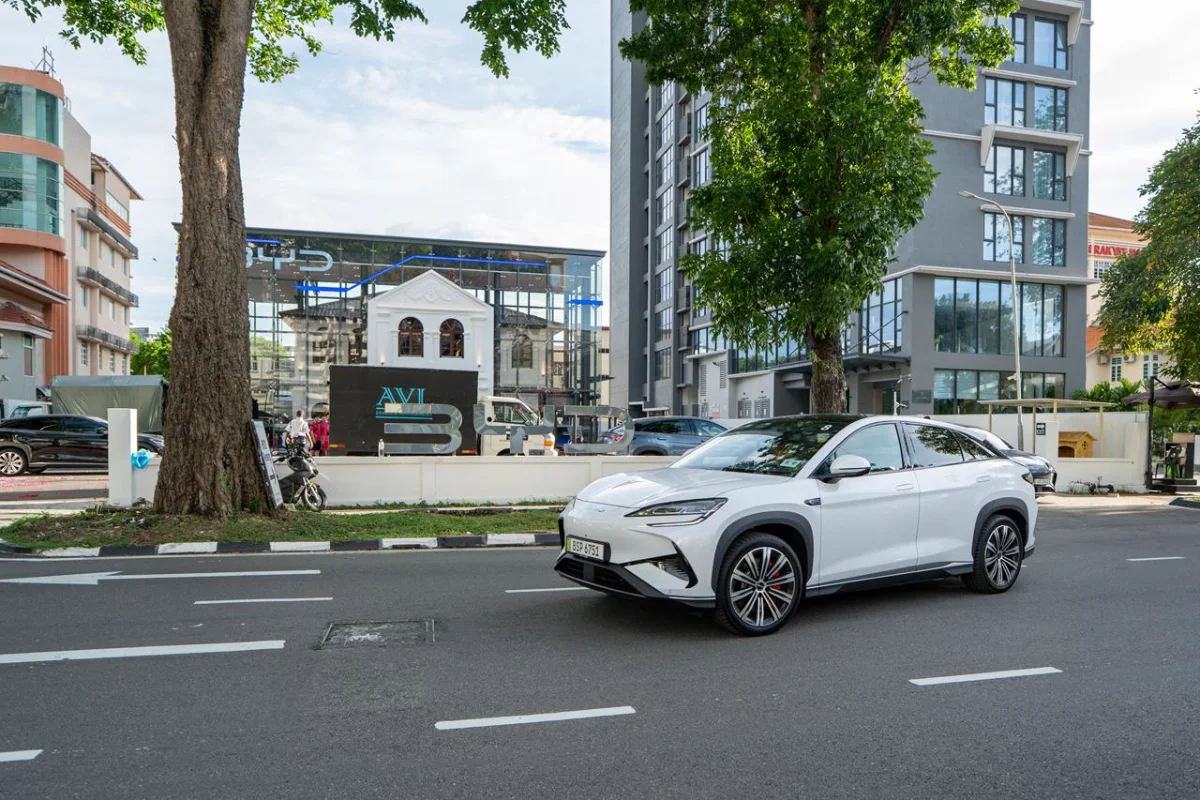
The journey subjected the car to the absolute worst of Malaysian driving: crawling urban gridlock, high-speed highway cruising, and sudden, torrential downpours. My goal was simple: to see if the car could genuinely live up to the elusive 1,000km per tank threshold that hybrid manufacturers often tease.
By the time I rolled back into the parking bay, I had travelled 908km. The instrument cluster revealed an average fuel consumption figure fluctuating between 24.6km/litre and 26.2km/litre, with 35km of remaining range still left in the tank.
Technically, I could have squeezed roughly 943km out of that single tank before being stranded. While that would be pushing your luck on the highway, it forced a glaring question into my mind: Do we actually need the complexity of a BEV or a Phev if outright fuel efficiency is our primary goal?
CASE FOR THE ‘UNPLUGGED’ LIFE
Some years ago, my father owned a Mercedes-Benz E300 BlueTEC diesel hybrid. Granted, it was mechanically complex and occasionally problematic, but it routinely clocked 1,300km on the highway and 800km in the city.
The raw efficiency was undeniable. Today’s modern Japanese petrol hybrids have inherited that mantle of efficiency, minus the reliability headaches.
An EV requires you to choreograph your life around a charging grid that is still playing catch-up in Malaysia.
A Phev demands that you plug it into a wall every week or two to keep its heavy battery primed; otherwise, you are simply hauling dead weight with a petrol engine.
For the average Malaysian who lacks a home charger, lives in a high-rise condo, or simply refuses to add “battery anxiety” to their daily routine, the standard hybrid remains the ultimate pragmatic compromise.
Spending money on a brandnew car just to save money on fuel rarely makes perfect mathematical sense. But if you are already in the market for a highly efficient, premium daily driver, do not let the loud EV marketing blind you.
The quiet, unplugged hybrid might just be the exact companion your lifestyle actually needs.



