




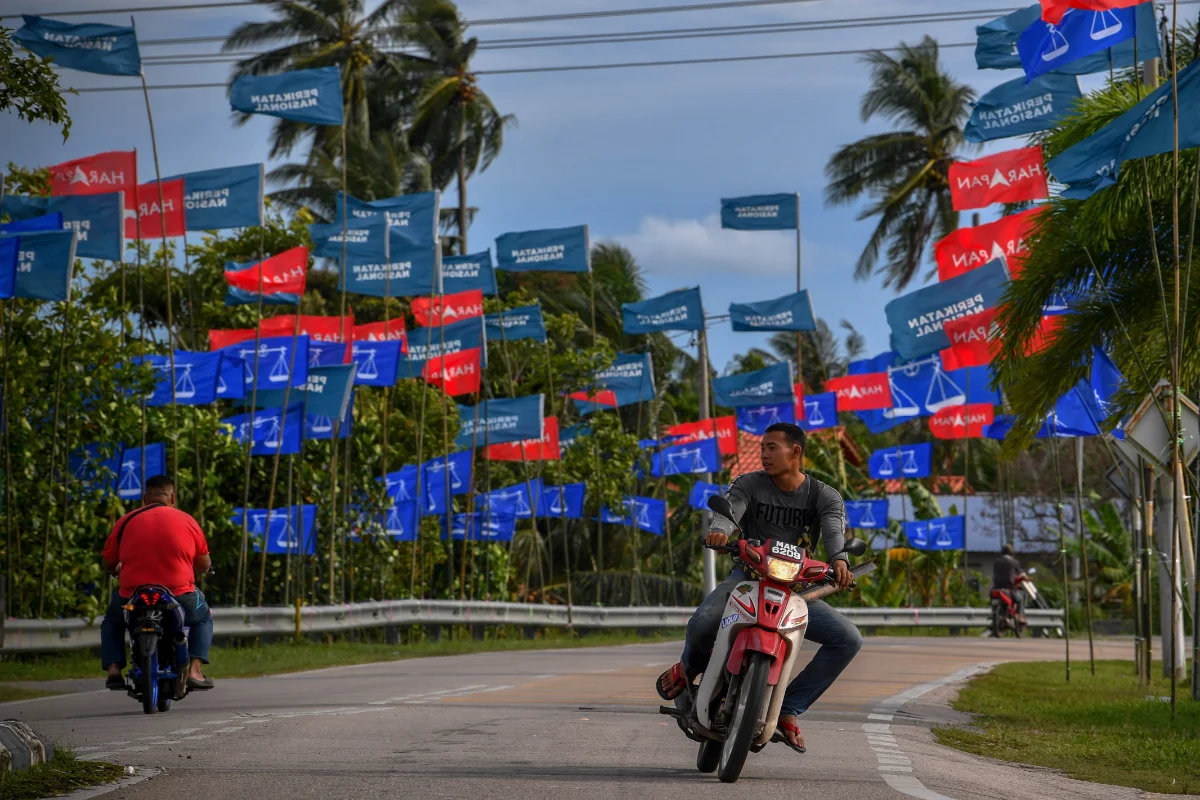
Malaysia has witnessed five prime ministers in eight years, alongside the rise of three national coalitions, two regional blocs and multiple smaller parties in Parliament, highlighting the growing volatility of the country’s political landscape.
PETALING JAYA: Malaysia’s political parties can no longer claim the moral high ground after years of shifting alliances that saw former rivals govern together, a civil society group said, as the country marks eight years since the 14th general election (GE14).
Projek Sama emphasised that Malaysia’s post-GE14 political era has fundamentally altered the nation’s democratic landscape, dismantling the traditional two-coalition rivalry and replacing it with an increasingly fragmented multiparty system.
The group said nearly all major political blocs, including Pakatan Harapan (PH), Barisan Nasional (BN) and Perikatan Nasional, had at different points served as both governing allies and electoral opponents, blurring ideological boundaries and reshaping public perception of political loyalties.
“This takes away any moral high ground by any party in claiming that others have unholy or unworthy political partners,” it said in a statement on Saturday to commemorate GE14, which ended BN’s six-decade grip on federal power.
Projek Sama said Malaysia has witnessed five prime ministers in eight years, alongside the rise of three national coalitions, two regional blocs and multiple smaller parties in Parliament, underscoring the growing volatility of the country’s political landscape.
It said the fragmentation is likely to persist into the next general election, with multi-cornered contests and shifting post-election alliances becoming the new political norm.
The group cautioned political parties against making rigid pre-election pledges rejecting cooperation with rivals, adding that such promises often unravel after polling day and further erode public trust.
“Election outcomes would decide which parties will emerge as federal and state government partners from multiple multilateral negotiations.”
Projek Sama said while the collapse of the traditional two-coalition structure may confuse some voters, it also offers Malaysians broader political choices and opens the door for discussions on electoral reform.
It added that political parties face increasing difficulty portraying rivals as enemies or morally inferior, given their past collaborations in various governments and coalitions.
“Grandstanding by political parties and politicians is more and more often greeted with scepticism and distrust.” The NGO said despite years of political turbulence, Malaysia’s democratisation process has remained largely peaceful, with no large-scale violence despite intense political competition and repeated changes in government.
It also called on all political actors to keep constitutional monarchs above politics, describing the institution as a crucial stabilising force amid a fractured political environment.
“As democratisation deepens, all political parties, politicians, social groups and individuals must keep monarchs above politics.”
Projek Sama stressed that parliamentary democracy must be strengthened rather than undermined, cautioning against narratives that seek to weaken elected institutions.
“Our task as we enter the ninth year of democratisation is to neither blindly trust Parliament and state legislatures nor sweepingly dismiss them, but to make the legislative branch of our democracy trustworthy.
“Regardless of which parties are in power, we must continue to demand parliamentary reforms at the federal and state levels.”
In GE14, PH led by Tun Dr Mahathir Mohamad secured a historic victory over BN, ending the coalition’s hold on Putrajaya for the first time since independence.
However, the political landscape shifted dramatically less than two years later following the Sheraton Move, which saw Bersatu, Pas, Gabungan Parti Sarawak and Gabungan Rakyat Sabah form a new governing alignment that triggered the collapse of the PH administration.
BN later withdrew support from the government, sparking further instability and eventually leading to the 2022 general election, which resulted in a hung Parliament.
The outcome paved the way for the formation of the Unity government under Datuk Seri Anwar Ibrahim, bringing together long-time rivals from PH and BN in an unprecedented political arrangement.



