



Moves aimed at boosting governance, welfare and driving reforms
PUTRAJAYA: Prime Minister Datuk Seri Anwar Ibrahim yesterday unveiled a sweeping legislative and policy agenda aimed at strengthening governance, boosting social welfare and driving economic and digital reforms.
Prime minister’s tenure to be capped
Anwar announced plans to introduce a landmark Bill to limit the prime minister’s tenure to 10 years, or two full terms, under legislation set to be tabled in Parliament this year.
Speaking at the monthly assembly of the Prime Minister’s Department, he said the law forms a cornerstone of the government’s ongoing institutional reforms.
“Everyone has term limits. The chief secretary to the government cannot serve for ten years. This applies to all, including the Prime Minister’s Department.
“Within that period, they could execute (tasks) effectively. Afterwards, it is appropriate to hand over the responsibilities to the next generation.
“We will present a law to limit the term to no more than ten years.”
Capping the prime minister’s tenure was a key pledge in Pakatan Harapan’s 2018 election manifesto.
Separation of powers, FOI and ombudsman Bills
Alongside the tenure-limiting Bill, Anwar said the first laws to be tabled in Parliament this year will include the separation of the attorney-general and public prosecutor roles, the establishment of an ombudsman and the Freedom of Information (FOI) Bill.
“These measures signal a renewed commitment to accountability, transparency and institutional reform.”
On the FOI Bill, he added: “The FOI law will be presented for parliamentary approval in this session or the next.
“Matters of national security and risk require exemptions, but all questions about tenders, contracts and projects should avoid misuse of the law.”
Regarding the Ombudsman Act, Anwar said it would provide the public with a platform to raise issues, holding officials accountable from the prime minister downwards.
“These measures are part of our broader roadmap for legal, institutional and governance reforms.”
Social assistance programmes
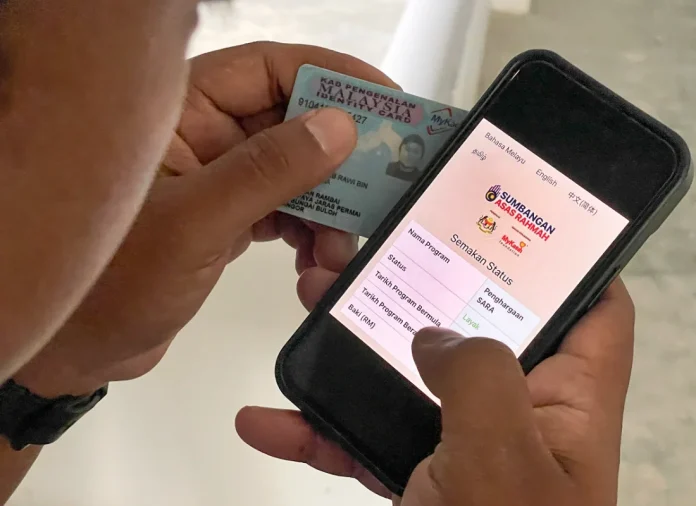
Anwar announced that a RM100 Sumbangan Asas Rahmah aid for all Malaysians aged 18 and above will be credited starting Feb 9, while monthly aid payments of up to RM200 will begin being credited in phases from Jan 9.
Phase 1 of the Sumbangan Tunai Rahmah cash aid will begin on Jan 20.
“Last year, the programme benefited 96% of the population, totaling nearly RM2.1 billion.
“While some wealthy recipients also received aid, many chose to share it with poorer neighbours.”
The RM150 million in unspent funds will now be redirected to shelter residents, victims of domestic violence, students with disabilities and patients in need of medical devices.
This year, the programme will cover 22 million Malaysians, supporting preparations for Ramadan and Chinese New Year celebrations.
Registration remains essential for new recipients in rural areas, as well as for 10,000 small traders and retail shops.
Complementing the cash aid, the government will continue the Rahmah Madani and Agro Madani sales initiatives.
“Over 23,000 Rahmah Madani sales events will be held across 600 state constituencies and 40 Federal Territory locations, while 5,000 Agro Madani sales events will offer products 10% to 30% cheaper than standard market prices.
“These programmes ensure affordability of essential goods, support small traders and reach vulnerable communities.”
Education support and community schools
Parents will receive early preschool assistance under the back-to-school project at RM150 per student, now covering students up to Form Six.
The total expenditure for the programmes is currently RM800 million annually.
The government has also increased focus on Technical and Vocational Education and Training (TVET), including the integration of Maahad Tahfiz schools to provide employment opportunities.
“Community religious schools remain in the poorest condition compared to other schools.
“Hundreds of thousands of students, more than 300,000, are enrolled in these schools. Previously, all assistance was cut, which disadvantaged our children.”
He directed the Islamic Development Department to engage directly with the schools to improve curricula, teaching quality and facilities.
Funding for Chinese and Tamil national-type schools has also increased.
SJKC allocations rise to RM80 million from RM50 million, while SJKT schools will receive RM50 million.
Digital transformation and e-government
Anwar called for accelerated digital government initiatives to improve public service delivery.
“Today, our national digital system must start seriously, not just talk about paradoxes between new technology and digital systems with increased funding but minimal results.”
Small-scale projects and infrastructure
The prime minister directed all ministries to implement small-scale projects immediately, including rural roads, staff quarters and repairs to dilapidated clinics.
“Direct contractor appointments will be allowed for projects worth up to RM200,000, while quotations may be used for projects valued up to RM1 million.”
To expedite the initiatives, the government issued the general expenditure warrant for 2026 ahead of schedule, allocating RM2.4 billion for small projects carried out by G1 to G4 contractors, mostly Bumiputera.
“Implementation must begin immediately at the state and district levels, and all processes must be expedited.”
Civil service and budget increases
Anwar emphasised that civil servants would benefit from reforms and increased funding.
Additional allocations of RM18 billion this year will cover judges’ salaries and other critical functions.
SME support and tax incentives
Service Tax on rentals for micro, small, and medium enterprises (MSMEs) has been lowered from 8% to 6%.
Newly-established MSMEs will enjoy a one-year tax deferment while the exemption threshold has been expanded to include businesses with annual sales of up to RM1.5 million.
“We are now extending the exemption to those with total annual sales of up to RM1.5 million.”
A one-year extension has also been granted for the e-invoicing transition period for companies with annual sales between RM1 million and RM5 million, initially set to begin on Jan 1.
“This extension will give these businesses additional time to comply without penalties, amid concerns about high implementation costs.”
The integrated system will also be expanded to the retail and construction materials sectors to encourage wider adoption.



