




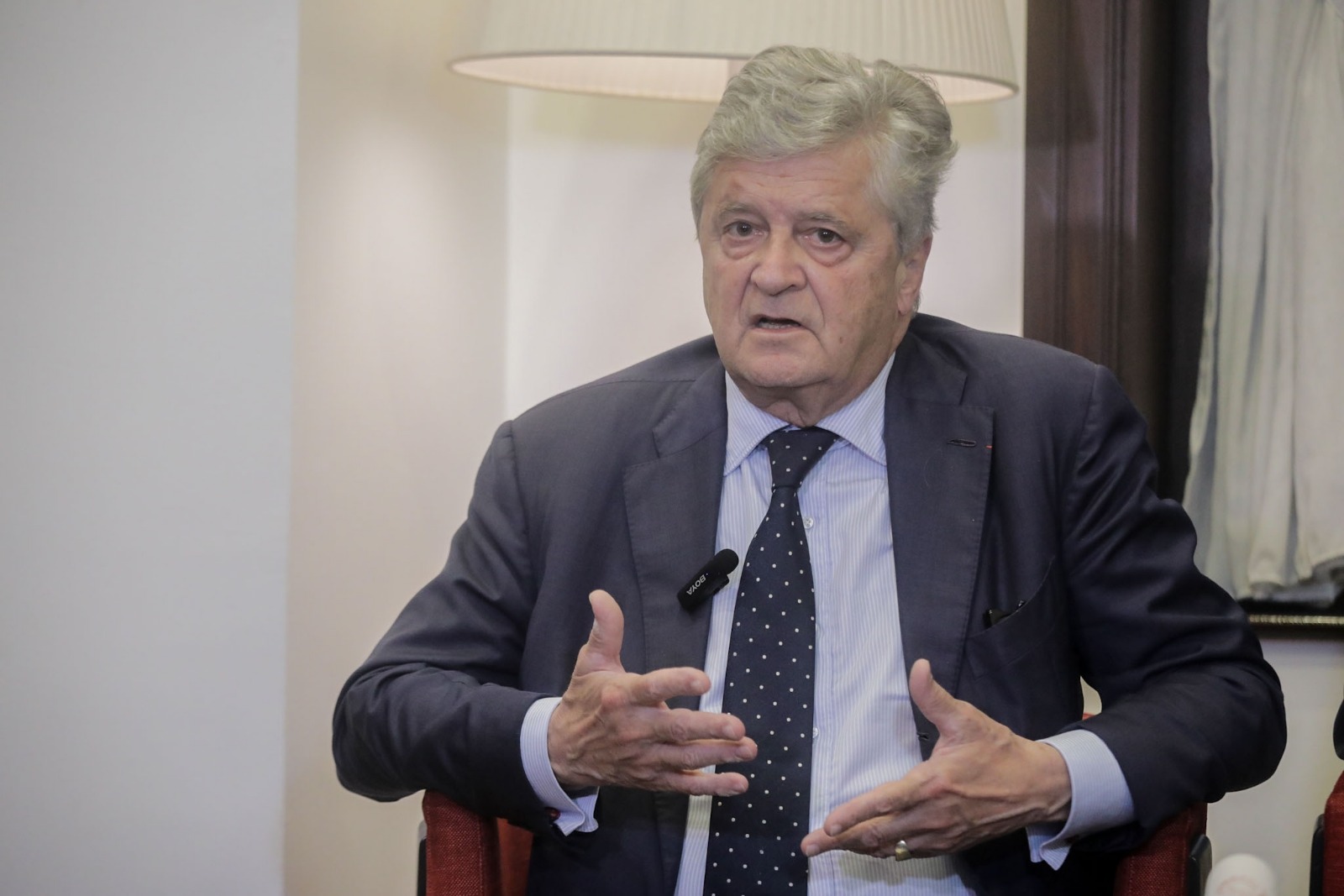
France seeks stronger economic ties with Malaysia through supply chains, rare earths, energy, trade, nuclear cooperation and investment partnerships.
KUALA LUMPUR: France wants to work more closely with Malaysia to build resilient supply chains and strengthen economic security, particularly in critical minerals, rare earth elements, energy and other strategic sectors.
French Minister for Foreign Trade and Economic Attractiveness Nicolas Forissier said his visit to Malaysia follows Prime Minister Datuk Seri Anwar Ibrahim’s trip to France last year and aims to translate those discussions into concrete economic partnerships.
“It is important for me to be here in Kuala Lumpur. We are here to build new partnerships and a global win-win partnership between our two countries,” he told reporters at the Residence of the French Ambassador on Wednesday.
Forissier described Malaysia as a key strategic partner and “a gateway to Asean”, saying both countries shared a commitment to a rules-based international system and were working together to strengthen economic security by diversifying supply chains in areas such as critical minerals, rare earth elements, raw materials and energy.
The visit comes as the European Union and Malaysia continue negotiations on a free trade agreement (FTA), which resumed in January 2025 after a 13-year hiatus. Four rounds of talks have been completed, with both sides aiming to conclude the agreement by 2027.
“We have had four rounds of negotiations, and we are working towards a fifth round. We have to be active. We have no time to lose,” he said, adding that both parties needed to continue strengthening cooperation through long-term partnerships that would benefit both economies.
Forissier said France is ready to help Malaysia develop civil nuclear energy if the country decides to adopt nuclear power, but stressed that the decision rests with the Malaysian government, which is still studying the option.
“I understand that it is under discussion because it is one of the best ways to decarbonise electricity and power generation. Malaysia is studying it. It is having a national debate.”
Forissier said France, where around 60% of electricity generation comes from nuclear power, has significant experience in combining nuclear energy with renewable sources such as solar and wind.
“We are telling Malaysia that, if you want to develop civil nuclear energy to increase decarbonised electricity generation, we are ready to help.
“We want to build a long-term partnership because nuclear energy requires a long-term commitment of about 50 to 80 years,” he added.
On defence cooperation, Forissier said France remains open to discussions should Malaysia seek alternatives following Norway’s decision to withdraw its export licence for a missile system intended for the country.
He declined to comment on Norway’s decision but said France was ready to engage with Malaysia if requested.
“I don’t want to comment on Norway’s decision. We simply want to say that we are ready to answer any questions if requested by the Malaysian authorities,” he said.
Forissier highlighted that France and Malaysia have maintained longstanding defence ties, adding that France is among the world’s leading defence exporters, offering advanced and reliable technology.
“We have a very strong industry in this field. You know that we are reliable, predictable, and have very good technology,” he said.
Forissier is leading a delegation of more than 20 French companies to Malaysia, including firms specialising in AI and advanced technologies, as part of efforts to expand investment and business cooperation between the two countries.
During his visit, Forissier met Investment, Trade and Industry Minister Datuk Seri Johari Abdul Ghani, Science, Technology and Innovation Minister Chang Lih Kang, and Deputy Energy Transition and Water Transformation Minister Datuk Seri Abdul Rahman Mohamad to discuss trade, innovation and cooperation in the energy transition.



