




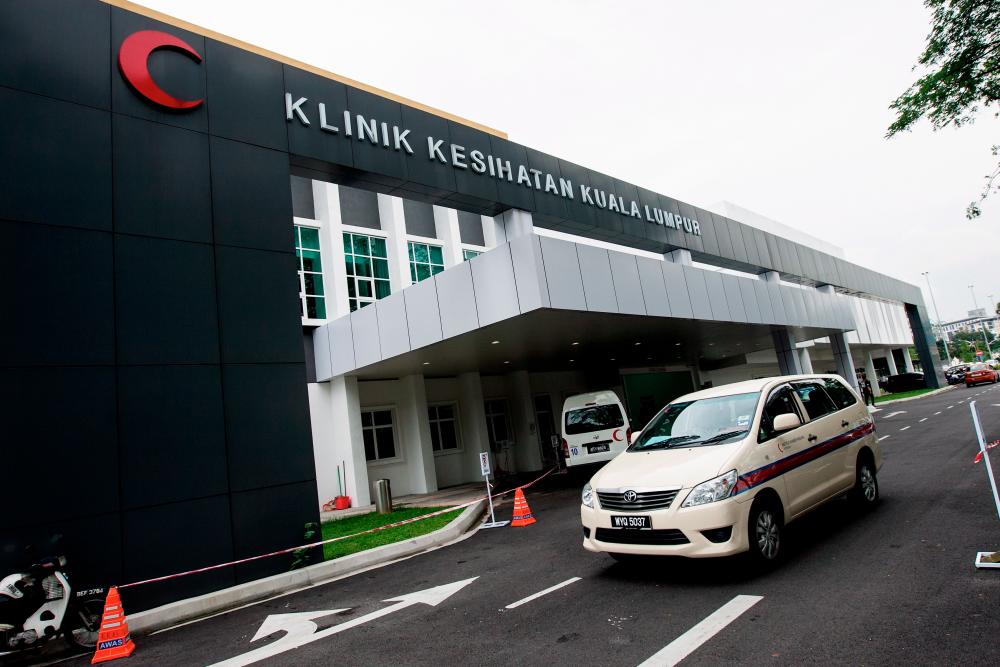
PETALING JAYA: The Health Ministry has started improving its clinics with basic services that are on par with those at hospitals.
As of January, there were a total of 3,114 clinics. They consisted of 1,076 health clinics, 83 maternal and child clinics, 1,727 rural clinics and 228 community clinics. Currently, there are 79 new clinics being built.
Health Director-General Tan Sri Dr Noor Hisham Abdullah said the clinics, which provide primary healthcare services, are recognised as the thrust of the healthcare system and are supported by secondary (regional) and tertiary (national) hospitals.
“The primary healthcare delivery system provides population-based services using a life-course approach from womb to tomb. These include promotive, preventive, curative and rehabilitative services supported by pharmacy, laboratory, radiology and teleprimary care systems.
“Public primary healthcare facilities are categorised into health, maternal and childcare, rural and community clinics, which cover the entire country, including the most remote communities in Sabah and Sarawak,” he told theSun.
Noor Hisham added that Family Medicine Specialists (FMS) play an important role as the clinical specialists at health clinics.
“The role and function of FMS is to provide a comprehensive and holistic specialist service at primary care (facilities) for every age group and ensuring that all referrals made to the hospital are necessary and appropriate.
“There are 773 FMS at 468 health clinics throughout the country. The ministry aims to place at least one or two FMS at each health clinic in the next five years.”
Noor Hisham said this will be achieved with a master’s programme at six public universities and two parallel pathway programmes recognised by the ministry, namely an Irish College of General Practitioners membership or a Royal Australian College of General Practitioners fellowship.
At a parliamentary session on March 20, Health Minister Dr Zaliha Mustafa said the ministry is dedicated to improving medical services for the benefit of the public and healthcare workers.
To enhance the medical service, the ministry has introduced the Lean Healthcare initiative, which evaluates the entire process of providing healthcare services and reduces activities that have no added value, which will increase efficiency.
“Repetition of procedures that cause the patient flow to be disrupted will be reduced or eliminated. This ensures the movement of patients in the clinic or hospital is not interrupted, helps shorten waiting times and reduces congestion at emergency departments and specialist clinics.
“This initiative also aims to reduce waiting times to see a doctor, starting from the registration counter until the patient collects the prescription at the pharmacy. It also cuts down waiting times for patients who need to be admitted to wards, and for patients to be discharged.”
She said virtual clinic sessions have been introduced at 376 clinics to help reduce congestion, where patients do not need to visit the hospital or clinic for consultations, adding that they could instead get virtual consultations via telephone or video call, and that telemedicine sessions commenced in 2020 for dietetics and nutrition counselling.
The ministry implemented the pharmacy Value Added Services (VAS) in 2003 to reduce waiting time for medicine collection and to prevent overcrowding, especially for patients who need follow-up medication at government hospitals.
“There are several initiatives implemented under VAS, such as drive-through pharmacy services and lockers for medicines at clinics, hospitals, mosques, commercial buildings, shopping centres and supermarkets.
“Apart from that, the Health Ministry also delivers medicines via the postal service. Patients will only have to pay a nominal delivery fee.”



