




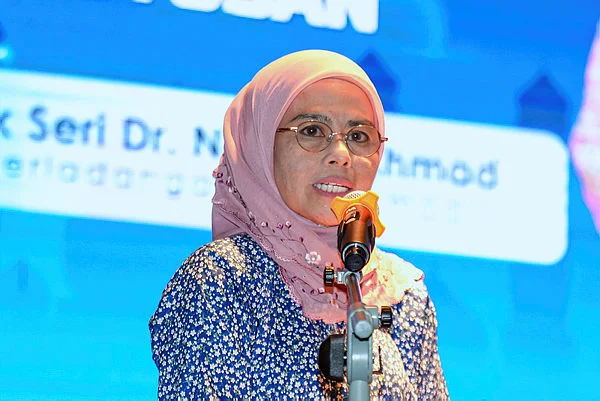
Malaysia’s plantation ministry intensifies efforts to enhance upstream efficiency, downstream value and sustainability to navigate 2026’s tough global economic landscape
PUTRAJAYA: The Plantation and Commodities Ministry will intensify efforts to boost productivity in the national agri-commodity sector. Minister Datuk Seri Dr Noraini Ahmad said this is crucial to navigate an increasingly challenging global economic landscape in 2026.
She cited geopolitical tensions, climate change and new international trade regulations as key challenges. “Therefore, the agri-commodity sector can no longer be managed in a business-as-usual manner,” she said at the ministry’s monthly assembly.
The first focus is improving upstream production efficiency. This involves emphasising higher yield per hectare for key commodities like oil palm, rubber, cocoa and pepper.
The second focus is strengthening the downstream value chain. The aim is to move beyond reliance on raw commodity exports through intensified research and development.
Noraini stressed the adoption of sustainable practices like the Malaysian Sustainable Palm Oil certification will continue. “We must prove to the world that Malaysian commodities are produced with full responsibility towards the environment,” she said.
She added that every policy and initiative must have clear, measurable targets. Improving smallholders’ living standards and income also remains a top agenda.
“An increase in export value means nothing if it is not felt by smallholders in the villages,” Noraini stated. She highlighted government support initiatives like the BUDI MADANI subsidy programme.
The minister also emphasised a culture of good governance and discouraged a silo work culture. “Our strength lies in close coordination, data and expertise sharing,” she said.
The ministry-level Ihya Ramadan Programme was launched at the same event. It features Ramadan talks, tadarus Quran sessions and the distribution of dates and bubur lambuk.



