



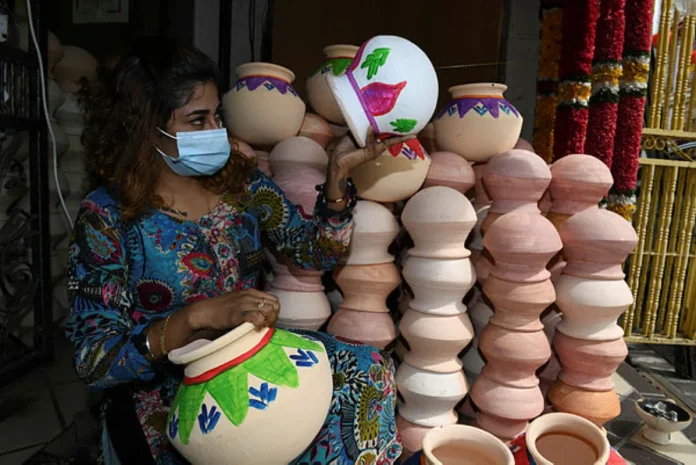
A 70-year-old family pottery business sees falling demand for handmade clay Ponggal pots as modern alternatives and evolving traditions take hold.
PETALING JAYA: For brothers Wadiveel and Nagendran Nadarajah, Ponggal is more than a harvest festival – it is the lifeblood of their family’s 70-year-old pottery business, in which every clay pot carries a story of tradition, skill and heritage.
The siblings run Jeyam Brothers Creations Sdn Bhd, continuing a family legacy that has supplied handcrafted clay Ponggal pots to households across Malaysia for three generations.
Yet, the brothers admit that times are changing. Demand for the pots has declined in recent years as celebration styles evolve and modern alternatives gain popularity.
“When Ponggal falls on weekdays, many families celebrate more simply.
“More people are also choosing stainless steel or decorative items instead of traditional clay pots,” Wadiveel said.
Still, he expressed belief that the clay pot remains at the heart of Ponggal celebrations.
Made from earth, it symbolises prosperity, renewal and a deep sense of gratitude towards nature.
He explained that the ritual of allowing milk and rice to boil over in a new pot, accompanied by joyful cries of “Ponggalo Ponggal”, represents hopes for abundance and happiness to overflow into a household.
“Ponggal is a four-day harvest festival celebrated by the Tamil community to give thanks to the sun, mother nature and farm animals for a bountiful harvest.
“It also marks the beginning of the Tamil month of Thai, which is considered auspicious and usually falls on Jan 14 or Jan 15 each year.”
The celebrations begin with Bhogi, a day of renewal when families clean their homes, discard old belongings and prepare for fresh beginnings.
This is followed by Surya Ponggal, the main day of the festival.
Colourful kolam designs adorn doorsteps and families gather to cook Ponggal dishes at auspicious times.
The third day, Maatu Ponggal, is devoted to honouring cattle for their vital role in farming and food production. Cows are bathed, decorated with garlands, beads and bells, and worshipped as symbols of agricultural prosperity.
The festival concludes with Kaanum Ponggal, a day centred on family and community, when relatives gather to share meals and younger members seek blessings from elders.
Behind each pot crafted at Jeyam Brothers Creations lies a painstaking traditional process.
Wadiveel said clay is sourced locally and carefully filtered to remove impurities such as stones and roots.
“It is then mixed with about 20% to 30% sand and kneaded until it reaches the right consistency.
“Each pot is manually shaped on a pottery wheel, preserving skills honed over decades.”
The freshly formed pots are sun-dried for eight to 14 days to ensure strength before being fired in a kiln for about 10 hours at temperatures reaching 1,050°C.
Finally, each pot is hand-painted with colourful floral motifs, making every piece unique.
Despite seasonal spikes during Ponggal, the brothers say sustaining the craft is increasingly challenging.
Rising costs of raw materials, fuel and manpower coupled with a lack of interest among younger generations put pressure on traditional potters.
“There are fewer young people willing to learn the craft today. At the same time, mass-produced plastic and stainless steel items have reduced demand for clay pots, especially for everyday use,” said Nagendran.
Even so, the company continues to distribute pots nationwide and has received individual overseas orders from customers in Australia, the United Kingdom and Canada.
Nagendran said international customers value the use of premium-grade clay and traditional firing techniques which result in superior quality, durability and authenticity.
The brothers expressed belief that preserving the craft would require renewed appreciation, innovation and youth involvement.
They also expressed hope that younger generations would see pottery not only as cultural heritage but also as a meaningful and sustainable modern business.



