




Cyber Security Bill 2026 aims to strengthen Malaysia’s digital defences, fill legal gaps, and combat hacking, deepfakes, and cyber fraud
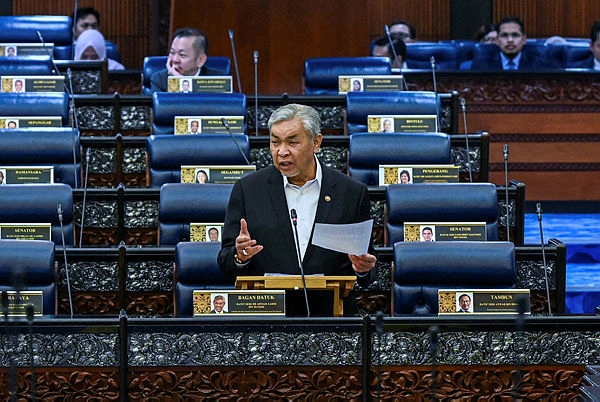
KUALA LUMPUR: The Cyber Security Bill 2026 is a critical move to strengthen the nation’s capacity to tackle increasingly complex cyber threats, which have grown in tandem with the rapid advancement of digital technology, said Deputy Prime Minister Datuk Seri Dr Ahmad Zahid Hamidi.
He emphasised that the Bill is designed to plug gaps in existing laws, bolster prevention, detection, and enforcement, as well as to ensure Malaysia’s legal system remains firmly relevant to today’s cyber landscape.
The Bill, he noted, was drafted by the National Cyber Security Agency (NACSA) and National Security Council (MKN) under the Prime Minister’s Department, adopting a “technology-neutral” approach.
This is also the approach embraced by the Budapest Convention and the UN Convention, which allows for the law to adapt as technology continues to evolve.
“It will be enforced in partnership with the Royal Malaysia Police, the Malaysian Communications and Multimedia Commission, NACSA, and MKN,” he said during the Bill’s second reading in the Dewan Rakyat today.
Ahmad Zahid also highlighted that the Bill provides for the formation of a Cyber Crime Combat Committee, complete with defined membership, functions and meeting structures. The Committee may also establish sub-committees and will be chaired by the Chief Secretary to the Government.
He added that the Bill also covers offences relating to the confidentiality, integrity, and availability of computer systems and data, including hacking, ransomware and malware attacks, and the misuse of devices.
“Part IV addresses computer-related forgery and fraud, both traditional crimes that have taken on a new scale and reach through computer systems, networks and other forms of ICT,” he explained.
The Bill also includes provisions concerning the national digital identity service, MyDigital ID, which adopts international standards and best practices to ensure robust information security.
Ahmad Zahid said these provisions will protect individuals’ digital identity information from being accessed, stored, supplied, or transmitted to others without lawful justification, especially for criminal purposes.
“Moreover, these provisions will help boost public confidence in the security of the biometric information registered for the wider rollout of MyDigital ID across Malaysia,” he said.
Ahmad Zahid said the Bill also covers offences involving digital forgery, including deepfakes, as well as the distribution of intimate images.
He noted that existing legal provisions are no longer sufficient to counter the spread of digitally manipulated intimate content, which is now being propagated on a large scale in modern cybercrime through complex computer systems, often across borders.
“This Bill reflects the Government’s commitment to safeguarding national security, public interest, and the well-being of the people.
“This legislation, we believe, will also strengthen public and business confidence in the security of our digital space, ultimately supporting the growth of the digital economy and enhancing Malaysia’s competitiveness,” he concluded.



