



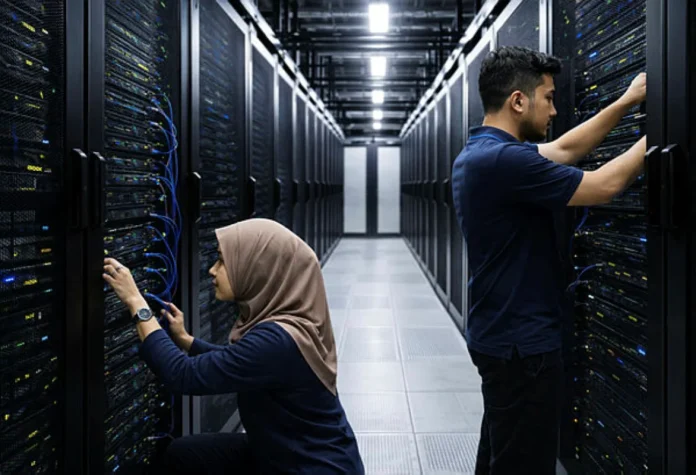
Water and energy research group estimates consumption could reach 68TWh from current average of 8.5TWh
PETALING JAYA: Malaysia’s data centre electricity use could increase nearly eightfold by the end of 2030, according to projections cited by the Association of Water and Energy Research Malaysia (Awer), as demands for artificial intelligence (AI)-driven infrastructure expands.
Awer president Piarapakaran Subramaniam said current national data centre electricity use is estimated at about 8.5 terawatt-hours (TWh) in 2024, with demand projected to reach around 68 TWh by 2030.
A TWh is a unit used to measure large-scale electricity use at industry or national level, with one TWh equal to one billion kilowatt-hours of electricity.
However, public discussion often assumes data centres operate at full power all the time, which is not how facilities run in reality, he said.
“It’s a business decision. It makes no sense to run it at 1,000 megawatts (MW) capacity when the operating demand is maybe 250MW. So, the demand increase is a progressive increase.
“Based on available data, in 2024, data centres used about 8.5 TWh and this demand is projected to reach 68 TWh by 2030 subject to efficiency and actual operation capacity,” he told theSun.
To illustrate the scale of electricity use, he gave an example of a very large data centre campus and how consumption changes depending on how heavily it is used.
“For example, if a 1,000MW data centre (known as gigawatt campus) operates at full capacity for 24 hours, annual consumption is about 8.76TWh.
“If it operates at 20% capacity, then the consumption is about 1.75TWh annually,” he said, adding that efficiency improvements and cooling technology advances could reduce energy use further.
On water, Piarapakaran said cooling needs can vary significantly depending on design and technology.
He said water use is measured in million litres per day (MLD), a scale used for industrial or municipal supply planning.
“Depending on the technology deployed, water usage may vary between 40 and 200MLD for a 1,000MW capacity data centre.
“By ensuring Water Usage Effectiveness (WUE) is sustainable, we can drive the water usage down. Malaysia is using 2.2 as a WUE benchmark.
“Based on some operating examples in the world, WUE of 1.8 is already achievable,” Piarapakaran said.
He added that WUE is a measure of how efficiently a data centre uses water for cooling, with lower figures indicating less water consumed per unit of computing power.
Piarapakaran said states with smaller spare capacity in their water systems would feel more pressure, as he cited examples such as the Klang Valley, Johor and Negeri Sembilan.
He added that approval processes are meant to ensure supply is secured before projects proceed.
However, Piarapakaran also said Malaysia’s reliance on imported fuels such as coal and liquefied natural gas means energy supply is still exposed to global risks.
“The other concern that we need to keep in mind is that energy resources will be increasingly attached to foreign risk as we are a net importer of coal, and natural gas is still shipped in.
“Trade relationship, trade route risk and unforeseen global energy resource demand risks are still there,” he said.



