



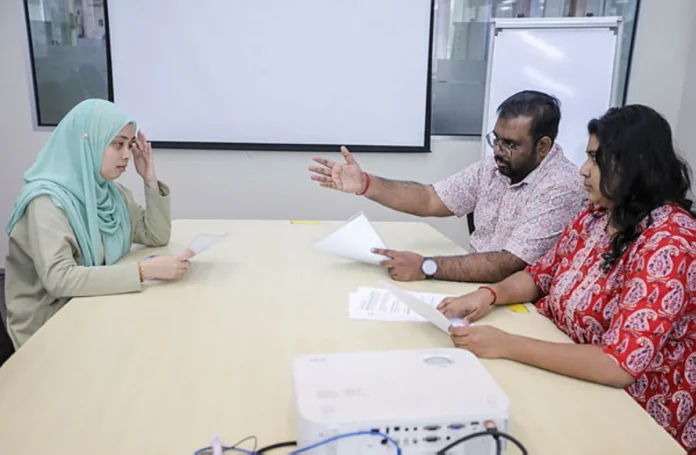
Malaysian employers now see degrees as a basic entry ticket, prioritising attitude, adaptability and soft skills over academic results alone, says expert.
PETALING JAYA: The rapid expansion of higher education in Malaysia has transformed employer expectations, with academic qualifications now seen as a basic entry ticket rather than a guarantee of a job, according to Universiti Malaysia Kelantan human resource expert Prof Dr Balakrishnan Parasuraman.
Reflecting on the evolution of education and employment since the 1970s and 1980s, Balakrishnan noted that access to universities was once highly limited, with only a handful of public institutions available to students.
“Today, we have more than 20 public universities, over 100 private universities and numerous university colleges, including foreign institutions. Because of this, having a degree – even a second-class upper – has become common. It is now only a ticket to apply for a job, not a guarantee of getting one.”
He added that employers are increasingly prioritising graduates’ attitudes, behaviour and adaptability over academic results alone.
“Companies want to see whether graduates are positive, adaptable and willing to work hard.
“They ask: Are they ready to learn? Can they accept instructions? Can they work well with others?”
To illustrate the shift, he recounted the case of an engineering graduate who secured a position at a multinational company within months of completing his degree in electronics and electrical engineering with a second-class upper.
The graduate had actively participated in student societies, NGOs and supplementary human resource management courses.
“When he was interviewed by senior engineers, they evaluated not just his technical knowledge but also his communication skills, behaviour and attitude.
“He was willing to take on different roles, learn from senior engineers and adapt to the organisation’s needs. That is why he received a job offer on the same day.”
Drawing on more than 33 years of experience as an academic, Balakrishnan observed a behavioural gap between high academic achievers and more well-rounded graduates.
“Some first-class graduates tend to be very proud and overly confident.
“They feel they know everything and may struggle to follow instructions or accept criticism. This does not align with industry expectations.”
He stressed that employers prefer graduates who are humble, respectful, disciplined and open to learning, particularly in multicultural and multinational work environments.
“In the industry, punctuality, integrity, teamwork and the willingness to work long hours are critical. Graduates must learn to work with people from different backgrounds, races and nationalities.”
Balakrishnan said academic excellence alone can limit a graduate’s employability.
“Being an ‘A student’ in university does not necessarily mean you are an ‘A employee’. From an industry perspective, an ‘A graduate’ is someone who is holistic – strong in communication, leadership, teamwork, adaptability and problem-solving.”
He called on universities to proactively cultivate these skills from the first year through to graduation, encouraging students to participate in clubs, uniformed bodies, leadership roles, and community programmes.
“University is a place for exposure, not isolation. Students who isolate themselves and focus only on grades miss out on valuable life skills.
“The key is balance – academic knowledge must go hand in hand with non-academic excellence. Students need to expose themselves early, remain humble and build strong character.”



