



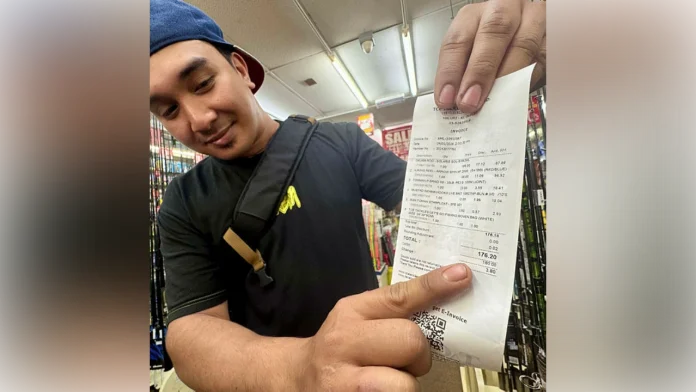
Systemic overcharging from improper rounding up across businesses could violate consumer rights, says Fomca
PETALING JAYA: What seems like a few sen at the checkout may signal a systemic violation of consumer rights, with improper bill-rounding practices persisting across food outlets and other businesses, Fomca pointed out.
Fomca CEO Saravanan Thambirajah said while the organisation plays an active role in monitoring complaints and advocating compliance, enforcement of rounding rules falls under the jurisdiction of Bank Negara Malaysia (BNM), which issued clear guidelines on rounding to the nearest five sen following the withdrawal of the one sen coin.
“Fomca does not conduct routine inspections or audits of business billing systems like an enforcement agency. However, we actively monitor consumer complaints, public feedback and reported irregularities.
“When issues are identified, we raise them with the relevant authorities, such as the Domestic Trade and Cost of Living Ministry and BNM, urging investigation and corrective action.”
He explained that checks are typically triggered by consumer reports, media exposure or emerging patterns that suggest systemic non-compliance, rather than carried out on a fixed schedule.
Saravanan cautioned that incorrect rounding – particularly when billing systems automatically round up – should not be dismissed as a mere technical error.
“When such practices are repeated or widespread, they become a systemic consumer rights issue, disadvantaging consumers despite the small amounts involved,” he said, adding that over time repeated rounding up can lead to unjust enrichment of businesses at consumers’ expense.
To prevent this, Fomca has urged businesses to ensure their billing systems fully comply with BNM’s rounding rules, provide proper staff training to explain rounding calculations and issue receipts that clearly show how final amounts are derived.
Saravanan also called for greater accountability from billing software vendors, warning that automated errors could affect thousands of transactions daily.
He said even small discrepancies, such as repeated five-sen rounding, should be taken seriously and verified through receipt and transaction reviews to identify patterns.
“If the issue appears isolated, we may engage the business directly to seek clarification and voluntary correction. But where there is evidence of repeated or systematic overcharging, the matter is escalated to the Domestic Trade and Cost of Living Ministry for enforcement action under the Consumer Protection Act 1999.”
In some cases, the issue may also be publicised to alert consumers and deter similar practices.
“The size of the loss does not negate the violation of consumer rights,” Saravanan stressed, adding that consumer education remains crucial as many shoppers do not routinely check receipts due to trust in automated systems or the perception that the amounts involved are insignificant.
Public awareness efforts through media engagement, outreach programmes and social media, he said, emphasise the importance of billing accuracy, price transparency and receipt-checking.
“Small discrepancies, when multiplied across many consumers, can result in significant financial loss,” Saravanan said, adding that education should target both consumers and traders.
“Consumer protection works best when both sides understand their rights and responsibilities.”
Under Malaysian law, particularly the Consumer Protection Act 1999, businesses found to be engaging in misleading pricing, unfair practices or systematic overcharging may face fines, penalties or other enforcement action.
Saravanan said repeated overcharging due to rounding errors or faulty systems could be construed as misleading conduct, especially if businesses fail to rectify known problems.
While Fomca does not impose penalties itself, he said it plays a “crucial role” in documenting complaints, assisting affected consumers and pushing the ministry for enforcement.
“Meaningful sanctions are necessary to deter businesses from treating overcharging as an acceptable cost of doing business.”
Saravanan also urged consumers to take action when they encounter incorrect rounding.
“Consumers should first raise the issue with the business and keep the receipt as evidence. If unresolved, they should lodge a complaint with the ministry through its official channels or report the matter to Fomca for guidance.”
“Reporting is important, even for small amounts, as it helps identify repeat offenders and strengthens overall market fairness.”



