




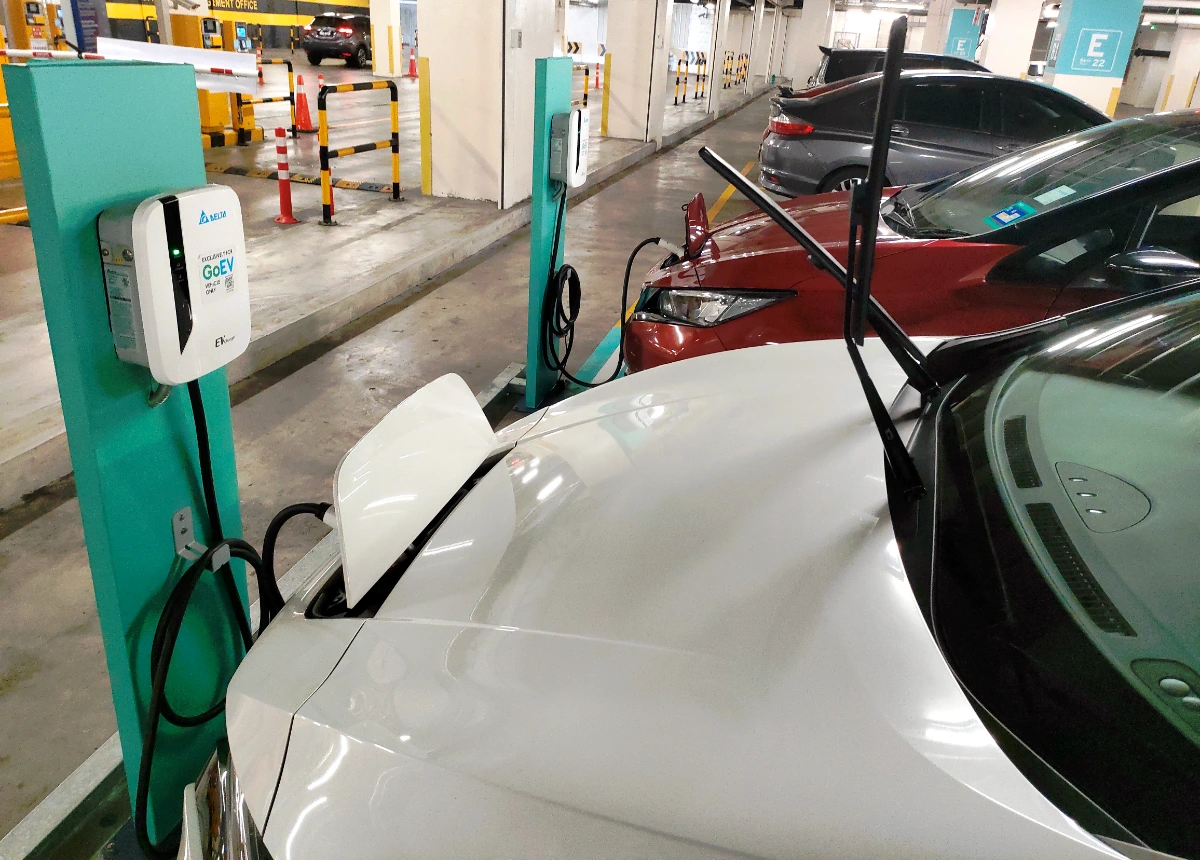
The government is stepping up efforts to expand electric vehicle (EV) charging infrastructure nationwide by reviewing existing policies and incentives, the Dewan Rakyat was told today.
PETALING JAYA: The government is stepping up efforts to expand electric vehicle (EV) charging infrastructure nationwide by reviewing existing policies and incentives, the Dewan Rakyat was told today.
Deputy Investment, Trade and Industry Minister Sim Tze Tzin said the government was working with Tenaga Nasional Bhd (TNB) to expand power substations.
He added that as EVs remain an emerging technology and market segment, policies and incentives are being continuously reviewed while efforts to increase the number of charging stations are intensified.
“If there are no substations, no party can build charging facilities as the power supply is insufficient. Hence, this effort requires incentives, appropriate policies and the development of the entire ecosystem.
“It takes time, but the government has taken note of the suggestions put forth and will work to improve implementation.
“We are collaborating with stakeholders, particularly TNB, to develop the necessary substations. Charging stations require adequate direct current power, so more substations must be built to support them,” he said.
Sim added that the government was also developing targeted incentives for charging point operators to encourage further investment in charging infrastructure.
He was replying to a supplementary question from Datuk Ku Abd Rahman Ku Ismail (PN-Kubang Pasu) regarding the government’s proactive measures to address the lack of EV charging facilities nationwide in line with the target of achieving net-zero greenhouse gas emissions by 2050.
Sim also said the government welcomed the suggestions and would continue strengthening its efforts, acknowledging that expanding the charging network nationwide would take time.
Meanwhile, on EV regulations, Sim said the government adopted a different policy framework for EVs and internal combustion engine (ICE) vehicles because the two sectors were at different stages of development.
“While imports of completely built-up (CBU) ICE vehicles have long been restricted to models with engine capacities of 1,800cc and above, EV policies are designed to strike a balance between encouraging adoption and supporting the growth of local assembly, supply chains and the wider EV ecosystem,” he said.
Sim also highlighted that EVs are subject to a much lower excise duty of 10% compared with ICE vehicles, whose tax rates vary depending on engine capacity and localisation requirements.
He said this made the accurate declaration of an EV’s import value more critical, prompting the government to introduce a minimum Cost, Insurance and Freight (CIF) value to curb the under-declaration of imported CBU EVs and safeguard government tax revenue.
“Hence, setting a minimum CIF value is one of the policy mechanisms to reduce the scope for under-declaration and ensure that government revenue collection continues to be maintained,” he said.



