



More relying on strained public healthcare services, abandoning insurance
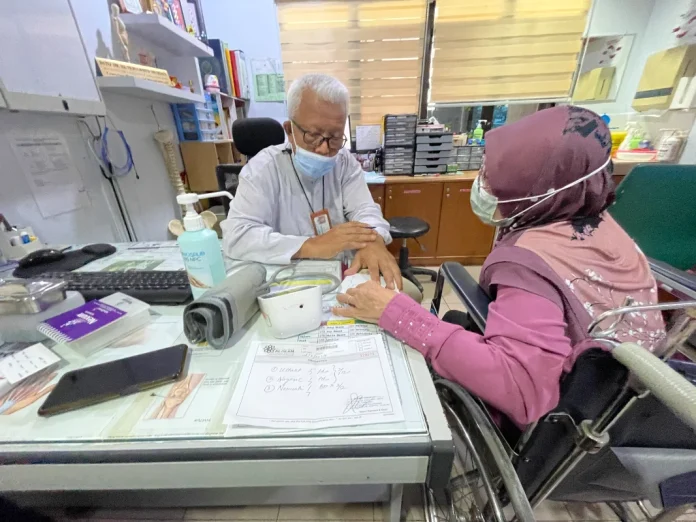
PETALING JAYA: The Consumers’ Association of Penang (CAP) said escalating private hospital charges are forcing more Malaysians, particularly ordinary wage earners, to rely heavily on public healthcare services, which are already operating at maximum capacity.
Its president Mohideen Abdul Kader said many families struggling with the rising cost of living now view private medical treatment as increasingly unaffordable.
“When private hospital charges increase, more people turn to public health facilities under the Health Ministry. These facilities are stretched to the limit.”
He added that Malaysia continues to battle a significant burden from non-communicable diseases (NCDs), including cardiovascular disease, hypertension and diabetes.
He also pointed out that NCDs, which are considered preventable conditions, account for about 67% of deaths and disabilities nationwide.
“In 2021 alone, the government spent RM12.4 billion on direct public healthcare costs for NCD treatment.
“If Malaysians could reduce the number of NCD cases, hospitals and clinics would become more manageable, and the financial burden of treatment would be reduced.”
He said the rising cost of private care is also forcing more Malaysians to abandon medical insurance, a trend he described as a “ticking time bomb”.
“Many people have given up their health insurance or are contemplating doing so after having paid for decades.”
While health insurance is generally affordable when an individual is young and earning, premiums rise with age as income declines and age-related illnesses occur.
“Older age groups are most likely to be affected by steep premium increases, forcing them to drop their insurance and making private healthcare unaffordable.”
Mohideen added that this would result in overwhelming patient loads at public hospitals, burnout among healthcare workers and surging government expenditure.
He suggested some private hospital fees should be regulated or capped and proposed the creation of competitively-priced private wards within public hospitals.
“As part of the public healthcare system, the charges could be lower than those in private hospitals for individuals who could afford enhanced facilities.”
He also said consumers remain largely unaware of hospital pricing practices, including charges for room, equipment, consumables, tests and medication not covered under Act 586, are fuelling insurance premium hikes.
He welcomed initiatives such as the Rahmah Insurance and Rahmah Takaful schemes for lower-income groups and gig workers, but said the need for deeper structural reforms, such as adopting public-private partnership models such as Universiti Malaya Medical Centre’s dual system.
Meanwhile, Federation of Private Medical Practitioners’ Associations Malaysia president Dr Shanmuganathan Ganesan said fee structures differ for insured and self-paying patients.
“For insured patients, fees are based on schedules. Usually, hospitals charge out-of-pocket patients lower, so it may seem like they charge insured patients higher. As insured benefits are generous, patients receive optimum care.”
“Curbing costs may translate to inferior care. One must be careful not to get sued because of cost containment practices,” he said, adding that aggressive cost-cutting could compromise treatment quality.
He also said rising private healthcare costs are driven by factors including staff shortages, expensive medical technology, increasing drug prices, stricter regulations and compliance requirements, the need for hospitals to remain profitable and an ageing population with complex diseases.
He agreed that escalating insurance premiums, if unchecked, would make health coverage unaffordable, putting long-term strain on public hospitals.
Shanmuganathan said consumers have a role to play in keeping premiums affordable.
“Honesty in insurance applications, proper declaration of pre-existing conditions and avoiding fraudulent claims are critical. All these contribute to eventual premium increases.”
He also advised patients to consult general practitioners first instead of directly seeking specialist care, which could drive up costs unnecessarily.



