



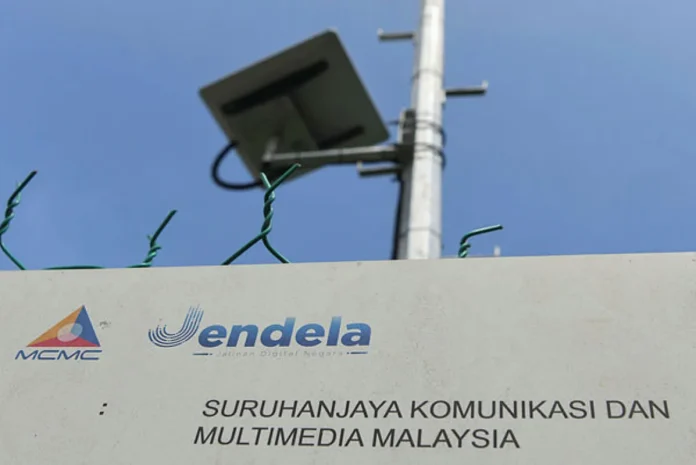
Malaysia’s JENDELA phase 1 is 99.1% complete, adding 1,646 towers and boosting internet coverage to 99.71% in populated areas, surpassing speed targets.
PUTRAJAYA: The first phase of Malaysia’s National Digital Network (JENDELA) plan is 99.1% complete nationwide.
The Malaysian Communications and Multimedia Commission (MCMC) stated that 1,646 new communication towers were built as of December 31 last year, nearing the 1,661-tower target.
Full completion of the tower construction is expected in the first quarter of this year.
Premises passed by network coverage increased from 4.96 million before JENDELA to 9.81 million by the end of December, exceeding the nine million target.
Median mobile broadband download speeds rose to 143.70 Mbps, surpassing the set goal.
Internet coverage in populated areas increased from 91.8% to 99.71% by the end of December 2025.
These achievements were supported by mobile network operators’ expansion initiatives, including new 4G infrastructure and site upgrades.
Since August 2025, each operator has submitted network improvement plans monitored by MCMC.
The commission continues to strengthen connectivity through targeted improvements in seven focus areas.
These areas include public higher education institutions, tourist spots, stadiums, event venues, military camps, hospitals and highways.
Over 34,000 Wi-Fi access points have been installed across 126 public universities, polytechnics and community colleges.
An additional 73,768 access points are planned to ensure comprehensive coverage at these institutions.
Fibre optic facilities are being provided at 73 military camps, delivering FTTH access to 59,240 Armed Forces Family Housing units.
Network coverage has also been expanded at 18 IPTA campuses and 17 event venues.
These venues include Sepang Circuit, SPICE Arena Penang, Sabah International Convention Centre and Borneo Convention Centre Kuching.
MCMC said the phased implementation enabled efficient internet expansion, including in sparsely populated areas.
The commission will continue monitoring to ensure sustainable improvements in coverage and service quality.
This aligns with JENDELA Phase 2 objectives to extend access to low-density areas and major transport corridors.



