




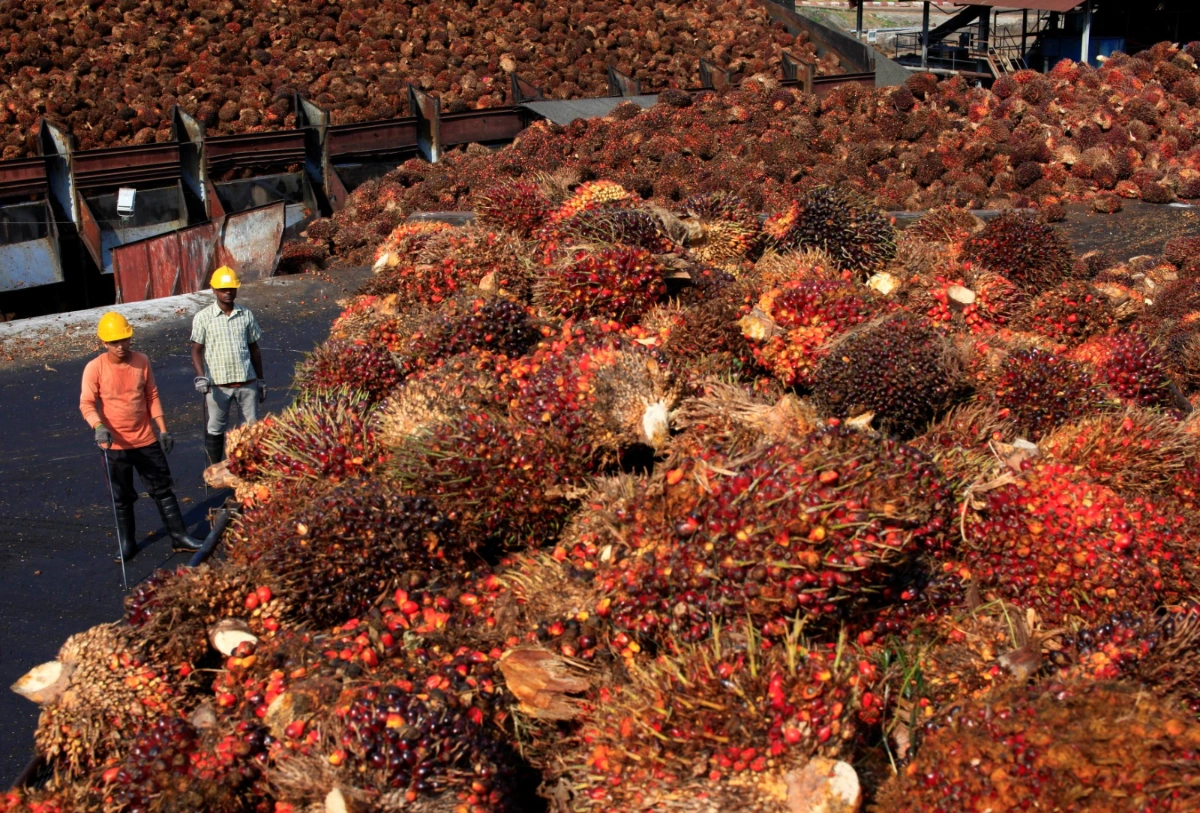
Palm oil sector still relies on foreign workers despite workforce growth; government pushes automation and local skills.
PETALING JAYA: Malaysia’s oil palm industry continues to face manpower shortages despite a steady increase in foreign workers, with the government moving to accelerate automation and local skills development to reduce reliance on manual labour.
The Plantation and Commodities Ministry (KPK) said more than 70% of the sector’s workforce currently comprises foreign workers, particularly for fresh fruit bunch (FFB) harvesting and collection activities, which are considered “3D” jobs — dirty, dangerous and difficult.
“The industry still depends on foreign labour, especially for harvesting and FFB collection activities, which are less attractive to local workers,” the ministry said in a written reply to the Dewan Negara.
It said labour shortages became more pronounced during the Covid-19 pandemic following restrictions on foreign worker entry, affecting harvesting activities and subsequently the country’s palm oil production.
However, the number of foreign workers holding Temporary Employment Visit Passes (PLKS) in the plantation sector has since increased from 173,696 in 2022 to 244,151 in 2023, 260,192 in 2024 and 267,750 in 2025.
“As of April 30 this year, the figure stood at 268,691 workers.
“Nevertheless, the industry’s labour requirements have yet to be fully met as some foreign workers have completed their contracts and returned to their home countries, while others have absconded from their employers,” it said.
The ministry added that the shortage had particularly affected harvesting and FFB collection activities, which are closely linked to national palm oil output.
To address the issue, KPK said it had submitted applications to open foreign worker employment quotas for 2026 to the Human Resources Ministry and the Home Ministry.
The ministry is also strengthening local workforce development through the Malaysian Institute of Plantation and Commodities (IMPAC) by offering agriculture-based Technical and Vocational Education and Training (TVET) programmes, including the Plantation Operations and Mechanisation Course (KOML), Harvesting Specialist (HS) and Machine Specialist (MS), using a place-and-train approach to develop highly skilled local workers.
KPK also said it was accelerating the adoption of mechanisation, automation and digital technologies through the Palm Oil Mechanisation and Automation Research Consortium (MARCOP) to boost productivity and reduce reliance on manual labour.
“We will continue strengthening responsible labour practices through awareness programmes for industry players and wider compliance with the Malaysian Sustainable Palm Oil (MSPO) 2.0 standard, while enhancing productivity through technology adoption and strategic workforce management.
“These efforts are expected to gradually reduce dependence on foreign workers without affecting the productivity and competitiveness of Malaysia’s palm oil industry,” it said.



