



In urban areas, one salary often not enough: Group
PETALING JAYA: E-hailing work has increasingly become a side hustle of necessity rather than choice for many in the Klang Valley.
This is due to rising living costs outpacing income growth, forcing individuals to take on multiple jobs to make ends meet.
Malaysia E-Hailing and Delivery Organisation chairman Masrizal Mahidin (also known as Jose Rizal) said feedback from drivers shows that e-hailing work is now commonly used to supplement income from primary employment.
“Based on our engagement, it’s 50-50. Certain drivers rely on e-hailing as a main source of income, but many others are working full time in other jobs and doing e-hailing on the side because their main income is no longer enough,” Masrizal told theSun via phone call.
He added that drivers come from a wide range of professions, including engineers, chefs, photographers and journalists, reflecting the growing reliance on side gigs across different income groups.
“Many of them already have jobs or businesses, but they still need an additional income. This is especially (true) in urban areas such as the Klang Valley, where one salary alone is often not enough.”
He also said it is important to distinguish between different types of gig work, as the financial commitment and accessibility vary significantly.
“In e-hailing, there are two categories. One is passenger ride and the other is parcel or food hailing.
“For passenger ride, it is quite different and the upfront cost to enter or to get into the passenger ride field is quite high.
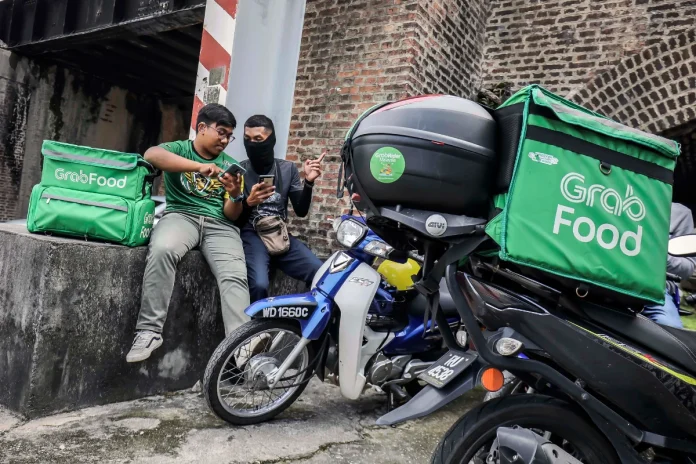
“For food and parcel hailing, the entry is a lot easier. They only need a B2 licence, and if they have a vehicle, they could do it. That’s why many (individuals) do freelance or part-time work in food and parcel hailing.”
Masrizal said for passenger e-hailing drivers, upfront costs are substantial and could limit flexibility.
“They need a Public Service Vehicle operator licence, vehicle permits, inspections and specific insurance.
“The annual permit costs about RM110 but e-hailing insurance could reach almost 200% of a normal vehicle premium. If your usual premium is RM1,000, e-hailing insurance could be RM1,500 or even RM2,000.
“Most of the costs are borne by the drivers themselves. Some e-hailing platforms subsidise permits, such as Grab. But overall, the driver is the one paying.”
He said net earnings are significantly lower once costs are taken into account.
“If a driver works about 10 hours a day in the Klang Valley, gross income could average about RM300 a day.
“In terms of costs, subtract petrol, maintenances and so on. The total cost is estimated at about 50%. Now, their average net income is only RM150 a day.
“At the beginning, RM300 a day sounds good. But after six months or a year, when a vehicle starts wearing down, when insurance renewals come in, that’s when the pressure hits.”
He added that the situation has blurred the line between flexible gig work and stable employment, particularly for passenger e-hailing drivers who have already invested thousands of ringgit upfront.
“Gig work is supposed to be (about) flexibility. When we feel like doing it, we do it. But for e-hailing drivers, it does not always feel that way.
“Why? Because in a year, they (have) invested the upfront cost as mentioned earlier, estimated between RM2,000 to RM3,000.
“It’s like they are tied to the gig despite juggling main jobs. Whether they like it or not, they have to do the work. So, the nature is different.”
Masrizal said the growing reliance on side hustles reflects broader economic pressures rather than personal preference.
“Gig work is no longer just a temporary option. For many urban workers, they would look for part-time (jobs) after working hours.
“If you are in a low or middle-income job, one salaried position is often not enough. That’s why people turn to e-hailing and other gig work. Not because they want to, but because they have to.”



