



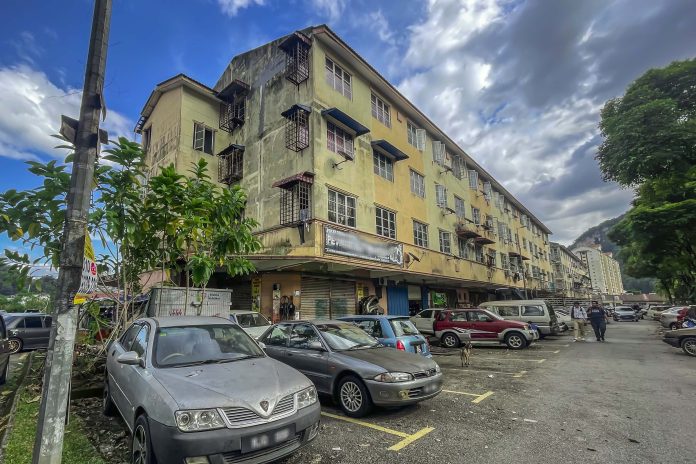
A property expert details the essential protections, including right to return and fair compensation, needed for a genuine ‘win-win’ housing redevelopment model in Selangor
PETALING JAYA: Any redevelopment of ageing housing in Selangor must guarantee residents the right to return, fair compensation and long-term security of tenure if it is to be genuinely “win-win”, said Universiti Teknologi Malaysia associate professor of property economics Dr Muhammad Najib Razali.
He said a true win-win redevelopment model must protect residents under existing land and planning laws, while ensuring they benefit meaningfully from redevelopment rather than being displaced.
He was responding to remarks by Selangor Menteri Besar Datuk Seri Amirudin Shari, who said the state may consider, possibly next year or in the next term, an initiative to redevelop ageing apartments built since the 1970s using a “win-win” formula for residents and the wider community.
“For residents, a win-win outcome typically includes the right to return to the redeveloped site, replacement homes of equal or higher value, improved safety and amenities and long-term security of tenure.
“For developers and the state, the benefits come in the form of better land utilisation and urban renewal.”
On safeguards for redeveloping housing built in the 1970s, he said protections must be firmly grounded in both federal legislation and state-level implementation.
“Federal laws such as the Housing Development (Control and Licensing) Act 1966, Strata Titles Act 1985 and the Strata Management Act 2013 establish ownership and transaction rights, while state governments and local authorities control planning approvals and redevelopment conditions.
“Key safeguards include transparent consultation and consent processes, legally binding rehousing or compensation agreements, independent market-based property valuations, temporary relocation assistance and accessible dispute resolution mechanisms,” he said.
Without such protections, Muhammad Najib said residents, particularly the elderly and lower-income households, risk being unfairly displaced or inadequately compensated.
He added that urban redevelopment could also offer an opportunity to address flood risks and infrastructure weaknesses in flood-prone Selangor, but only if these considerations are deliberately integrated into broader planning frameworks.
“While state and local authorities can impose conditions related to drainage, building design and infrastructure upgrades, flood mitigation often involves federal agencies and long-term capital funding.
“Without this alignment, redevelopment may improve housing quality but fall short of addressing systemic flood risks,” he added.
Muhammad Najib said housing areas typically prioritised for redevelopment are those that are structurally unsafe, severely deteriorated, poorly maintained or no longer compliant with modern safety standards, particularly developments more than 40 years old.
Areas located on strategically valuable land, such as near transport corridors or urban centres, are also more likely to be targeted, he added.
However, he stressed that fairness is not determined by location alone.
“Fairness is determined by the adequacy of compensation or rehousing arrangements, the level of resident consent, economic feasibility and the presence of enforceable legal protections that safeguard residents’ rights throughout the redevelopment process,” he said.
He cautioned that if a win-win approach is not clearly defined or properly implemented, risks to residents increase, especially in high-value states such as Selangor.
“At the state level, residents may face displacement without adequate compensation or the loss of the right to return if redevelopment is driven mainly by commercial considerations. Weak or inconsistently enforced planning conditions could result in unclear or unenforceable rehousing commitments.
“From a federal perspective, gaps could arise when national housing and strata laws are not effectively translated into state-level execution, potentially resulting in delayed rehousing, unfair compensation or gentrification.
“These risks highlight the need for clear guidelines, transparent decision-making and enforceable legal protections to ensure redevelopment delivers equitable and sustainable outcomes for residents.”
Last month, Amirudin said the redevelopment of ageing housing in Selangor could be implemented in 2027 or 2028, stressing that such initiatives are necessary to keep Selangor liveable and in step with rapid urban growth as more local authorities are upgraded from municipalities to city councils.



