



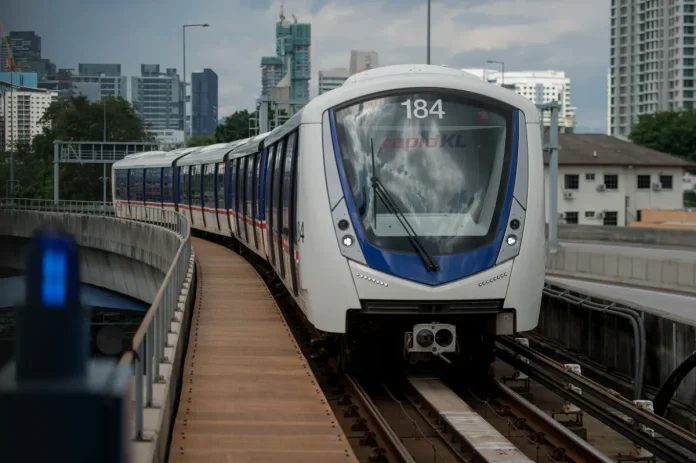
Technical problems during system testing delay the Shah Alam LRT line opening until mid-2026 at least
PETALING JAYA: Commuters hoping for relief from congested routes between Klang and Kuala Lumpur will face further disappointment, as the Shah Alam LRT line—previously known as LRT3—is now unlikely to begin operations before the second quarter of 2026.
According to The Star, sources within the industry indicate that complications during the final phase of development have pushed back the timeline. The most challenging aspect involves comprehensive system testing and commissioning procedures that must be completed before passenger services can commence.
The rail line is currently working through compulsory “fault-free run” protocols mandated by the Land Public Transport Act 2010. The report pointed out that This critical phase demands that all 22 trainsets, together with trackside infrastructure and support systems, demonstrate seamless integration and consistent reliability expected from an advanced driverless transit system operating at Grade of Automation 4 (GoA 4) standards.
The testing framework requires rolling stock, signalling networks, communication platforms, and electrical systems to function flawlessly as an integrated unit—not merely as independent components—before the Land Public Transport Agency (Apad) can issue safety certification.
Industry insiders reveal that the trainsets have encountered difficulties reaching and maintaining the designated operational speeds of 80-90 kilometers per hour, an issue that carries significant implications beyond mere technical concerns.
According to sources, if the trains cannot consistently achieve these velocity targets, the intended six-minute service intervals become impossible to maintain. This directly affects the system’s capacity to handle passenger volumes and service frequency, falling below the standards outlined in the Railway Scheme made available for public review.
Additional complications involve incomplete procedural documentation. Critical standard operating procedures (SOPs) have reportedly not been finalized or formally approved, creating further obstacles to progress.
Without fully endorsed SOPs and comprehensive documentation, testing cannot advance in the systematic, traceable fashion required by modern railway standards. Safety protocols, audit documentation, and regulatory compliance represent non-negotiable elements of any contemporary rail infrastructure.
Sources indicate that extensive testing of the train fleet has been paused for the remainder of this month, effectively eliminating any possibility of commercial launch this year.
“This situation raises substantial questions about whether a few extra months in 2026 will provide adequate time to meet international standards for railway testing and commissioning,” one source noted.
Back on August 4, The Star reported that the Shah Alam LRT would miss its initially scheduled September 30 debut. This followed Prasarana Malaysia Bhd’s Facebook announcement stating that trainsets required continuous evaluation through October 30.
By November 17, Transport Minister Anthony Loke informed the Dewan Rakyat that the launch date had been adjusted to December 31, contingent upon “ongoing test outcomes.”
Railway professionals widely acknowledge that testing and commissioning represents the most technically intricate stage of any transit project.
This phase demands validation of numerous subsystems—including train control mechanisms, signalling infrastructure, communications networks, power distribution, platform systems, and safety protocols—as a unified operational entity.
Prasarana owns the Shah Alam LRT, with operations managed by its subsidiary Rapid Rail Sdn Bhd. Setia Utama LRT3 Sdn Bhd (SULRT3)—a subsidiary of Malaysian Resources Corporation Bhd (MRCB)—functions as the principal contractor, having assumed responsibility from the previous project delivery partner, MRCB George Kent Sdn Bhd.
The line extends from Bandar Utama in Petaling Jaya to Johan Setia in Klang, connecting heavily populated residential neighborhoods to key business districts throughout the Greater Klang Valley.
The Shah Alam line was anticipated to offer an essential backup to KTM Komuter services, which have experienced recurring interruptions due to Phase II of the Klang Valley Double Track Rehabilitation project.



