



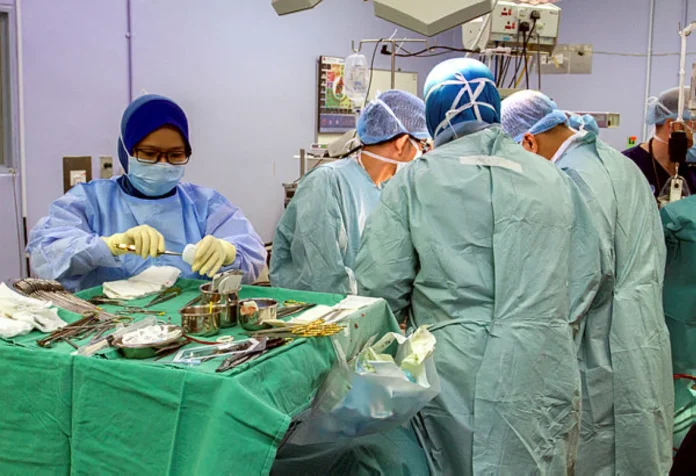
Only 50 out of more than 800 potential organ donors in Malaysia last year successfully converted, representing achievement rate of less than 7%
PETALING JAYA: Only 50 of more than 800 potential organ donors identified in Malaysia last year were successfully converted, an achievement rate of less than 7%.
This highlights an urgent need for stronger laws as the government moves to make organ transplantation a national agenda in 2026.
Malaysian Society of Transplantation president and Kuala Lumpur Hospital transplant nephrologist Dr Mohamad Zaimi Abdul Wahab said gaps in the Human Tissue Act 1974 complicate life-and-death decisions, particularly over who can give consent and whether a donor’s pledge must be honoured.
“We don’t clearly define who is considered the next-of-kin, and there’s nothing in the Act to say that you must honour the pledge (made by the deceased).
“In some countries, they call it ‘soft opt-out’ (presumed consent). Soft opt-out means if we know that the deceased is a (pledged donor), other people (including family members) cannot override or withdraw the consent.
“To me, if a person has pledged and never reversed that decision during his lifetime, that pledge should be respected. The problem is that we currently do not have an Act to enforce it,” Mohamad Zaimi told theSun.
He said a more empowered National Transplant Resource Centre (NTRC) should lead reforms on consent, coordination and accountability across hospitals.
“Before this, NTRC’s main aim was just to promote organ donation, create awareness and coordinate organ procurement.
“But now, we want them to be more than that. Everything related to transplants – law, funding and manpower shortage – NTRC should be responsible for sorting it out.”
He said despite previous ministry efforts to focus on donor identification at selected hospitals, the system remains uneven.
“Out of the 16 hospitals identified, at least three or four are performing well. Malacca is very good, Seremban is very good and so is Selayang.
“But what happened to the other 13 hospitals? There is no single body looking at all the hospitals and asking why donors are not being identified.”
He said while donor identification is improving, follow-through remains low.
“This year at Kuala Lumpur Hospital, living and deceased donations are almost 50–50 for the first time ever. Previously, about 70% of our transplant organs came from living donors, with only about 20% from deceased donors.”
Mohamad Zaimi expressed hope that stronger coordination would translate into more transplants nationwide.
Health Minister Datuk Seri Dr Dzulkefly Ahmad had said on Dec 29 that organ transplantation would be reframed as a national agenda in 2026.
The key initiative is to restructure and elevate NTRC’s role as a national command centre under the Medical Development Division of the Health Ministry.
Dzulkefly added that the revision of the National Organ, Tissue and Cell Transplantation Policy 2007 is in its final stages, while a review of the Human Tissue Act 1974 is underway.
He said although more than 400,000 Malaysians have registered as organ donors, over 10,000 patients remain on waiting lists, adding that MySejahtera recorded more than 16,000 new donor registrations as of July 2025.



