



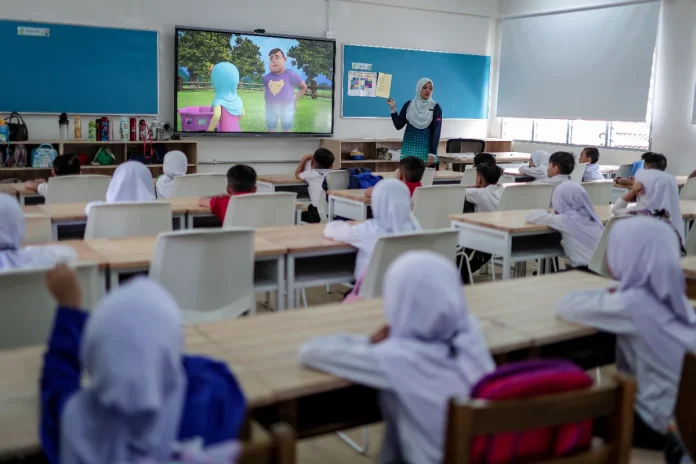
PETALING JAYA: Teachers have expressed concerns that introducing formal schooling at six would require a comprehensive review of schools’ readiness, teacher capacity and the existing curriculum.
A teacher in Sarawak, who wished to be known only as Nor, said success would largely depend on the Education Ministry’s ability to ensure adequate number of teachers as well as teaching assistants in schools.
“Managing pupils aged five to six is very different from handling seven-year-olds, who would have gone through at least one year of preschool transition.”
Nor said younger pupils require closer supervision, particularly in terms of emotional management, discipline and safety, making the presence of teaching assistants in every classroom crucial to ensure effective learning.
She said the current syllabus would need to be reviewed and reduced.
“The focus should be more on self-management, character and values development, mental readiness and motor skills before children are prepared for formal education.”
Nor said the approach would help reduce pressure on pupils and enable teachers to conduct teaching and learning in a more structured and gradual manner.
A teacher in Johor, who only wished to be identified as Adek, said school facilities were another major concern, particularly in accommodating a larger student intake from next year.
“Our school has more than 1,500 students operating on a double-session system, with Year One classes currently having between 35 and 40 pupils per class across six classes,” he said, adding that the move could result in schools becoming a “dumping ground” for working parents facing economic pressures.
“Currently, even in urban schools, not all Year One pupils are ready to cope with the existing syllabus. Some are weak and require extra guidance. While it is said to depend on parents, I expect many will choose to send their children to school at six starting 2027.
“I’m expecting a tougher year for teachers to manage Year One classes. Even seven-year-olds are already challenging enough to keep disciplined in class.”
Separately, history teacher Afiq Asri, 26, from Negeri Sembilan, said the introduction of the Year Four examination carries positive intentions, but warned against an exam-oriented approach at the primary school level.
“It can help teachers to identify the pupils’ learning gaps sooner and this can be attended to at once. But there must be careful implementation because schools can become too focused on examinations. Primary school pupils need a more flexible and enjoyable learning environment.”
On early assessment, Afiq said the move is logical as it allows students time to improve before transitioning to secondary school.
“Students still have a two-year window to improve their performance before entering Form One, which enables teachers to plan a more targeted support.”
That said, Afiq warned that pressures could arise if assessment results were given too much weight, adding that there should be balance in the teaching and learning process.
As for school readiness, he said preparations for the examination, scheduled for October, would be implemented gradually and should not pose major difficulties.



