




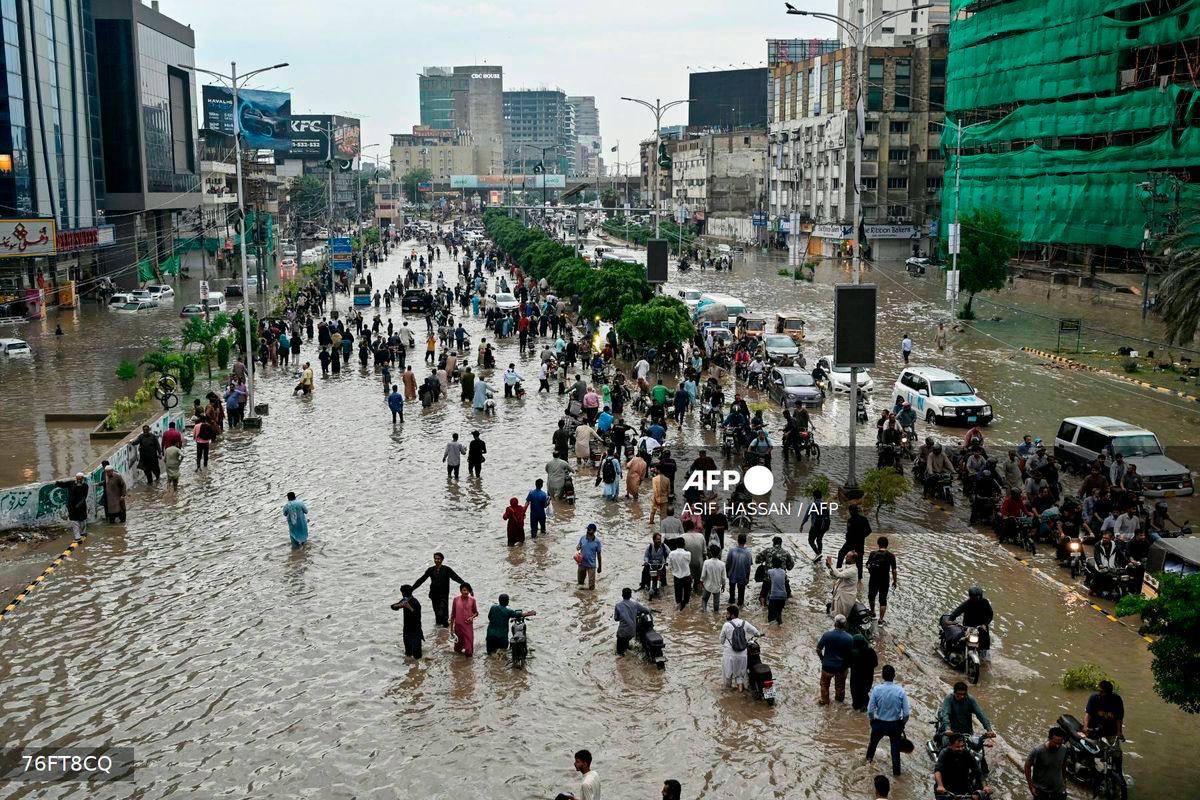
NEW DELHI: South Asia’s annual monsoon rains are becoming increasingly erratic and deadly due to climate change, threatening the billion people who depend on them.
Farming, water supplies, and hydropower across the region rely on these seasonal rains, which now feature longer dry spells broken by extreme downpours.
The monsoon is a seasonal reversal of winds driven by differences in land and sea heating observed in several parts of the world.
In South Asia, the Southwest Monsoon brings rains starting in southern India in late May and sweeping north until September.
The Northeast Monsoon then begins in October as winds blow seaward and pick up moisture over the Bay of Bengal.
India’s government warns that climate change is causing “more frequent” long dry stretches and “more intense” wet spells.
Extreme daily rainfall events increased by about 75% between 1950 and 2015 according to the India Meteorological Department.
Nearly half the season’s rain now falls within just 20 to 30 hours according to a government briefing note.
Pakistan’s monsoon arrived earlier than usual this year with excessive rain in the last week of June.
The country received 50% more rain than last year by mid-August according to disaster authorities.
Climate scientist Agus Santoso expects “more intense and perhaps prolonged monsoons” due to warmer conditions.
Warmer seas evaporate more moisture and a warmer atmosphere holds more moisture leading to heavier rainfall.
El Nino and La Nina patterns are also more variable likely due to climate change complicating predictions.
Climate scientist Shakil Romshoo noted the difficulty in discerning patterns due to a sparse observation network.
The monsoon’s annual toll has risen over the last decade with heavy rains devastating India’s Punjab region this year.
Erratic rains impact soil health and irrigation timing threatening food supply and livelihoods.
Pakistan’s monsoon has killed over 1,000 people this year nearly triple last year’s figure.
Standing water carries disease and flood damage threatens livelihoods and education across the region.
Accelerated glacier melt and deforestation weaken slopes and raise landslide risks.
Rapid unplanned development and poorly sited infrastructure destabilise slopes and block natural drainage. – AFP



