




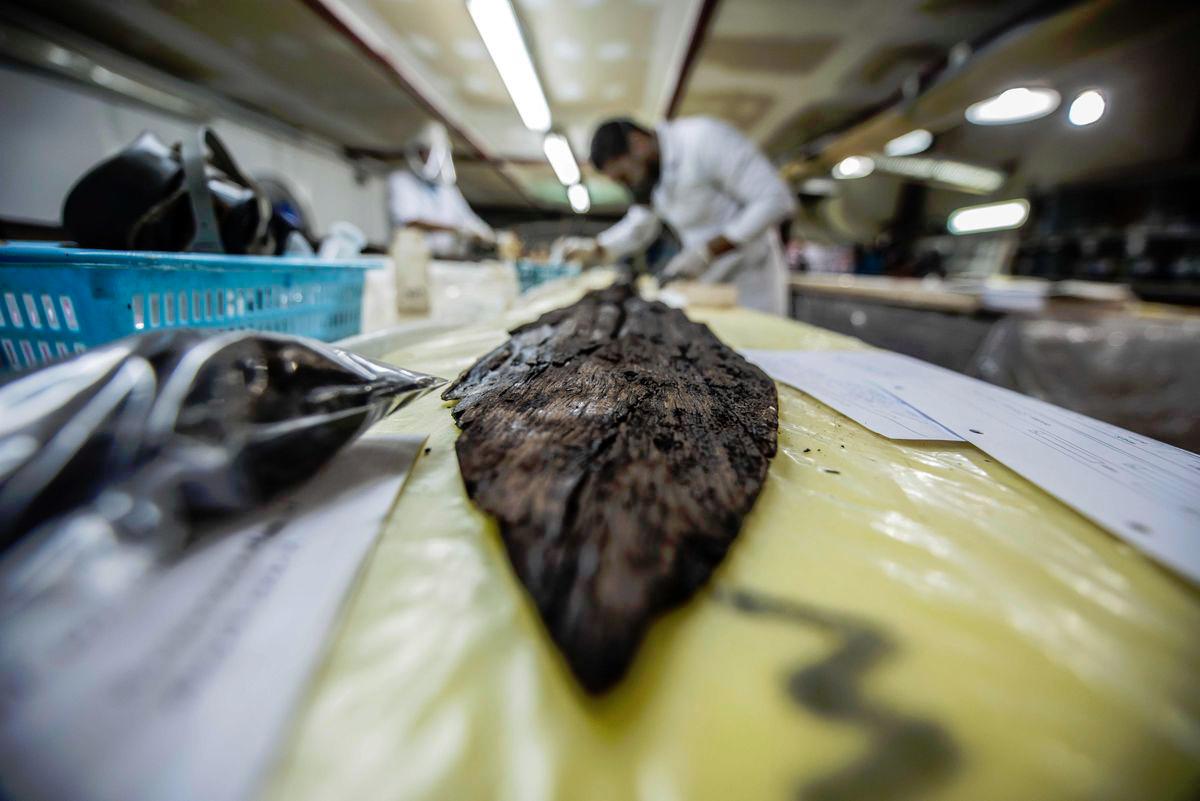
GIZA PLATEAU: For over a decade, a team of Egyptian conservators has worked meticulously to restore thousands of artefacts belonging to King Tutankhamun, preparing them for display at the Grand Egyptian Museum (GEM).
The $1 billion museum, set to open later this year, will be the world’s largest archaeological museum dedicated to a single civilisation.
Among the conservators is Eid Mertah, 36, who once dreamed of holding King Tut’s golden mask as a child. Now, he carefully brushes dust off gilded shrines he once only saw in textbooks. “I studied archaeology because of Tut,“ Mertah said. “It was my dream to work on his treasures—and that dream came true.”
The museum will house over 100,000 artefacts, with more than half on public display. A unique feature will be a live conservation lab where visitors can watch experts restore a 4,500-year-old boat intended for Pharaoh Khufu’s afterlife journey.
King Tut’s collection, including his golden mask, gilded coffins, and ceremonial chariots, remains the highlight. Many items have not been restored since their discovery by Howard Carter in 1922. Early conservation methods, such as wax coatings, preserved the artefacts but obscured details over time.
Conservator Hind Bayoumi, 39, spent months removing wax applied by British chemist Alfred Lucas. “It preserved the objects at the time,“ she said, “but it then hid the very details we want the world to see.”
The restoration is a joint effort between Egypt and Japan, which provided $800 million in loans and technical support. Egyptian conservators, trained by Japanese experts, work across 19 specialised labs.
One of the most challenging tasks was reassembling Tut’s gilded coffin. Conservator Fatma Magdy, 34, described it as “solving a giant puzzle,“ using magnifying lenses and archival photos to align delicate gold sheets.
Before restoration, artefacts were retrieved from multiple sites, including the Egyptian Museum in Tahrir Square and Luxor Museum. Teams conducted X-ray analysis and material testing to assess each item’s condition. Fragile pieces were stabilised with Japanese tissue paper and reversible adhesives.
Mohamed Moustafa, 36, a senior restorer, emphasised restraint in conservation. “The goal is always to do the least amount necessary—and to respect the object’s history,“ he said.
For the conservators, the process has been deeply personal. “When visitors walk through the museum, they’ll see the beauty of these artefacts,“ Moustafa said. “But for us, every piece is a reminder of the endless working hours, the debates, the training. Every piece tells a story.” – AFP



