



US President Trump held a Venezuela strategy meeting as his counterpart Maduro denounced external pressure, amid rising tensions and military deployments.
WASHINGTON: US President Donald Trump convened his top national security officials on Monday to discuss Venezuela.
The meeting occurred as his Venezuelan counterpart, Nicolas Maduro, rejected what he termed a “slave’s peace” amid fears of potential US military action.
White House Press Secretary Karoline Leavitt confirmed the Oval Office meeting but declined to detail its specifics.
She did not rule out the possibility of deploying US troops to Venezuela, stating “there’s options at the president’s disposal.”
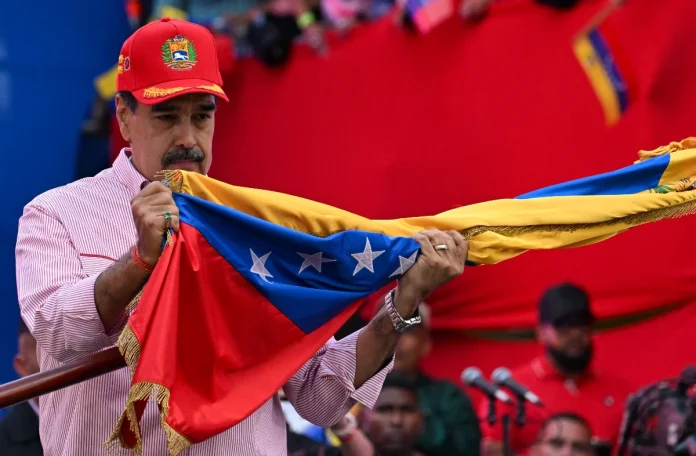
Maduro addressed thousands of supporters at a rally in Caracas, accusing Washington of seeking to overthrow him.
“We want peace, but peace with sovereignty, equality, freedom!” Maduro declared from the stage.
He insisted Venezuela does not want a “slave’s peace, nor the peace of colonies.”
The US has deployed a major naval force, including the world’s largest aircraft carrier, to the Caribbean region.
Washington designates an alleged drug cartel run by Maduro, called the “Cartel of the Suns,” as a terrorist group and offers a USD 50 million reward for his capture.
The US says the military deployment aims to curb drug trafficking, while Caracas insists the goal is regime change.
Trump confirmed on Sunday he recently spoke with Maduro for the first time since returning to office.
“I wouldn’t say it went well or badly. It was a phone call,” Trump told reporters.
Media reports suggest the call discussed a potential meeting and conditions for Maduro to step down.
Republican Senator Markwayne Mullin said the US offered Maduro a chance to leave for Russia or another country.
The Trump administration faces controversy over air strikes targeting alleged drug-trafficking boats.
These strikes in the Caribbean and eastern Pacific have killed at least 83 people.
Trump said he would “look into” claims of a “double-tap” strike that killed survivors on a burning boat in September.
The White House defended the follow-up strike, stating Admiral Frank Bradley acted lawfully within his authority.
Leavitt said the admiral acted “to ensure the boat was destroyed and the threat to the United States of America was eliminated.”



