




WASHINGTON: US President Donald Trump inked plans Thursday for sweeping “reciprocal tariffs“ that could hit both allies and competitors, in a dramatic escalation of an international trade war that economists warn could fuel inflation at home.
Since taking office, Trump has announced a broad range of tariffs targeting some of America’s biggest trading partners, arguing that they would help tackle unfair practices — and in some cases using the threats to influence policy.
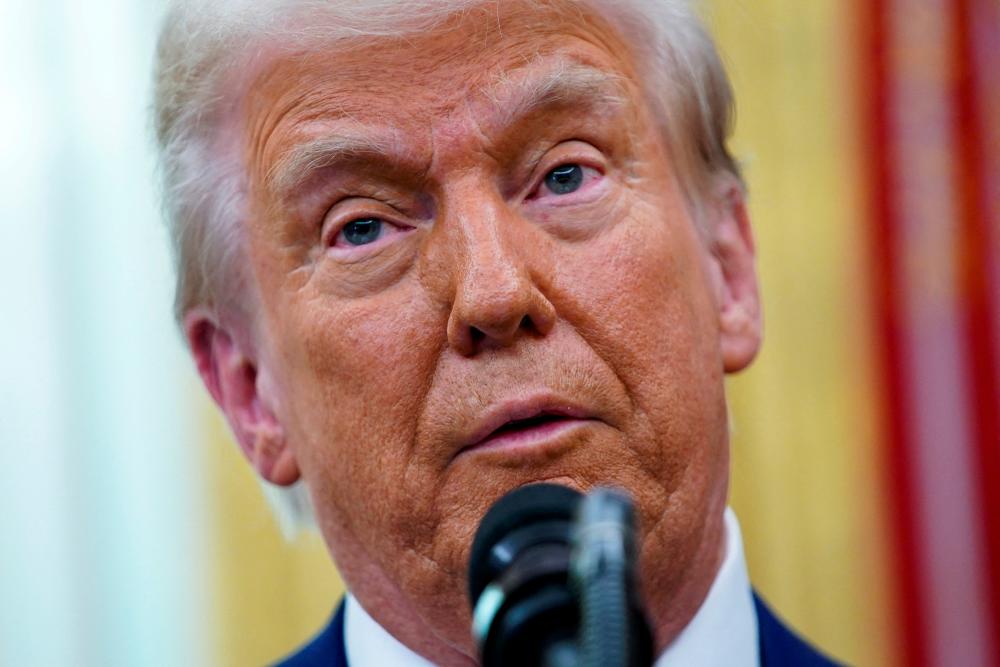
Speaking in the Oval Office, Trump said Thursday he had decided to impose reciprocal duties, telling reporters that US allies were often “worse than our enemies” on trade.
“Whatever countries charge the United States of America, we will charge them,“ Trump added.
In particular, he called the European Union “absolutely brutal” in trade ties with Washington.
The levies would be tailored to each US trading partner and consider the tariffs they impose on American goods, alongside taxes seen as “discriminatory,“ such as value-added taxes (VATs), a White House official said on condition of anonymity.
With the memo Trump signed Thursday, officials including the US trade representative and commerce secretary will propose remedies on a country-by-country basis.
Trump’s commerce secretary nominee Howard Lutnick said Thursday that studies should be completed by April 1, and the president could start tariffs as early as April 2.
Washington will begin by examining economies with which the United States has its biggest deficits or “most egregious issues,“ the White House official added.
“This should be a matter of weeks, in a few months,“ the official said.
– Inflation fears –
Ahead of Trump’s Oval Office comments, Trump trade advisor Peter Navarro told reporters: “Major exporting nations of the world attack our markets with punishing tariffs and even more punishing non-tariff barriers.”
Besides the EU, the White House also flagged differences in certain US tariff levels with India and Brazil, while noting Japan’s “high structural barriers.”
Cost-of-living pressures were a key issue in the November election that saw Trump return to power, and the Republican has promised to swiftly reduce prices.
But economists caution that sweeping tariffs on US imports would likely boost inflation, not reduce it, in the near term and could weigh on growth eventually.
Trump acknowledged Thursday that US prices “could go up” due to tariffs, but he expressed confidence that they would ultimately ease.
– ‘Unfair’ treatment –
The White House official said the United States has been “treated unfairly,“ saying a lack of reciprocity is a reason behind the country’s “persistent annual trade deficit in goods” which topped $1 trillion last year.
One issue US officials pointed out was the EU’s 10 percent tariff on American autos, while the United States charges only 2.5 percent.
But Sean Bray, policy director of Tax Foundation Europe, noted that the United States might have higher levies on other products, like a 25 percent rate on light truck imports.
Trump also criticized “certain areas of Europe” for a VAT tax of about 20 percent, although some analysts have challenged the characterization that VATs provide unfair trade advantages.
Trump’s announcement came shortly before he met Indian Prime Minister Narendra Modi in Washington, and the US president has since said he expected “wonderful trade deals” with India.
Analysts have warned that reciprocal duties could bring a broad tariff hike to emerging market economies such as India and Thailand, which tend to have higher effective tariff rates on US products.
Countries like South Korea that have trade deals with Washington are less at risk, analysts believe.
New Delhi offered some quick tariff concessions ahead of Modi’s visit, including on high-end motorcycles.
Christine McDaniel, a senior research fellow at the Mercatus Center, told AFP that Trump does not appear constrained by World Trade Organization norms.
His memo forces countries to renegotiate tariff schedules with Washington, she said, adding that this could turn out well if others come to the table.
“But if countries refuse, and the US raises its tariffs, then it is bad for the US” as American importers will face higher prices, said McDaniel, a former official in George W. Bush’s administration.



