



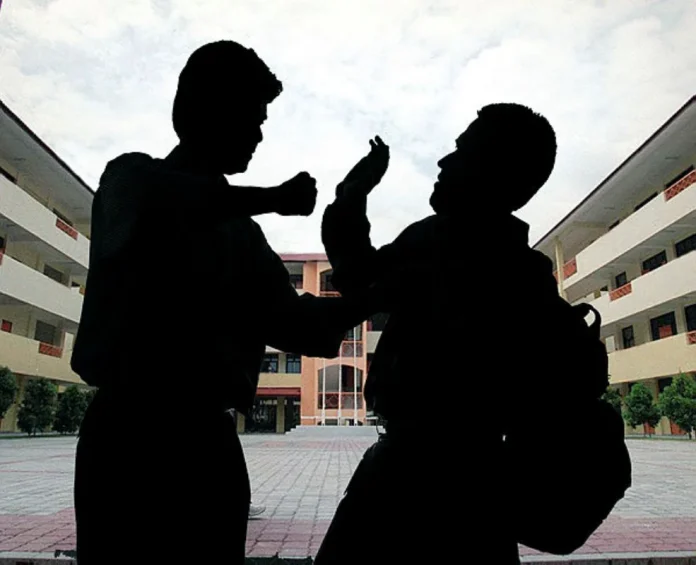
School violence stems from unmet emotional needs; experts urge empathy, restorative practices and stronger parent-child connections to prevent harm.
SCHOOL violence does not happen overnight; it grows out of years of neglect when emotional well-being takes a back seat to exam scores, when moral guidance is left to overworked teachers and when busy families unintentionally overlook early warning signs.
As we approach the end of the year, many parents, teachers and communities are taking stock of what our children have experienced – the pressures they carry, the expectations placed upon them and the environments in which they grow.
These reflections remind us that violence is rarely sudden; it is often the result of unmet emotional needs, unspoken fears and long-standing gaps in connection.
ALSO READ: Punitive practices do little to curb school violence: NGO
Whenever a troubling incident occurs in a school, our natural response is to demand stricter discipline or tighter rules. While understandable, these reactions seldom touch the deeper roots of the problem.
Rules can correct behaviour but they cannot heal loneliness, teach empathy or build emotional resilience.
Prevention requires something deliberate, deeper and more human: consistent empathy, meaningful connection and shared responsibility between home and school.
Calls for stronger character development in schools are timely but character cannot be taught through slogans or assemblies; it must be built through relationships, reflection and example.
When adults model empathy, respect and integrity, children learn to internalise those values far more effectively than through lectures about “good behaviour”.
However, modelling alone is not enough; schools also need practical approaches to repair harm and strengthen relationships.
Restorative justice
Restorative justice (RJ) offers such a framework. Instead of asking, “Who’s to blame?”, RJ asks, “Who was harmed and how can we make things right?” It brings together those affected – victims, offenders, families and communities – to acknowledge harm, accept responsibility and repair relationships.
This approach teaches accountability without humiliation and helps children learn empathy and remorse. RJ is not new; it is practised in countries like the United States, Canada, Australia, New Zealand and across Europe, and is endorsed by the United Nations and European Union, proving its global credibility.
Schools that adopt RJ often see fewer conflicts and stronger trust and belonging. But schools cannot do this alone. Teachers already carry heavy workloads and emotional burdens. When parents expect schools to handle everything – from discipline to moral education – the system becomes overstretched and ineffective.
Furthermore, preventing school violence is not just about enforcing discipline; it is about nurturing connection. We need schools that integrate social-emotional learning (SEL) into everyday lessons, teacher training that emphasises care and conflict resolution and a national culture that values emotional intelligence as much as academic success.
When academics outweigh empathy and time spent on screens exceeds time spent making real connections, children lose the guidance they need most.
Building safer schools begins with listening – at home and in the classroom. A peaceful, respectful school environment cannot be achieved through fear or punishment alone; it begins with empathy, responsibility and presence, from adults and the systems that shape young lives.
Responsible parenting
At the same time, it requires responsible parenting in the digital age. Technology offers tremendous educational benefits but it cannot replace the human connection children desperately need.
When tablets become constant companions and video games serve as emotional regulators, children miss out on developing crucial skills – reading facial expressions, managing uncomfortable feelings and navigating real-world conflicts.
Children need adults who are present, not just providers. They need to learn that when something bothers them, they can seek support from a trusted adult rather than retreat behind a screen.
The question is not whether children should have access to technology but whether children have access to genuine human attention.
Strengthening relationships
Globally and locally, World Vision has implemented programmes that strengthen parent-child relationships, such as “Celebrating Families” and “Positive Parenting” workshops.
Valuations of these models report measurable increases in positive discipline practices, parent-child bonds and reductions in harmful attitudes and norms that justify violence.
Listening to our children
When adults take time to understand their frustrations, fears and hopes, we uncover problems early – before they turn into aggression or despair.
Creating safe spaces for dialogue, at home and in school, teaches children that their feelings matter and that empathy is a strength, not a weakness.
Working together
Parents, teachers, school administrators and policymakers must work together, not in silos.
Building character is not the task of one institution but a shared national mission, one that begins with listening to children and believing that their voices matter.
Listening to children is not a soft response; it is the strongest, most lasting investment we can make in preventing school violence and nurturing a generation guided by compassion and conscience.
Lydia Lee is the manager of Malaysian Programmes and Grants at World Vision Malaysia. She oversees local community development projects and the One Goal Malaysia initiative, and works with schools, families and local partners to create safe, nurturing environments for vulnerable children.
Comments: letters@thesundaily.com



