



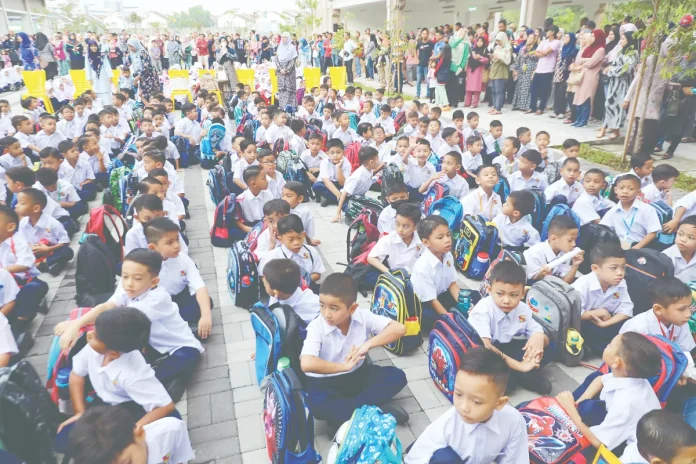
Rising school violence exposes a crisis of values in Malaysia’s education system, calling for stronger protection, empathy and shared responsibility
SCHOOLS are meant to be places of learning, character- building and nurturing of humanity. Yet today, the reality is deeply unsettling.
Cases of student stabbings, rape and bullying that injure peers are not just sensational headlines; they are also warning signs that our education system is hurting from within.
We are no longer just talking about academic performance or school rankings but also about the soul of education that has lost its direction.
ALSO READ: Listening to children key to preventing school violence
When students become perpetrators of crime, teachers suffer under pressure and parents lose faith in educational institutions. We are witnessing not just a disciplinary crisis but also a crisis of values and humanity.
Education in pain
Violence in schools is not an isolated issue. Over the past decade, reports of physical bullying, sexual harassment and serious disciplinary violations have become increasingly frequent.
Unicef’s 2020 report on bullying among children found that Malaysia ranked second in Asia (after India) and sixth globally for cyberbullying, with three out of 10 children affected.
Through its U-Report, Unicef revealed that 28% of 7,000 Malaysian children had experienced cyberbullying while an Ipsos 2018 study found that 23% of parents reported their children being bullied.
When schools fail to be safe spaces, the effects ripple far beyond the victims, impacting the entire educational ecosystem. Traumatised students struggle to focus, teachers face mental stress and schools suffer reputational damage. In the long run, this erodes the quality of learning and weakens public trust in the national education system.
Scars on nation’s image and economy
A crisis of values in education is not merely a moral issue; it is also an economic and reputational one. Malaysia has long prided itself on education as the engine of national development.
But when news of student violence circulates internationally, it raises questions about our education system’s ability to nurture a disciplined, ethical and knowledgeable generation.
A tarnished education image directly affects foreign investment and global confidence. A country perceived as failing to instil respect, empathy and discipline in its youths risks deterring investors who seek social stability.
On a broader scale, this undermines the government’s ambition to build a knowledge-based economy driven by skilled and ethical human capital.
At the micro level, school-related crimes have economic costs, medical expenses, lost learning time, social stigma and diminished future opportunities for both victims and perpetrators. Each act of violence carries a multiplier effect that extends far beyond the school gates.
Societal role
Education is a shared responsibility and a national one. Blaming schools or the government will not resolve the problem.
Every tragic incident in schools reflects a collective failure: families that have lost connection, communities that have lost compassion and systems obsessed with numbers but detached from the human spirit.
The Education Ministry must remain the primary guardian of our young generation. Student protection policies must go beyond paperwork; they require firm enforcement and continuous monitoring.
Concrete measures include installing CCTV cameras along corridors, toilets and school fields; conducting routine patrols and spot checks by schools and district officers; and providing anti-bullying and emotional safety training for teachers and support staff.
Teachers, too, should be trained to read the emotional and physical cues of students under stress or trauma. In today’s educational world, emotional intelligence is as vital as intellectual intelligence. Investing in teachers’ well-being means investing in students’ safety.
The Education Ministry could also establish Student Protection Units in every school, serving as safe reporting channels and rapid response centres for any incident. Annual physical and psychosocial school safety audits should be made mandatory to assess the overall environment.
Schools must be the first line of prevention. Teachers must be empowered to act as mentors, not just curriculum deliverers.
Mentorship programmes, counselling sessions and restorative discipline approaches that focus on rehabilitation and accountability rather than punishment can foster empathy, respect and care among students and staff.
Security guards and hostel wardens should also undergo safety awareness training to ensure constant vigilance. Every school should establish a “Safe School Zone” – a bully-free environment monitored by duty teachers and supported by early-warning systems.
Parents and guardians are the first educators at home. Many bullying and delinquency cases stem from a lack of attention, communication and affection.
A child who grows up without guidance or boundaries at home will seek them elsewhere and sometimes in the wrong places.
Parents must be emotionally present – not just physically – to ask, listen and understand their children daily. A loving home is the first defence against the culture of violence.
Society and the media also carry great responsibility. Do not spread tragedies and turn every report into an opportunity.
Media coverage should build awareness, not fear; inspire action, not pity. Social media, too, should serve as a platform for spreading values, not normalising cruelty or mockery.
On a broader level, corporate organisations and NGOs can play key roles in supporting value-based education and mental well-being.
This can be carried out through CSR programmes, such as digital literacy campaigns, anti-bullying initiatives and psychosocial support projects in schools.
In today’s digital era, digital literacy is no longer optional; it is essential to help children think critically, manage emotions and act responsibly online.
Ultimately, this is a collective responsibility. Parents, teachers, leaders and communities hold the key to shaping the nation’s educational direction. Whether schools become safe havens or social battlefields depends on how willing we are to act, listen and guide together.
Healing wounds
Education is not merely about examinations; it is also the process of shaping human beings. Values like respect, patience and compassion must be instilled from an early age.
Moral and religious education must go beyond textbooks – it must be lived and practised as a school culture.
If we aspire to build an ethical and competitive society, our education system must regain its soul. It cannot function as an academic factory alone. Teachers must be given space and support to teach with heart, not simply to finish the syllabus.
The wounds in our schools are not isolated; they mirror the condition of our society. Every case of bullying, stabbing or sexual assault among students is a crack in the moral fabric of our nation. If left unhealed, we risk losing not just our students but also our future.
Healing these wounds requires courage and sincerity from all parties – the government, schools, teachers, parents and the society.
Only when we collectively restore values in education can schools once again become safe spaces where knowledge, ethics and the nation’s dignity are nurtured with love and responsibility.
Dr Hafirda Akma Musaddad is a senior lecturer at Universiti Teknologi Mara, Kelantan Branch.
Comments: letters@thesundaily.com



