



The question facing Malaysia is no longer whether we should trust dengue vaccination but whether we can afford not to when lives are at stake.
AS we analyse the dengue statistics for 2024, the numbers are a stark wake-up call.
With 122,423 cases and 117 deaths – a 17% rise in fatalities – it is evident that our current strategies are being outpaced by the virus.
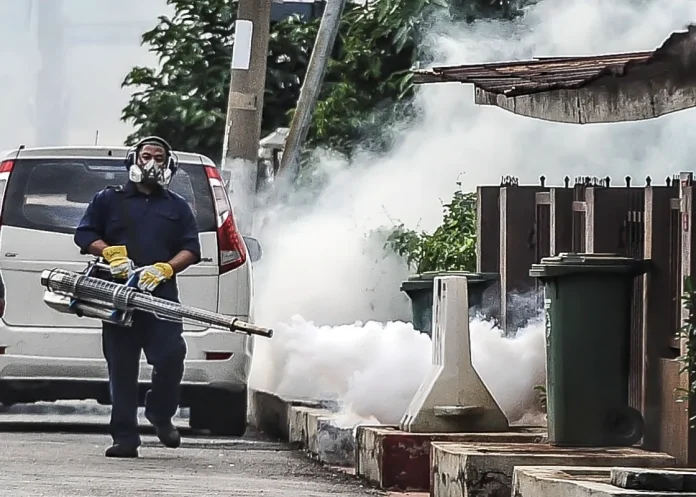
Malaysia has set an ambitious target of zero dengue deaths by 2030 but we will not reach this goal if we rely on vector control alone.
The mosquitoes are adapting and so must we.
However, the most effective tool in our arsenal – vaccination – remains clouded by the past.
We must address the elephant in the room.
Malaysia’s hesitation towards dengue vaccines is rooted in the experience with the first-generation vaccine (CYD-TDV).
The first vaccine (CYD-TDV) was a good vaccine but it came with a serious problem – for people who had never had dengue before, it could sometime make a future dengue infection worse.
This major safety concern limited its use and made regulatory authorities and doctors understandably cautious.
But science does not stand still.
Allowing that “legacy fear” to block access to new, safer technology today is a disservice to public health.
The new live-attenuated vaccine, TAK-003 (QDENGA), has fundamentally changed the safety equation.
Unlike its predecessor, TAK-003 does not have the previous safety problem.
In extensive clinical trials spanning seven years, there has been no evidence of increased disease severity or hospitalisations in individuals who have never had dengue (seronegative).
The data is robust: across 4.5 years of primary doses and subsequent booster studies, the vaccine has served as a shield against severe dengue disease leading to hospitalisation, not a risk.
This vaccine is already approved in 41 countries, with over 21 million doses distributed worldwide.
Real-world data, including from Brazil, confirms its effectiveness in preventing severe dengue outcomes.
For parents and working adults, this offers peace of mind without the need for complex pre-screening blood tests.
It shifts the focus from merely “avoiding mosquitoes” to actively preventing severe dengue disease that overwhelms our hospitals and claims lives.
The question facing Malaysia is no longer whether we should trust dengue vaccination but whether we can afford not to when lives are at stake.
Caution is a virtue in medicine but when caution ignores seven years of safety and efficacy data, it becomes an obstruction.
We urge the public and policymakers to look at the new evidence with fresh eyes.
Let us rebuild trust through science and ensure that by 2030, “zero dengue deaths” is a reality, not just a slogan.
Dr Musa Mohd Nordin and Dr Naveen Nair Gangadaran are from the Malaysian Paediatric Association.
Comments: letters@thesundaily.com



