




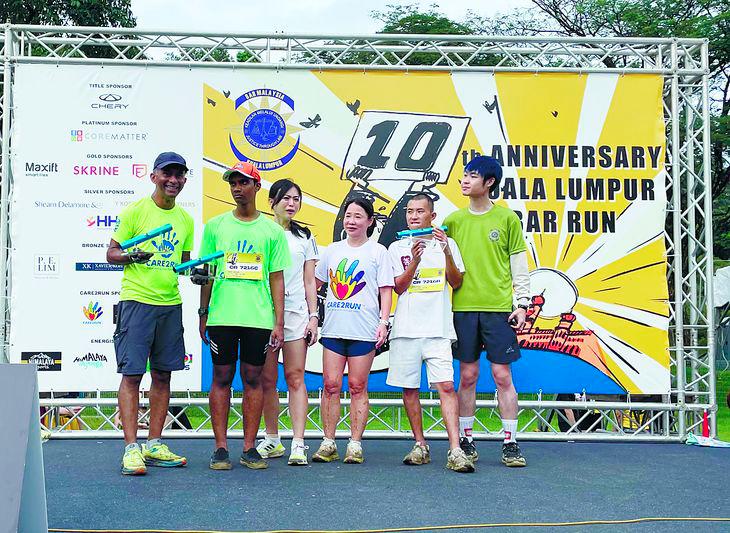
LEARNING is experienced through many different ways. Most learning is done in a classroom setting, but recently experiential learning has gained traction due to the advantage it gives the learner by being involved.
This is especially true for slow learners and those with learning disabilities, who have great difficulty processing information in a static environment, due to boredom and inability to focus.
Even normal children love being outdoors and being involved in outdoor activities. So why not those with special needs (SN), where experiential learning is used as a tool?
Prem Kumar, a psychologist, he describes it as a fun loving process, which he has successfully used in engaging SN young children and adults.
“No doubt it is rooted in gamified activities, engagement, reflection and real-world application.
“Experiential learning is particularly powerful because it taps into cognitive, emotional and social processes, enhancing the learning process, critical thinking, problem-solving and adaptability.
“Overall, the learning process becomes more active and helps build a library of new experiences. More importantly it lowers uncertainty and anxiety, and improves problem-solving skills,” said Prem, who founded Care2Run, a social enterprise, that runs experiential learning programmes such as ‘Nature Bingo’, a multi-sensory programme encouraging observation and environmental awareness.
Bridging gap between theory and application
It is especially difficult for SN children as well as adults to make connections, whether through social interactions and hands-on exploration, so any integrated activity that combines both theory and practice enables learning.
As the mother of a SN adult, I had the opportunity to see this integration with the KL Bar Run 2025, where my daughter, D. Preeya Nanthini, 34 years, participated. When the KL Bar first opened its doors to SN participants in 2018, the numbers were small but grew substantially due to the many benefits gained by the SN adults and differently-abled participants.
Determination, resilience and friendships formed along the way. These were some of the many plus points of the KL Bar Run, which could not have been formed or developed in a classroom setting.
As a parent shared in a Facebook page: “The camaraderie in the Bar Run 2025 was amazing, as the SN adults cheered on their friends in the race and my son learnt how to be part of a relay team and succeed despite the challenges.”



