




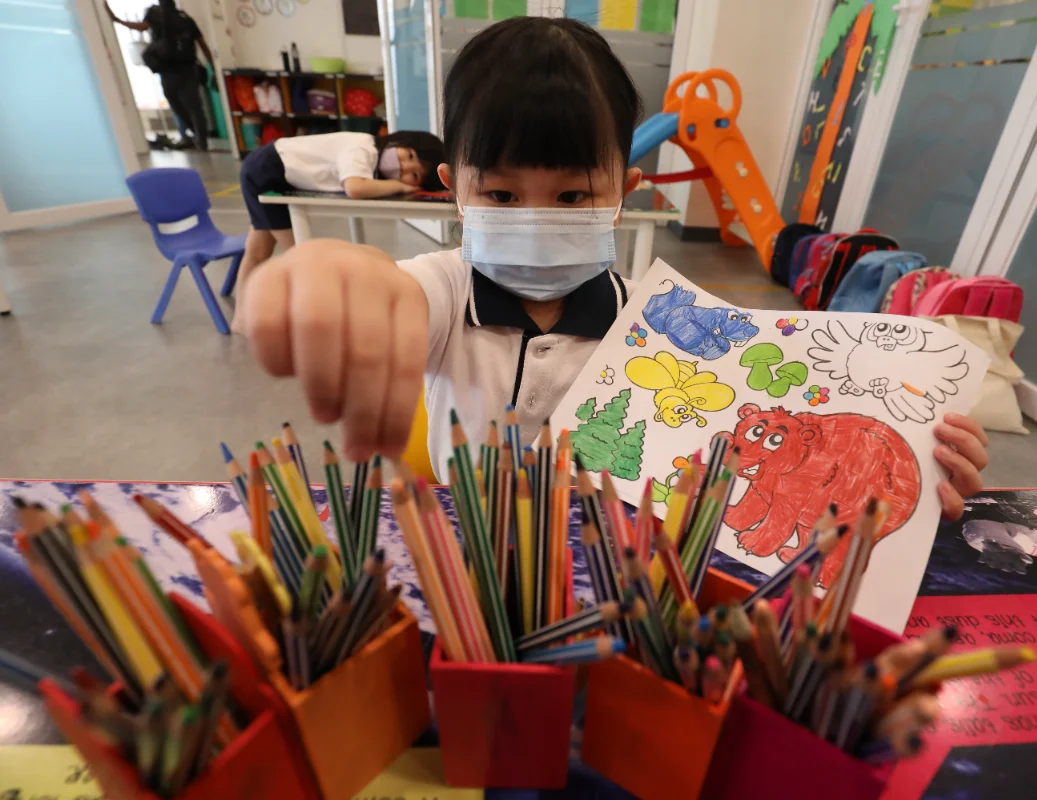
Formal schooling involves sitting for longer periods and fine-motor tasks like writing that can be physically exhausting for a six-year-old whose hand muscles are still maturing.
THE Malaysian Paediatric Association (MPA) acknowledges the recent announcement by the Education Ministry regarding the option for six-year-olds to begin Primary One starting in 2027.
While we appreciate the flexibility this offers families, we believe that “readiness” must be measured by a child’s neurological maturity rather than the mere passing of a calendar year.
The move to align Malaysia with global educational standards is rightfully ambitious, yet we must be cautious not to let chronological age overshadow developmental milestones.
For many children, particularly those in our rural and underserved districts, the biological reality of growth often tells a different story than a birth certificate.
The data on Malaysian child health remains a critical factor in this discussion.
With nearly one in five Malaysian children under the age of five currently suffering from stunting – a condition that disproportionately affects rural and indigenous communities – we cannot ignore that physical growth is often a proxy for brain development.
Stunting often correlates with delays in executive function and sensory processing.
When we talk about entering formal schooling a year early, we are asking a child’s prefrontal cortex to manage intense focus and social-emotional regulation.
For a child already facing nutritional or environmental hurdles, this “early start” could inadvertently become a “permanent setback” if the classroom environment is not radically adapted to a play-based, low-stress model.
Furthermore, we must look at the long-term trajectory of these early entrants.
A student starting at six will likely sit for the SPM at just 16 years of age.
While this may seem like an academic advantage, entering a pre-university or vocational environment at 17 requires a level of emotional resilience and life-skills autonomy that many 16-year-olds are still developing.
We urge stakeholders to look far beyond literacy and numeracy to assess a child’s skills, their ability to handle separation anxiety and their capacity for peer interaction in a high-density classroom.
The MPA stands ready to support the government in refining these readiness assessments.
We advocate for a “child-first” philosophy where the option to start early remains exactly that, an option, without any pressure on parents to rush their children into a system that may not yet be ready for their specific developmental needs.
Our goal is to ensure that no Malaysian child is left behind because we mistook academic acceleration for genuine maturity.
Here is a useful narrative guide for parents: Is my six-year-old truly ready?
Many parents are naturally feeling a mix of excitement and anxiety about the choice to send their child to primary school a year early.
It is important to remember that there is no “right” age that applies to every child, and choosing to wait until the age of seven is often a gift of time rather than a delay in progress.
When you are observing your child at home or in preschool, look for signs of “school maturity” that go beyond knowing their ABCs or counting one to 100.
A child who is ready for Primary One is one who can manage their basic physical needs independently, such as opening their own water bottle or managing their school bag, without becoming easily frustrated.
Consider your child’s emotional “battery” and how they handle a full day of structured activity.
If your child still requires significant downtime or struggles deeply with transitions between tasks, they may benefit from another year of play-based learning where their social confidence can bloom.
In the Malaysian context, where classrooms are often large and bustling, a child needs to be able to follow multistep instructions and advocate for themselves when they are confused or uncomfortable.
If you notice your child is still in a “parallel play” phase or finds it difficult to share and take turns, these are biological cues that their brain is still prioritising social-emotional growth over academic rigour.
We also encourage parents to look at their child’s physical stamina.
Formal schooling involves sitting for longer periods and fine-motor tasks like writing that can be physically exhausting for a six-year-old whose hand muscles are still maturing.
If your child is thriving, curious and socially robust, they may be excellent for early entry.
However, if they are still catching up on physical milestones or seem easily overwhelmed by loud, busy environments, waiting until they are seven allows them to enter school as a leader rather than a child who is constantly struggling to keep up.
Trust your instincts as a parent and remember that the best indicator of future success is not how early a child starts school but how confident they feel when they finally walk through those gates.
Malaysian Paediatric Association
Assoc Prof Dr Intan Juliana Abd Hamid
President
Assoc Prof Dr Erwin Khoo Jiayuan
Honorary Secretary



