




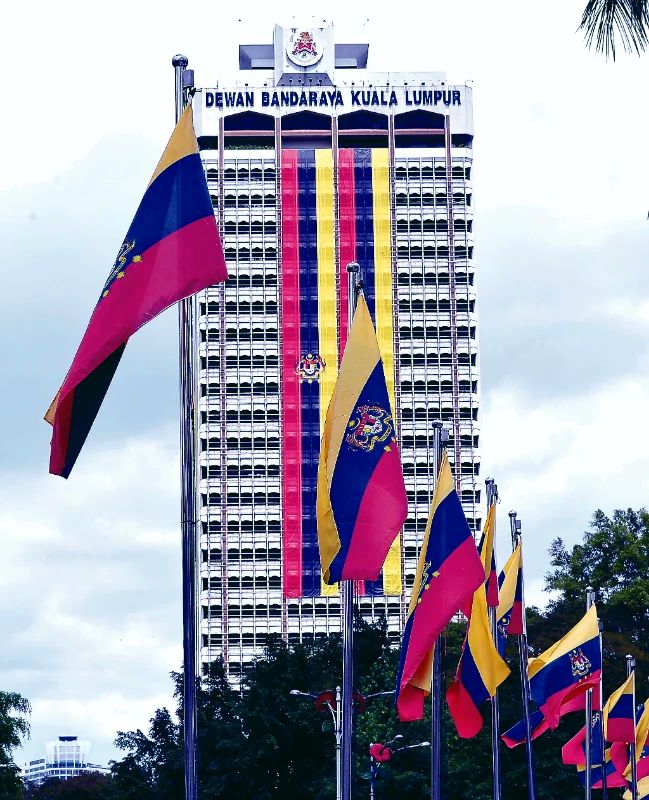
Constitutional expert warns that electing Kuala Lumpur’s mayor could impact Malaysia’s democratic framework and governance stability
PETALING JAYA: The proposal to introduce elections for the Kuala Lumpur mayor should be assessed carefully as it may have implications for Malaysia’s constitutional democratic framework, said constitutional expert Assoc Prof Datuk Dr Wan Ahmad Fauzi Wan Husain.
He said Malaysia’s constitutional system since independence has been based on the sovereignty of the Malay Rulers and the supremacy of the Federal Constitution, with democratic participation taking place through general elections to Parliament and state legislative assemblies.
Under the current framework, legislation is deliberated and approved by the Dewan Rakyat and Dewan Negara before receiving the assent of the Yang di-Pertuan Agong at the federal level. The authority to give assent to laws rests with the sovereign, who is not elected through a general election.
Wan Ahmad Fauzi, who is also International Institute of Islamic Thought and Civilisation faculty member at the International Islamic University Malaysia, said executive authority is exercised by the Cabinet appointed by the Yang di-Pertuan Agong on the advice of the prime minister, in accordance with the Constitution.
He said this reflects Malaysia’s practice of constitutional democracy, which differs from systems such as those in the United States or the Westminster model, in which sovereignty lies entirely with Parliament. The public does not directly elect those who exercise executive authority.
He added that the system was designed to ensure continuity and stability in the exercise of executive functions, in line with constitutional and statutory law.
Wan Ahmad Fauzi added that Kuala Lumpur already has elected representatives in Parliament, consistent with the existing constitutional democratic system.
On the proposal to elect the Kuala Lumpur mayor, he said it should not be viewed solely as an administrative change as it could affect governance arrangements in the capital.
He said an elected mayor would likely be granted greater autonomy and responsibilities than at present, which could introduce additional considerations, including the need to maintain political support and the possibility of candidacy by individuals who may not necessarily prioritise national aspirations or transparency in policy implementation.
He also said there was a possibility that political sponsorship and lobbying practices could become more prominent, with interest groups seeking to influence decision-making even if the mayor is elected by Kuala Lumpur voters.
Wan Ahmad Fauzi said development in the capital city cannot rely solely on local resources as it involves multiple stakeholders and national interests as well as the responsibility of preserving Malaysia’s national identity.
He suggested that attention could instead be directed towards improving administrative efficiency, strengthening integrity in senior appointments, enhancing transparency in procurement processes and shaping Kuala Lumpur’s urban development to better reflect national identity.
He said priority should also be given to addressing the cost of living, controlling the prices of essential goods, reducing rental rates for food business premises, expanding affordable housing for support groups, developing Bumiputera entrepreneurship and the middle class of other communities and creating opportunities to improve economic mobility among the B40 group.
He added that empowering communities and narrowing demographic gaps among Kuala Lumpur residents were important in safeguarding inter-ethnic harmony and national unity.
On Feb 1, Minister in the Prime Minister’s Department (Federal Territories) Hannah Yeoh said her ministry was studying the possibility of introducing elections for the Kuala Lumpur mayor.
The proposal drew objections from several Umno and PAS leaders, most of whom said the move could affect the position of Malays in the capital.
Meanwhile, former law minister Datuk Seri Nazri Aziz said concerns among Malays over the introduction of mayoral elections in Kuala Lumpur should be discussed openly, adding that demographic considerations in urban constituencies have long influenced resistance to local government polls.
However, the former Padang Rengas MP said despite these concerns, he personally supported the idea of electing a mayor for Kuala Lumpur, adding that the capital would benefit from greater accountability and more responsive governance.
He suggested that voters could elect several candidates, with a structured division between Bumiputera and non-Bumiputera representatives, and that those elected could then choose the datuk bandar from among themselves.
Nazri said such a collective leadership model could help address ethnic concerns while still allowing for democratic participation at the local level.
He added that this approach could make Malays more receptive to the introduction of local government elections.
Nazri also said Kuala Lumpur required a form of elected local leadership, adding that governance and development in the capital could be affected without stronger accountability.
He also said introducing a carefully structured electoral model for local government could improve transparency, governance and public confidence while taking into account long-standing ethnic considerations.



