




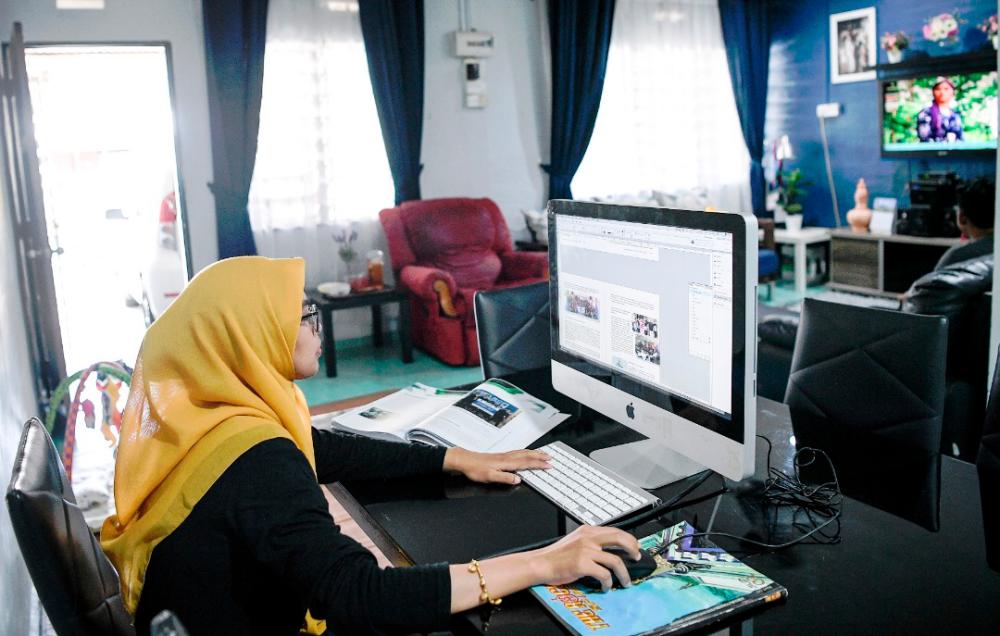
PETALING JAYA: It goes without saying that the work-from-home (WFH) concept has kept many industries afloat during the Covid-19 pandemic.
If humanity had had to face a health crisis of such magnitude before the age of the internet, the world would probably have âstopped turningâ.
On the other hand, the downside of WFH cannot be ignored. While it has helped to keep the wheels of businesses turning, albeit at a slower speed, efficiency has certainly been compromised.
For the worker, the line between work and personal life has disappeared altogether, and this has led to psychological health impairments.
For most employees, the work-life balance has been so skewed that it has become a case of living at work.
Private and personal time has been sacrificed to meet increasing demands from employers, resulting not only in heavier workload but also more lengthy work hours.
Added to these are a sense of isolation and waning job satisfaction due to the lack of supervision and communication, according to clinical psychologist Lum Khay Xian of Relate Mental Health Malaysia (Relate Malaysia), an organisation that specialises in raising mental health literacy and awareness.
âWorking from home can blur the line between work life and home life, and employees may find it difficult to know when to switch off after work,â she said.
âAs a result, workers end up sacrificing leisure and physical activities.â
Coupled with the stress caused by Covid-19, Lum said individuals are likely to feel burnt out.
However, there is a way to strike a balance, for the benefit of both employers and employees.
âFirstly, both parties must work together to set a clear path and structure in the implementation of WFH and to address issues that may arise,â Lum said.
âThere must be mutual understanding. Personal boundaries, in terms of time as well as emotional, physical and intellectual considerations, must be recognised.
She added that setting boundaries would be a way to ease the risk of burnout, and that would benefit the business as well.
Lum said for the long term, the government should consider implementing a WFH policy or introducing new legislation to prevent exploitation of worker rights.
Malaysian Trades Union Congress deputy president Mohd Effendy Abdul Ghani pointed out that WFH does not necessarily suit everyone, given that personality traits and abilities vary from one employee to another.
âSome workers prefer the routine and structure of an office environment, as well as personal interaction with colleagues and face-to-face guidance,â he told theSun.
He said apart from burnout and feelings of isolation, there also are many distractions at home.
For the employer, it is difficult to monitor an employeeâs performance, staff development is difficult and there is a risk of confidential information being leaked.
To address these problems, Effendy said employers should introduce a clear guideline on work hours to give the employee ample personal and family time.
âEmployees should also be provided with the necessary assistance and tools to make WFH work. Employers must understand that the quality of work may be a little compromised, given that working from home is not the same as working at the office,â he said.
Human resource manager Srithren Krishnan said as the WFH concept is relatively new in Malaysia, it would take time for the element of trust to take root.
He also believes that WFH will be a long-term concept, and will continue even after everyone has been vaccinated against Covid-19.
âThis will be the new normal, and it cuts costs for both parties.â
He expects future employment letters to include a clause that specify the days in the week when an employee is expected to work from home, with the company subsiding the internet bill.



