




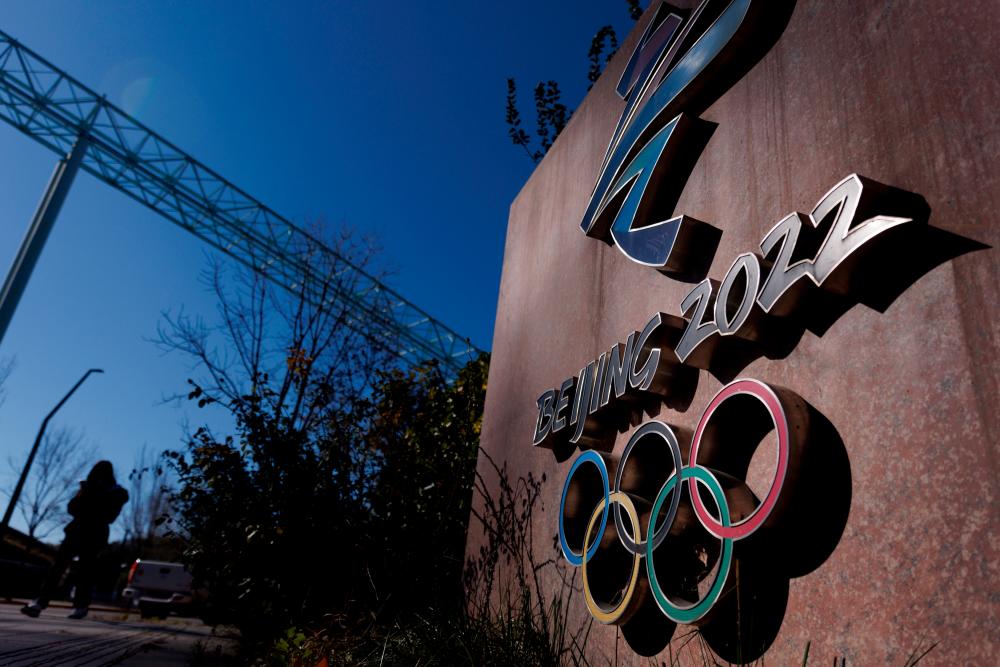
SYDNEY/BEIJING: Australia will join the United States in a diplomatic boycott of the Winter Olympic Games in Beijing, Prime Minister Scott Morrison said on Wednesday, as other allies weighed similar moves to protest Chinaâs human rights record.
The United States has said its government officials will boycott Februaryâs Beijing Olympics because of Chinaâs human rights âatrocitiesâ, just weeks after talks aimed at easing tense relations between the worldâs two largest economies.
China said the United States would âpay the priceâ for its decision and warned of countermeasures in response, but gave no details.
Morrison said Wednesdayâs decision came because of Australiaâs struggles to re-open diplomatic channels with China to discuss alleged human rights abuses in the far western region of Xinjiang and Beijingâs moves against Australian imports.
Announcing the plans, Morrison said Beijing had not responded to several issues raised by Canberra, including the rights abuse accusations.
âSo it is not surprising therefore that Australian government officials would not be going to China for those Games,â Morrison told reporters in Sydney. Australian athletes will attend.
China has denied any wrongdoing in Xinjiang and said allegations are fabricated.
Its foreign ministry spokesman Wang Wenbin said at a daily briefing in Beijing that Australian politicians were engaged in âpolitical posturingâ.
âWhether they come or not, nobody cares,â he added.
The Australian Olympic Committee said the boycott would have no impact on athletesâ preparations for the Games, which run from Feb. 4 to 20, adding that âdiplomatic optionsâ were a matter for governments.
Other U.S. allies have been slow to commit to joining the boycott.
Britain is considering approving limited government attendance at the event in the Chinese capital that would stop short of a full diplomatic boycott, the Telegraph newspaper said on Wednesday.
An outright ban on ministerial and diplomatic representation at the Winter Games remains a possibility, it added
Japan is considering not sending cabinet members to Games after the United States announced its diplomatic boycott, the Sankei Shimbun daily said on Wednesday, citing unidentified government sources.
A South Korean presidential official said the country is currently not considering a diplomatic boycott.
President Joe Bidenâs administration cited what the United States calls genocide against minority Muslims in Chinaâs Xinjiang region. China denies all rights abuses.
The Winter Games will begin about six months after the Summer Games wrapped up in the Japanese capital of Tokyo following a yearâs delay because of the Covid-19 pandemic.
âWe always ask for as much respect as possible and least possible interference from the political world,â said Juan Antonio Samaranch, who heads the International Olympic Committeeâs coordination panel for the Beijing event.
âWe have to be reciprocal. We respect the political decisions taken by political bodies.â
The United States is set to host the 2028 Summer Olympics in Los Angeles and is preparing to bid for the 2030 Winter Olympics in Salt Lake City.
The American diplomatic boycott, encouraged for months by some members of the U.S. Congress and rights groups, comes despite an effort to stabilise the two nationsâ ties, with a video meeting last month between Biden and Chinaâs Xi Jinping.
âThe only optionâ
Unless other countries joined the boycott it would undermine the message that Chinaâs human rights abuses are unacceptable, said Bonnie Glaser, a China expert at the German Marshall Fund of the United States.
âThe only option really that is available to us is to try to get as many countries as we can to stand with us in this coalition,â Glaser told a U.S. congressional hearing on Tuesday.
Ties between Australia and its top trade partner, China, are at a low ebb after Canberra banned Huawei Technologies from its 5G broadband network in 2018 and sought an independent inquiry into the origins of Covid-19.
Beijing responded with tariffs on Australian commodities such as barley, beef, coal and wine. â Reuters



