




Across Malay, Chinese and Indian traditions, animals carry layered meanings shaped by faith, folklore and generations of cultural doctrines
IF an owl hoots outside your window tonight, Malay tradition has a warning – do not ignore it.
The owl, burung hantu, translates literally as “ghost bird”. Its call near a home at night has long been regarded as an omen that someone inside or close by may soon die.
Crows carry a similarly sombre reputation in both Malay and Chinese folklore, in which their presence is often associated with misfortune, illness or death. Yet the same bird can mean something entirely different elsewhere.
Offerings to ancestors
In many Indian Hindu households, crows are welcomed rather than feared during memorial rituals. Food is offered as part of ceremonies honouring the dead. If the crow refuses to eat, it is seen as a troubling sign, suggesting the ancestors are displeased.
It is a reminder that meaning is not fixed in nature but shaped by belief.
Guardians in another form
Snakes receive one of the most fascinating interpretations in some Chinese traditions.
If one is found inside the home, the preferred response is often to avoid harming it and instead encourage it to leave peacefully.
The belief holds that such a snake may represent a household guardian or even an ancestral spirit, and injuring it could invite misfortune.
It turns what might otherwise be a frightening encounter into one handled with unexpected care and restraint.
Respect in the wild
The jungle comes with its own unwritten code. In Malay tradition, mocking, taunting or provoking wild animals is considered taboo, with some believing it could invite bad luck or offend unseen spirits believed to inhabit the forest.
Experienced guides often encourage visitors to behave respectfully in the wilderness, where humility is seen as part of staying safe.
Ritual and restraint
Then there is Chinese New Year, when traditional beliefs discourage the slaughter of animals during the opening days of the celebration.
The presence of blood is viewed by some as an inauspicious sign that could cast a shadow over the year ahead, encouraging families to begin the new year with harmony and positive symbolism.
Affection and reverence
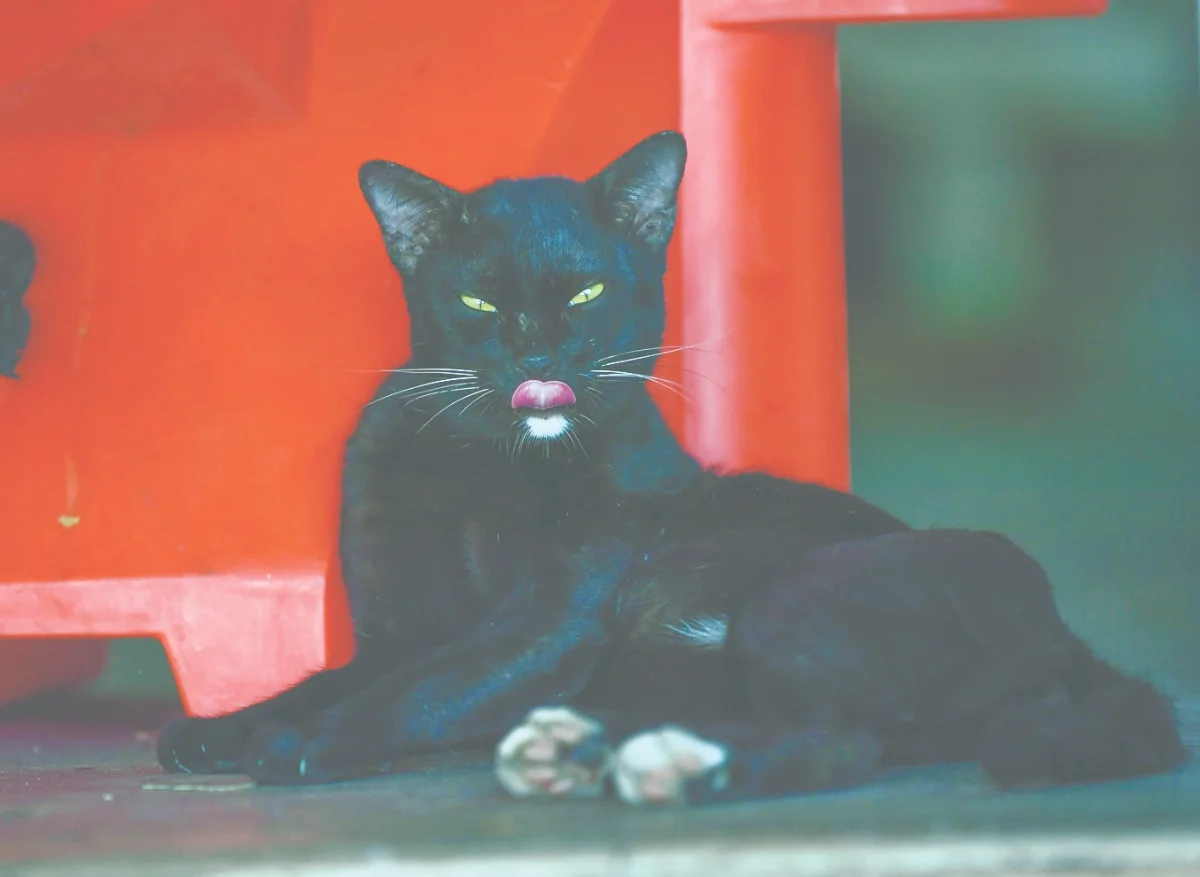
Not every animal carries ominous associations. Cats, for instance, occupy a more complex space in belief systems shaped by region and tradition.
In some Indian folk beliefs, a cat crossing one’s path before setting out is sometimes seen as a sign of caution or delay, while black cats are occasionally associated with superstition, although interpretations vary widely across communities.
In Malay-Islamic tradition, cats are widely regarded with affection, partly linked to the Prophet Muhammad’s well-known fondness for them.
They are commonly welcomed around homes and mosques, while feeding strays is seen as an act of kindness. Chinese culture adds another layer through the familiar Fortune Cat figurines that sit on shop counters as symbols of prosperity and goodwill.
Boundaries and belief
Dogs occupy a different space in Islamic practice. Considered ritually unclean in certain contexts, especially when wet, contact may require cleansing known as sertu.
As a result, many traditional Malay households have historically avoided keeping dogs indoors, a reflection of religious practice rather than hostility.
Sacred presence
The cow stands at almost the opposite end of the spectrum in many Hindu households, in which it is revered as sacred.
Devout families commonly avoid beef while products such as milk and ghee continue to play important roles in religious observances and purification rituals, underscoring the special status of the animal.
Fortune and caution
In Chinese mythology, turtles represent longevity and endurance.
Yet some traditional beliefs caution against keeping them as business mascots, as their slow and steady nature is thought to symbolically translate into sluggish fortunes.
It is a reminder of how symbolism can quietly shape everyday choices.
Small signs, lasting stories
Lizards round off the list as quiet but persistent messengers in parts of Indian and broader Asian folklore.
A lizard falling on someone, or making a sound at a particular moment, may be interpreted as an omen related to whatever is about to happen.
Countless families have their own variations on exactly what each sign means, proving that even the smallest creatures can inspire elaborate traditions.
Reading the natural world
The next time an owl calls in the dark, a gecko stirs on the ceiling or a snake appears in a garden, the reaction may not be purely instinctive.
Within Malaysia’s diverse traditions, animals have long carried stories – of warning and worship, luck and loss, reverence and restraint. In them, people have found ways to make sense of the unseen world, and their place within it.



