




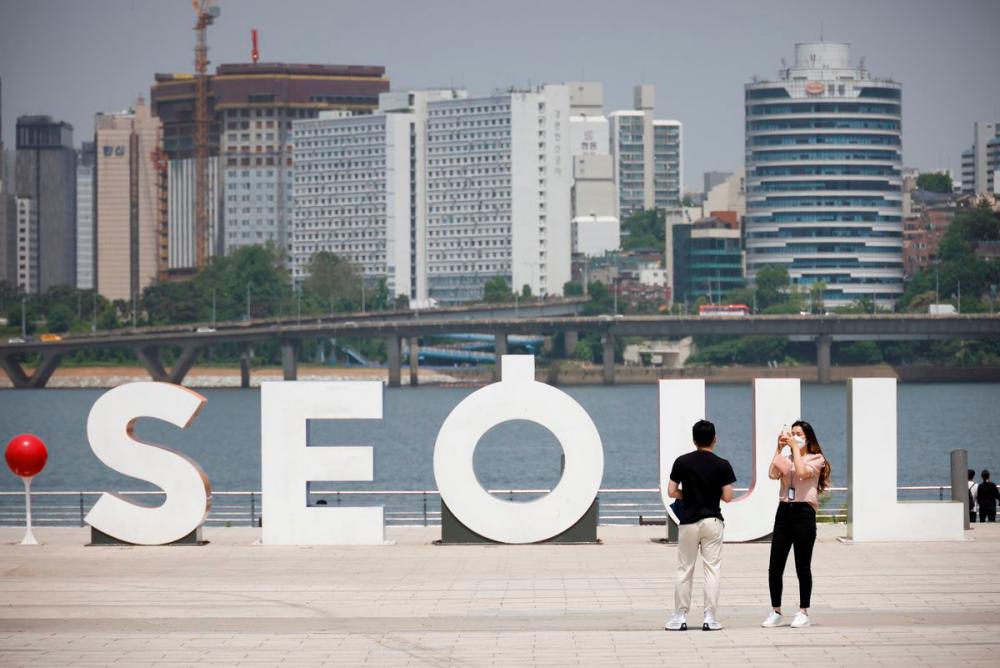
SEOUL: Condemnation of quotas for women, vilification of a short-haired Olympic gold medallist, and calls to abolish the gender ministry itself: a backlash against feminism is on the rise in South Korea â with even presidential candidates joining in.
While South Korea is the worldâs 12th-largest economy and a leading technological power, it remains a male-dominated society with a poor record on womenâs rights.
That has been challenged in recent years, with young women fighting to legalise abortion and organising a widespread #MeToo and anti-spycam movement that led to the largest womenâs rights demonstrations in Korean history.
At their most militant some campaigners have vowed to never marry, have children, or even have sex with men, while others have gone viral smashing up their make-up products on video in protest against the countryâs demanding beauty standards.
Ferocious online campaigns
Now a fierce reaction is spreading online.
Members of anti-feminist groups, often right-wing, have even bullied triple Olympic champion An San during the Tokyo Games for having short hair, and demanded she hand back her medals and apologise.
One such groupâs YouTube channel has drawn more than 300,000 subscribers since its foundation in February, and their online campaigns can be ferocious.
They have extracted apologies from companies â and even a government ministry â for using images of pinching fingers in advertising, which they claim âextreme, misandrist feministsâ use as a symbol for small penises.
And leading mainstream conservative politicians â including two presidential contenders â have seized on the wider anti-feminist sentiment with pledges to abolish the gender ministry.
Critics accuse the department of âdeepeningâ the countryâs social tensions, with young men claiming equality policies fail to address issues that affect men.
They say it is especially unreasonable that only South Korean men have to perform near two-year compulsory military service, delaying their career starts in a highly competitive society, while women are exempt.
Lawmaker Ha Tae-keung, who is seeking presidential nomination by the conservative opposition Peopleâs Power Party (PPP), says the ministry is obsolete and told AFP that it needed to be disbanded to reduce the âenormous social cost caused by conflict over gender issuesâ.
In an earlier television appearance, he told broadcaster MBC: âItâs like a zombie â the ministryâs still around although itâs already dead, and thatâs why itâs only creating adverse effects.â
âBacklash to progressâ
Sharon Yoon, a Korean studies professor at University of Notre Dame in the US, said: âWhat we are seeing now is a very powerful backlash to all of the progress that feminist movements in Korea have made in the past few years.â
Lee Jun-seok, the PPPâs 36-year-old leader, has established himself as one of the most popular politicians among the countryâs young men.
He has repeatedly said he is against gender quotas and âradical feminismâ, and that the gender equality and family ministry needs to be scrapped.
Lee, who has been compared by some to former US president Donald Trump for his at times divisive rhetoric, insists the countryâs young women no longer face discrimination in education, nor in the early career job market.
âThrough novels and movies women in their 20s and 30s have developed an unfounded victim mentality that they are being discriminated against,â Lee told the Korea Economic Daily.
Jinsook Kim, a University of Pennsylvania postdoctoral fellow, said politicians were exploiting the resentments of frustrated men to try to secure their votes.
Nowadays, she added, âsome of these men see themselves as victims of feminismâ, for example because of affirmative action.
Loss of privileges
The reaction comes against a backdrop of stuttering economic growth, rising inequality and soaring housing prices leaving many Koreans despairing of ever buying a home of their own.
Oh Jae-ho of Gyeonggi Research Institute pointed out that female participation in the workforce â and hence competition â had risen over recent decades while military service remained men-only.
âYoung men feel that they are being unfairly asked to compensate for the sexist privileges enjoyed by men in the older generation.â
Those privileges are longstanding: the South has the highest gender wage gap in the OECD club of developed countries, while women do 2.6 times as much unpaid domestic work as men. Only 5.2 percent of Korean conglomeratesâ board members are female.
Spycams, revenge porn
The country has also witnessed a disturbing rise in spycam and revenge porn crimes.
But womenâs activist Ahn So-jung said that politicians were âdenying institutional discrimination exists against womenâ.
âAnd they are dismissing women who voice concerns about womenâs rights as a source of gender conflict,â she added.
Founded in 2001, the gender ministry has played a role in the abolition of the Southâs discriminatory hoju system, which saw children registered exclusively under the patriarchal line.
It has also set up an agency to help single mothers collect child support, and implemented programmes for working mothers and immigrant wives.
Minister Chung Young-ai pleaded for it to continue: âThe improvement of womenâs rights so far has been possible because our ministry existed.â â AFP



