




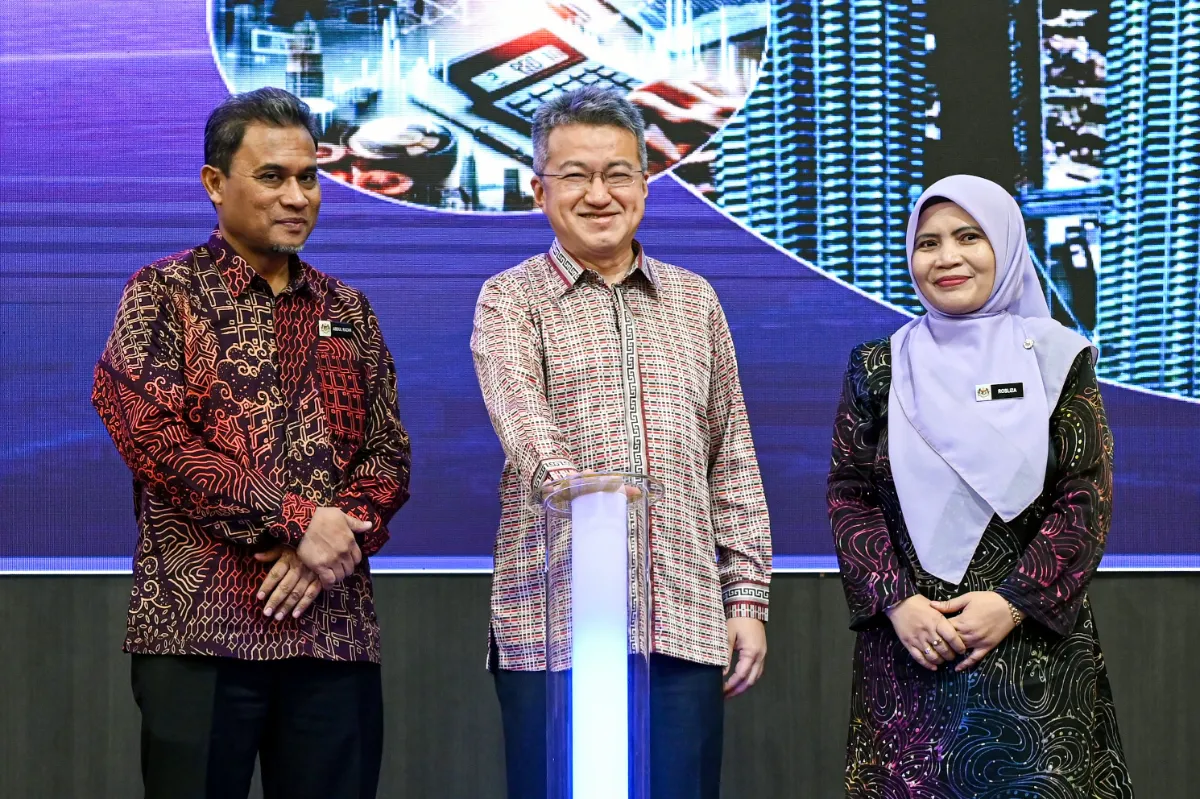
KUALA LUMPUR: The real estate sector should support broader economic and nation-building goals instead of focusing solely on profit-driven housing developments, Deputy Finance Minister Liew Chin Tong said.
He said the sector should contribute towards addressing wider national challenges, including housing affordability, urban sprawl, talent retention and dependence on private vehicles.
“The real estate sector should not see itself as the centre of the universe. Instead, it should see itself as fulfilling broader public purposes within the economy and nation-building process,” he told reporters after officiating the 13th International Real Estate Research Symposium 2026 (IRERS 2026) here today.
Liew said Malaysia needs to rebuild its metropolitan system amid massive global shifts and changes unlike anything seen in recent years, including the ongoing oil and supply crisis.
“Even if wars were to end tomorrow, the effects will linger much longer than we anticipate. Therefore, we need to address the national vulnerabilities that we face,” he said.
Liew said more housing should be developed within inner cities through ownership, rental or hybrid models to encourage more people to live there and help transform them into 24-hour cities.
“What I have mentioned will not happen overnight because what we are seeing today is the result of 50 years of the way we have approached housing development and urban expansion. It may take 10 to 15 years to reverse this trend,” he added.
He said that Malaysia must also create an environment that is less dependent on private cars, more reliant on public transportation, and focused on people living closer to their workplaces and within inner cities, rather than continuing urban sprawl.
Elaborating on the role of the real estate sector, he cited Penang as an example, saying developers should not only focus on building housing for foreign buyers but also support the semiconductor industry to strengthen the nation’s economy.
“One way is to increase housing stock so that young engineers can live decently, whether through ownership, rental or company-provided housing.
“Housing can help retain more Malaysians, especially young Malaysian engineers, to continue working in Malaysia’s semiconductor industry,” he said.
Liew also said Malaysia needed to explore new models, noting that empty office buildings in Kuala Lumpur could be converted into housing, similar to initiatives seen in Europe and the United States.
“We are not only talking about housing for the poor. We are talking about housing for young people and the middle class.
“Young people in their 30s should not have to live a life where they commute from Seremban while still effectively working in Kuala Lumpur,” he said.
Liew also warned of the risks of property bubbles, saying that assumptions that property prices would continue to rise could have severe consequences.
He cited Japan’s property bubble in 1990 and 1991, whose effects lingered for decades, as well as the 2008 Global Financial Crisis, which began as a property-related subprime crisis with major global consequences.
“And in our own experience, the Asian Financial Crisis in 1997 continues to have lingering effects even today. Therefore, we must be very careful in managing the sector,” he added.
At a separate event, Liew said the Ministry of Finance (MoF) is exploring ways to create a pathway for more semiconductor-related companies, both foreign direct investment (FDI)-linked and local firms, to be listed on Bursa Malaysia.
He said this is because the stock market currently does not fully reflect the country’s industrial strength and capabilities, as Malaysia remains heavily dependent on an FDI-driven model.
“It has always been about foreign capital coming into the country, but not enough of it is circulated or recycled domestically,” he said in his keynote address at the Affin Market Outlook 2026 here today.
Liew said that creating a path for more semiconductor firms to list is needed to move forward in building a stronger economy and market, especially amid an artificial intelligence (AI) boom.
This is because, he said, Malaysia already has strong capabilities in the semiconductor value chain, particularly in equipment and automation suppliers, which form an important part of the industry.
“So if we talk about supply chain resilience (and) about riding the industrial wave and ensuring that capital is circulated, then we can build a mini-Korea or mini-Taiwan within our capital market and our industry,” he said.
Liew added that beyond industrial development, Malaysia must also focus on building “secure people” by addressing jobs, wages, housing and urban development, to ensure Malaysians are economically confident and able to participate in the country’s next phase of growth.



