




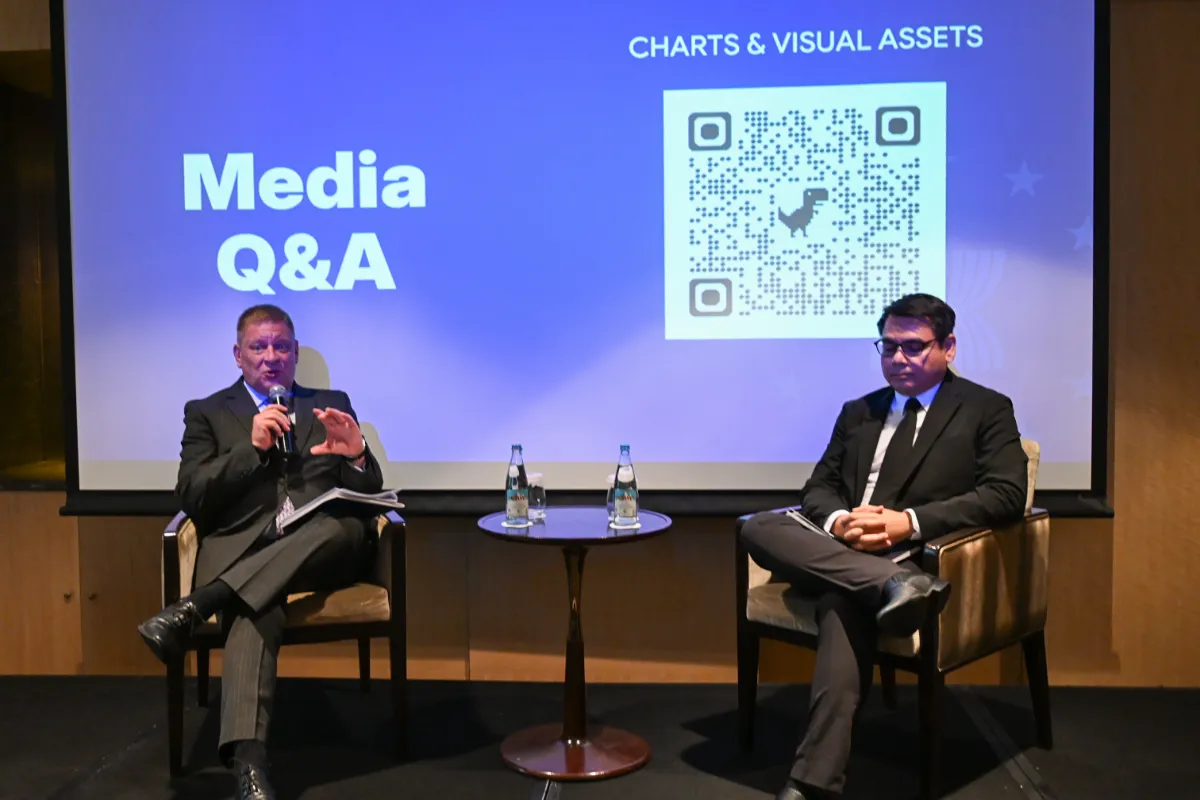
PETALING JAYA: Malaysia lost an estimated RM11.5 billion (US$2.5 billion) in government revenue to the illicit tobacco trade over the past two years, the second-highest losses among the Asean-6, according to a report released today by the EU-Asean Business Council (EU-ABC) and Euromonitor International.
The findings show that Malaysia recorded the highest illicit cigarette market share in the Asean-6, with 57% of cigarettes sold in 2025 estimated to be illicit– making it the only assessed market in the region where illicit cigarette sales exceed legal sales.
The report highlights significant growth in the region’s illicit tobacco market, with illicit operators continuing to record rising year-on-year profits, depriving governments of much-needed tax revenue and diverting demand away from legitimate businesses.
This comes as Southeast Asia faces economic and supply chain shocks driven by the Middle East crisis, which has placed government budgets under severe pressure and public scrutiny, raising concerns about the region’s economic resilience. Against this backdrop, the report highlights illicit trade as a strategic risk to Asean’s growth ambitions.
Indonesia recorded the highest government revenue loss among the Asean-6 at US$5.6 billion, followed by Malaysia and the Philippines at US$2.5 billion each.
Across the Assean-6, illicit tobacco resulted in a total of US$13.1 billion in lost government revenue over the past two years.
The illicit tobacco market across the Asean-6 generated an estimated US$12.6 billion in revenue over the past two years (2024–2025), with illicit cigarette sales growing by 14% and illicit e-vape sales by 24% in the past year alone.
Malaysia’s illicit e-vape market generated an estimated RM1.7 billion (US$ 365 million) in 2025 – the highest among the Asean-6 – with illicit e-vapes accounting for 67% of e-vapes sold.
Demand for illicit tobacco is driven by lower prices and growing accessibility of illicit products, while supply is facilitated by Asean’s extensive and interconnected trade routes and uneven supply chain controls, which complicate customs enforcement.
Illicit cigarettes and e-vapes are largely produced within the region in Indonesia, Cambodia with additional supply from China, while Malaysia, Singapore and Vietnam are key distribution hubs.
These findings represent only a fraction of the broader illicit trade challenge facing the region. An earlier EU-ABC report estimated Asean’s wider illicit trade market at US$35 billion.
“The scale of illicit trade across Asean is often sorely underestimated – and, more worryingly, growing at an alarming pace. Its impacts are wide-ranging, spanning economic, public health and security challenges. If left unchecked, illicit trade could jeopardise Asean’s economic future as a global growth engine,” said EU-ABC executive director Chris Humphrey.
The report notes that illicit cigarettes and e-vapes comprise a significant portion of the illicit tobacco trade in Southeast Asia. While illicit cigarette growth is expected to decline over the next three years, illicit e-vapes will see faster growth at nearly 9% each year, up from around 7% in previous years.
Illicit cigarettes are largely produced within Southeast Asia in Indonesia and Cambodia, with additional supply from China. Illicit networks exploit free trade zones (FTZ) in the region to avoid customs duties and regulatory scrutiny, by moving goods in small fishing vessels.
Ports within FTZ are known to be hotspots for illegal smuggling, including Port Klang (Malaysia); Subic Bay Freeport Zone (the Philippines); Laem Chabang Port (Thailand) and Sabang, Batam (Indonesia).
Illicit e-vapes are mostly imported from China and easily disguised as retail goods for e-commerce orders due to their compact size and individual packaging.
Online platforms have become a key enabler of the illicit tobacco trade, as sales of illicit cigarettes and e-vapes are often conducted through encrypted chat messengers and social media marketplaces. Transactions are frequently completed offline, usually in cash.
“The decentralised nature of online sales makes it hard to crack down on illicit tobacco operations,” said Firdaus Muhamad, head of consulting for Apac at Euromonitor International. “Sellers can quickly shift between platforms, communication channels and delivery networks to evade detection.”
In addition, weak supply chain controls facilitate the flow of illicit tobacco within the region. Track-and-trace systems – widely regarded as an international best practice for illicit trade prevention – are decentralised and unevenly applied, making customs enforcement more difficult.
The report illustrates the outsize fiscal impact of illicit trade on Asean’s developing economies, draining billions in government revenue that could otherwise support infrastructure, education, healthcare, green investment and other priorities critical to economic development.
“The effects are particularly severe at a time when the region is already facing economic pressures and supply chain disruptions linked to the Middle East crisis,” Humphrey said, adding that revenue lost to illicit trade reduces the fiscal space available for relief and mitigation measures, while illicit networks continue to exploit weaknesses in regional supply chains.
The report further notes that illicit tobacco diverts revenue away from the formal economy, reducing the wider economic benefits generated by legitimate businesses through employment, taxation and investment.
“Not only does this create unfair competition, the presence of illicit trade also undermines supply chain integrity, signalling weaknesses in regulatory and law enforcement. Over time, this could diminish Asean’s attractiveness to foreign investors and legitimate businesses,” said Humphrey.
Beyond economic impact, the report highlights health and security risks linked to illicit tobacco. Illicit products expose consumers to higher levels of toxic chemicals and heavy metals, while revenue gained from illicit sales fuels organised crime and other illegal activities.
In an earlier paper published in February, the council outlined a blueprint for illicit trade prevention under the Philippines’ 2026 Asean chairship, emphasising stronger regional cooperation and more flexible mechanisms.
“Illicit trade is a regional problem that demands a regional solution,” said Humphrey. “As illicit operators exploit Asean’s regional connectivity for illicit trade flows, so should Asean leverage its regional platforms for stronger collective enforcement.”
The paper called for the bloc to strengthen institutional coordination through a consolidated, multistakeholder platform for intelligence sharing, joint action, commitment implementation and public-private collaboration.
To achieve this, the paper notes that rather than creating new institutions, Asean could enhance existing cooperation mechanisms under strategic trade management and customs frameworks, building on joint customs control initiatives and ongoing capacity-building efforts.
This consolidated platform could then be concretised through a proposed Asean Leaders’ Declaration on Preventing Illicit Trade and Diversion.
Other recommendations in the paper included aligning policy and regulatory frameworks across Asean for supply chain oversight, leveraging digital and artificial intelligence tools for customs monitoring and enforcement, and increasing structured collaboration with the private sector and Asean’s dialogue partners for intelligence sharing and capacity building.
Humphrey said: “Illicit trade has been allowed to fester in Asean for far too long, giving rise to painful consequences for the region’s communities and economy.
“While we cannot take back what has been lost, we must act quickly and decisively to protect government revenues, strengthen supply chain integrity and safeguard Asean’s economic resilience. Asean’s economic future hangs in the balance.”



