




Dolpo Tulku brings ancient Buddhist wisdom to Malaysia in quest for peace
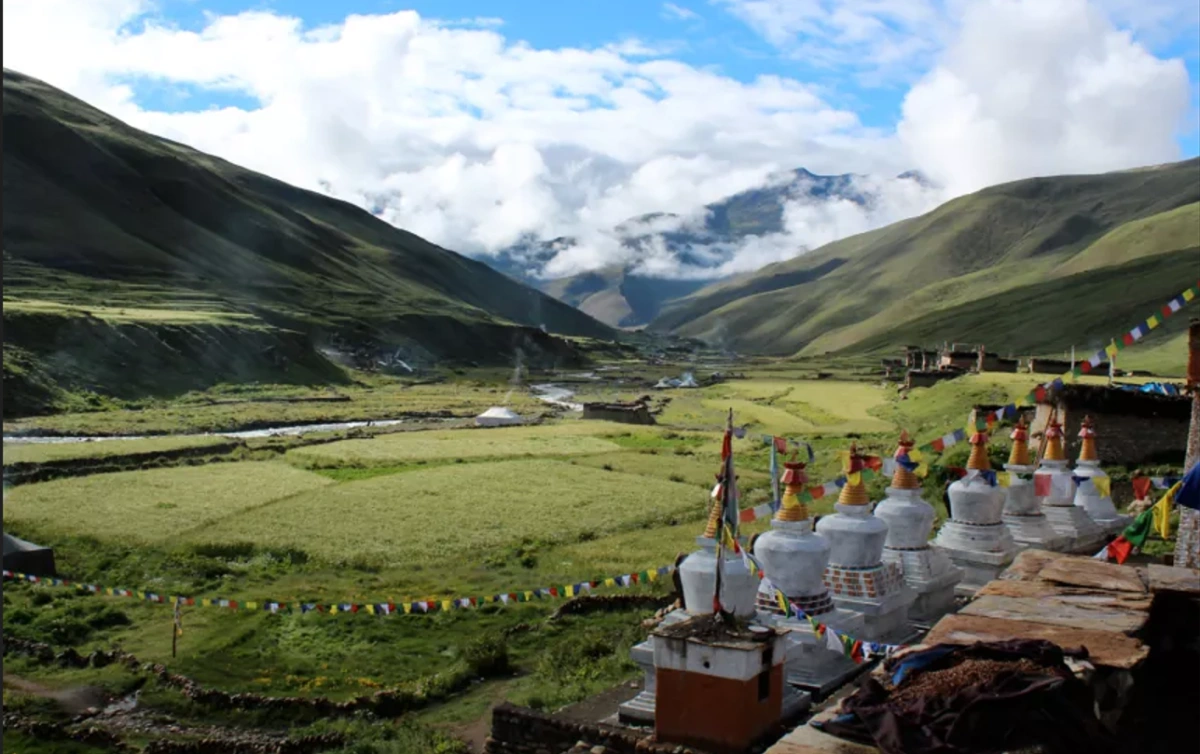
THE enchanting Himalayan region of Dolpo, located in northwestern Nepal, sustains some of the highest human inhabitations on Earth, with certain elevations reaching up to 4,000m above sea level.
Dotted with idyllic villages occupied predominantly by Tibetan-speaking populations, it features an endless landscape that is incredibly panoramic and breathtaking.
READ MORE: How a rejected scholarship birthed Bangsar’s most beautiful antique archive
The green mountain slopes are surrounded by streams lakes and meadows, and the air is crisp, soothing and serene. Yaks and sheep graze blissfully along the cold pastures in placid coexistence with the human settlements.
It is no wonder that the communities here are among the most peaceful and spiritually uplifted that one can find. It is also no surprise to see Buddhist monasteries and stupas across the hills, in picturesque valleys and high up on soaring crags and cliffs.
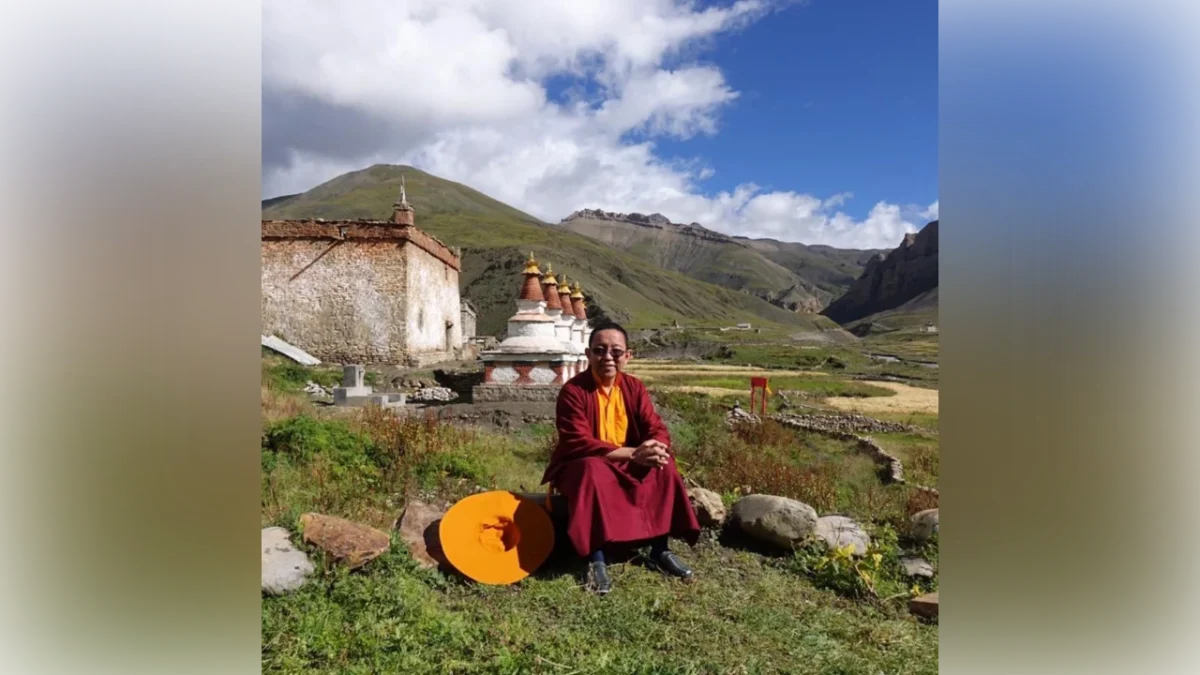
It was in one such humble and deeply pious village that Dolpo Tulku Rinpoche was born to an extremely austere Lama Yogi family.
Today, he is regarded as the reincarnation of a well-known revered yogi, the second Nyingchung Tulku Rinpoche, who was the Dharma holder of Namgung Monastery, one of the three oldest mother monasteries in Dolpo.
He heads the Dolpo Tulku Charitable Foundation (DTCF), which is focussed on environmental protection, healthcare, preservation of culture and a meaningful combination of traditional and modern education.
Recital of ancient texts
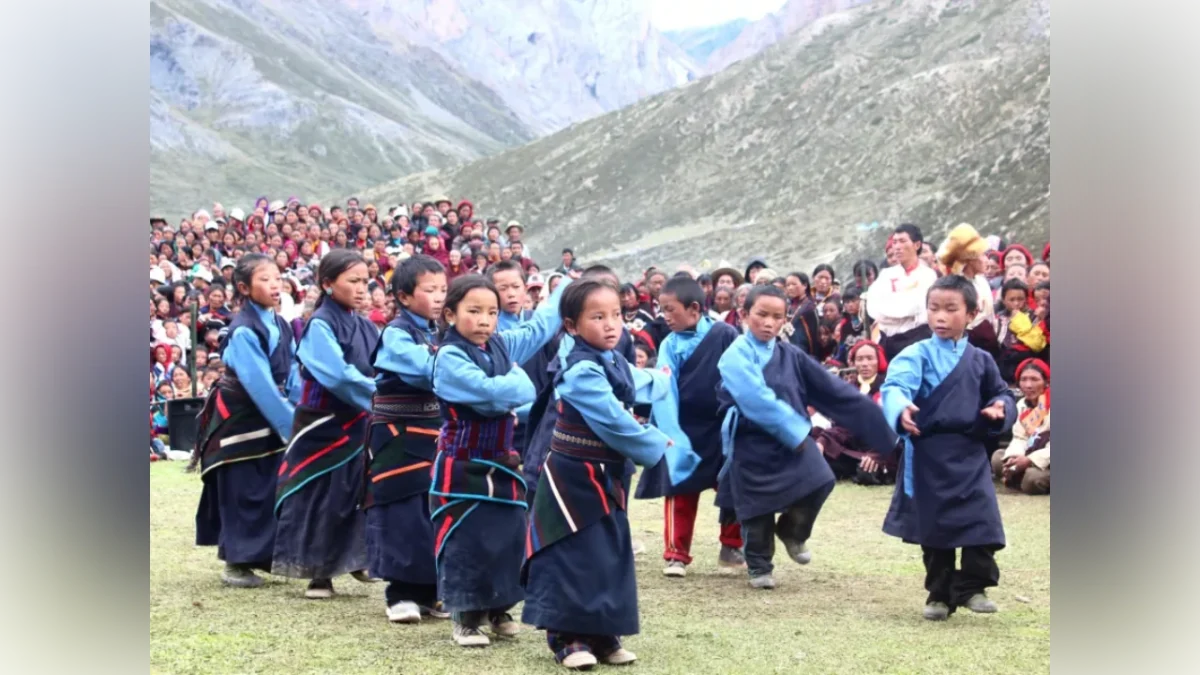
Dolpo Tulku shall soon lead a nine-day chanting initiative dedicated to peace in Malaysia. The 2nd Malaysia Grand Tripitaka Recital is scheduled to take place daily from July 11 to 19 at the Manhattan V hall of Berjaya Times Square Hotel, Kuala Lumpur.
The event is organised by the Selangor and Kuala Lumpur Paramita Buddhist Society, with Berjaya Corporation Bhd being the main sponsor. It features soothing and uplifting chants of sacred Buddhist sutras that originated over 2,000 years ago.
These verses were designed to inspire people of all walks of life with the three pitakas, as they are called in Sanskrit – pearls of wisdom on mindful living and prosperity.
“This activity is on the Buddha’s written sutras. You can put them in three parts, which we call the three pitakas,” Dolpo Tulku said in a video interview with theSun from a monastery in Sankhu, Nepal.
He explained that when scholars in ancient times put into writing the teachings of the Buddha, the parchments were placed in three boxes. Literally, pitaka in Sanskrit means box or container.
“That is why they are known as three pitakas,” he said.
These pitakas were originally composed in Sanskrit and Pali. They were translated to Tibetan around the 8th century, he added.
Metaphorically, the pitakas preach about topics relevant to the moral, ethical and spiritual realities faced by humankind.
The first, Vinaya Pitaka, refers to moral discipline to counter mundane physical desires.
The second, Sutra Pitaka, promotes mindfulness to train the mind inwards to alleviate suffering. The third, Abhidhamma Pitaka, is about knowledge of true reality to counter delusions. “Abhidhamma Pitaka is Buddhist science, as we call it.”
Basically, moral discipline and mindfulness are best observed with knowledge or wisdom. This is why the three are profoundly linked.
“That is why the Buddha said that your morality and meditation (samadhi) should be led by wisdom and knowledge. “If you just meditate on something that does not exist, it is of little use.
“You can meditate and imagine that that they are a hundred Himalayan yaks in the centre of Kuala Lumpur.
“You can meditate on that, but it is not knowledge-based meditation. It’s a totally wrong imagination and not in tune with reality.”
Dolpo Tulku emphasised that all religions touch on themes similar to those highlighted in the three pitakas, but with different vocabularies.
“I am sure they also talk about moral discipline, mindfulness and knowledge,” he said.
Destined from tender age
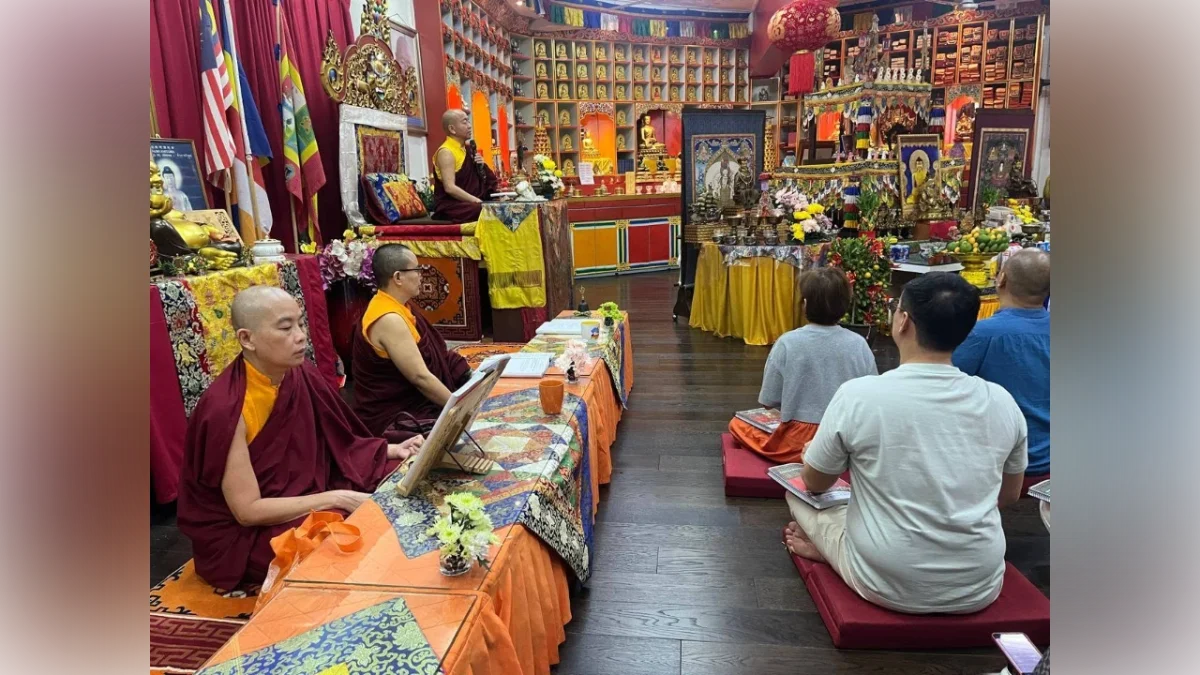
At the age of eight, Dolpo Tulku was present at the immensely transformative Kalachakra empowerment given by the Dalai Lama in the ancient city of Varanasi, India, from December 20, 1990 to January 4, 1991. How he ended up there is an unforgettable tale in itself.
The little boy had secretly followed his grandfather, who left their village to walk towards Varanasi to attend the gathering.
Only after a whole day of quietly walking behind did Dolpo Tulku call out to his startled grandfather. When he eventually returned home from Varanasi, he joined the Ka-Nying Shedrub Ling Monastery in Nepal as a novice.
He then took his refuge vows from Tulku Orgyen Rinpoche and was given the name Orgyen Tsering. At age 15, he became ordained as a monk , receiving the name Orgyen Chöying Yeshe.
He began his higher Buddhist studies at Nyingma Ngagyur Institute, the highly respected university of Namdroling Monastery in Karnataka, India. There, over the course of ten years, he studied and explored sutra and tantra teachings dating back to the Buddha.
In 2008, after a total of 17 years, he travelled back to his native Dolpo for the first time to visit the monasteries under his responsibility and to be enthroned there. He was accompanied by a German film team, which produced the acclaimed documentary Dolpo Tulku – Return to the Himalayas.
According to Dolpo Tulku, it is highly significant to understand the pitakas in trying to come to terms with the journey taken by all humans in the material world.
“Through the recital and explanations, people can reflect on their present situation,” he said, adding that this could also include tragedies like wars taking place in the world that somehow impact us.
“We are not directly in the war, but we face its effects like inflation and mental anxiety. Most of us don’t feel relaxed. We need more peace and more knowledge on how to solve this conflict.”
Overcoming clutches of material temptations
Speaking of unhappiness and discontentment, I put to him a question on woes of materialism in the present day and age. What role could Buddhist dharma play in mitigating or even dispelling the endless temptations of the physical world that contribute to laziness, greed and mental enslavement?
How can the ancient scriptures help in the present modern era in which our 21stcentury senses are bombarded by digital distractions like video entertainments and AI? Dolpo Tulku refused to accept that the human condition has in essence changed from how it was in the distant past.
“Even in ancient times, there was enough outside to distract a person although there was no such technology then.
“People still had reason to get distracted from spirituality. Times have changed but the mentality is the same.
“I don’t believe that past generations were better and that today we are worse. We are humans and more or less we are the same.”
Giving an example, he said some people in the past may have been distracted by physical fighting and other vices.
“Today, we are also busy. But with mobile phones,” he said. “Even I use mobile phones and AI because they can be of good use.
“You can get a lot of good information easily if you utilise technology with good intention and motivation.”
The crux of the matter is that we need moral discipline based on good intentions, and also awareness and knowledge.
“We need to train people in these three things. For those who engage in these three, it does not matter whether they are busy with AI or use tonnes of technology. It is important that you use it with good moral intention, and not with bad motivation. I wish every school would have subjects on meditation, moral discipline and humankind.”
He said the pitakas are like the soles of shoes that offer protection for the feet no matter what surface of the physical world we walk upon.
“The Buddha said don’t complain about others. You change your mind into something positive. Then it can solve lots of problems.
“This is a very useful message for everyone.”
For more information, please contact [email protected] or call +601127493257.



