




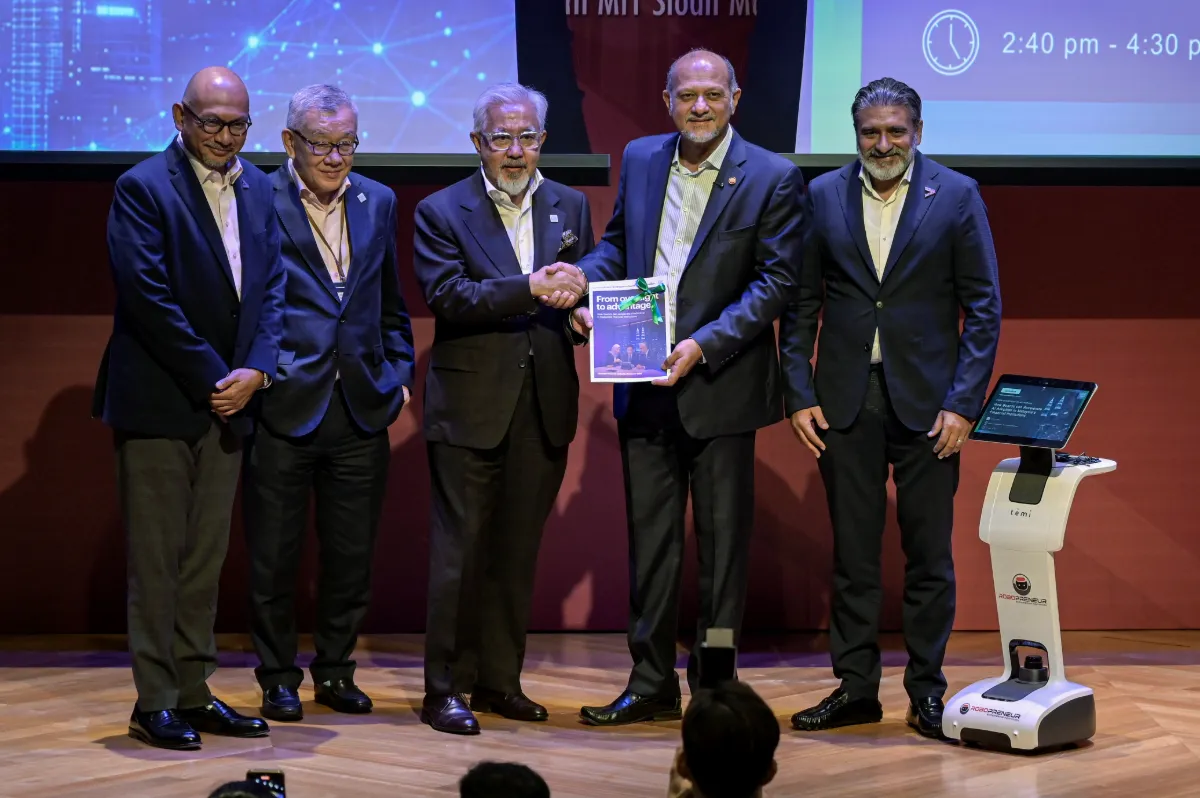
KUALA LUMPUR: Malaysia will adopt a coordinated approach to artificial intelligence (AI) governance without centralising regulatory control, allowing existing authorities to retain oversight while the National AI Office (NAIO) sets broader standards.
Digital Minister Gobind Singh Deo said AI regulation will remain sector-based, with regulators such as Bank Negara Malaysia continuing to supervise their respective industries, while NAIO provides overarching guidance on how AI systems and models should be developed.
“AI cuts across all sectors. Each sector will continue to be regulated by its respective authorities. The National AI Office will not take over these roles, but will work together to set broader guardrails,“ he said at the launch of a joint report by FIDE Forum and Accenture Malaysia today.
The report said that while 71% of Malaysian banks have implemented at least one AI application, only 17% of financial institutions surveyed have successfully scaled strategic AI initiatives.
Notably, none of the insurers surveyed had successfully scaled a strategic AI initiative, highlighting a significant gap between AI adoption and enterprise-wide value creation.
Gobind said that with NAIO setting broader standards, the approach reflects the need to balance innovation with oversight, as AI adoption accelerates across industries with varying regulatory requirements.
He said NAIO, established in 2024 and expected to be institutionalised next month, will serve as the central coordinating body for Malaysia’s AI strategy, bringing together government, industry and academia.
The office will focus on setting standards, developing guardrails for AI systems and ensuring that emerging technologies align with national priorities, including safety, security and economic development.
Gobind said the coordinated governance model allows Malaysia to leverage existing regulatory expertise within sectors while ensuring consistency in how AI technologies are developed and deployed across the economy.
He added that the government will continue to strengthen collaboration with industry stakeholders to ensure Malaysia is prepared to adopt and scale new technologies, in line with its ambition to become an AI-driven nation by 2030.
“This is about making sure that when new technologies arrive, we are ready, not just with infrastructure, but with the right systems, talent and governance in place,“ he said.
Malaysia has spent the past two years building the necessary digital ecosystem to support AI adoption, including strengthening connectivity, developing data centre capacity and enhancing cybersecurity capabilities, the minister said.
“We have the technology, we have connectivity, we have data centres and cybersecurity. The question now is whether Malaysians and businesses are ready to use these technologies effectively.”
Gobind stressed that the next phase of Malaysia’s AI journey will focus on adoption and capability building, particularly at the industry and board levels, as companies assess how AI can transform their operations.
He said businesses must evaluate how AI will reshape their sectors and whether their leadership structures, including boards of directors, are prepared to guide that transformation. “This requires discussions at the company level, how AI changes the way you operate, and whether your organisation is ready for that shift.”
Gobind said engagement with industry players remains critical, as the government relies on feedback from companies to better understand sector-specific challenges and design targeted policy support.
He added that forums such as the FIDE event provide a platform for industry representatives to highlight key issues, enabling the government to refine its strategies and ensure that support measures are aligned with actual needs.
Gobind acknowledged AI could replace or change some lower-level jobs, but the government is working to help affected workers adapt through training and skills development.
He said sectors likely to be affected have been identified over a five-year horizon, with efforts underway to implement upskilling and reskilling programmes to help workers transition.
“We do not want a situation where technology comes, and those affected are left without options. Through reskilling and upskilling, they can continue to participate in the workforce and benefit from new technologies,“ Gobind said.
He added that the government is also looking at broader talent development strategies, including introducing accessible learning modules and strengthening collaboration with educational institutions to ensure both students and existing workers are equipped with relevant digital skills.



