




The collaboration marks a major step towards developing Malaysia’s downstream rare earth industry.
KUALA LUMPUR: French rare earth specialist Carester plans to build a rare earth separation plant in Perak and transfer key processing technologies to Malaysia under a 10-year partnership with local miner Malaco Mining Group.
The collaboration marks a major step towards developing Malaysia’s downstream rare earth industry, with the partnership covering the full value chain from extraction and purification to processing.
Carester CEO Frederic Carencotte said the company would transfer rare earth extraction, purification and separation technologies to Malaco, while securing an offtake of refined rare earth products from Malaysia to support its operations in France.
The company is also seeking approval from Malaysian authorities to undertake rare earth mining using clean in-situ leaching technology in plantation areas across several states, with potential sites being studied in Kelantan and Perak.
“The idea is exactly the same as our business model – to provide upstream and downstream technologies, while also taking some concentrate to feed our plant in France.
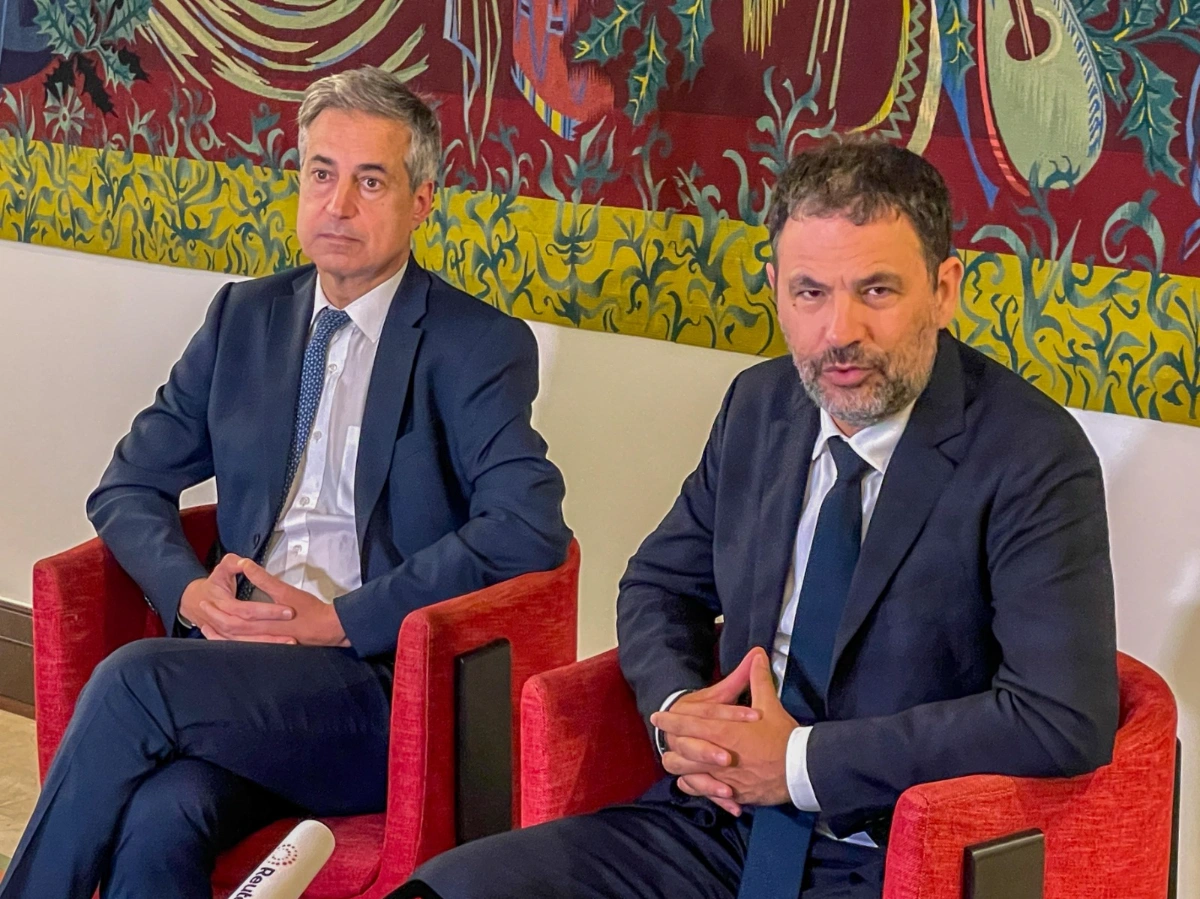
“This is a win-win partnership where we transfer technology and purchase concentrate,” he told a briefing at the French Embassy on Monday.
Carencotte said Malaysia was chosen because of its abundant ionic clay deposits, which contain both light and heavy rare earth elements. Under the agreement, Carester will introduce three core technologies.
The first is clean in-situ leaching, a method of extracting rare earth elements while minimising environmental risks. The second involves removing actinium, a radioactive element found in ionic clay.
Carencotte said Carester had developed a patented liquid-liquid extraction technology capable of removing the element without generating waste.
The third is the company’s rare earth separation technology, which would enable Malaysia to produce higher-value rare earth products such as neodymium, praseodymium, dysprosium and terbium.
Carester said its processing technology does not generate wastewater and is capable of recycling carbon dioxide during production.
Plans for the separation plant in Perak are being finalised, although the investment value and production capacity have yet to be determined.
Under the partnership, Carester will provide the technology and receive a share of production through an offtake arrangement.
Carencotte said the material supplied to Carester would not be raw rare earth ore, but chemically refined concentrate that had undergone initial processing in Malaysia.
Addressing environmental concerns over rare earth processing, Carencotte said uranium and thorium levels in ionic clay were significantly lower than in other rock types.
“Today, in ionic clay, it is relatively easy to remove uranium and thorium using proper operating procedures.
“The amount of uranium and thorium in ionic clay is significantly lower compared with other types of rocks, but they can still be removed,” he said.
He added that Carester’s process removes radioactive elements at the earliest stage and avoids producing radioactive waste.
“We do not generate waste. We will produce a by-product that can be sold to fertiliser companies,” he said.
Carencotte also stressed Carester was not positioning itself as a competitor to Australiabased rare earth producer Lynas, saying the two companies operate under different business models.
“Lynas is a billion-dollar-plus company, while Carester is a company worth only a few million. Our DNA is really process expertise – rare earth chemistry,” he said.
Unlike companies centred on a single mining deposit, Carencotte said Carester specialised in developing processing technologies capable of handling rare earth materials from multiple sources.
He added the company had signed agreements with Malaysia, South Africa, Canada and Brazil to secure future feedstock supplies. Its facility in France is expected to begin operations within the next year, focusing on magnet recycling and the processing of heavy rare earth concentrates.
Carencotte said Carester hoped to begin operations in Malaysia “as soon as possible”, but acknowledged environmental impact assessments and regulatory approvals must first be completed.
“Today, there are already separation plants in Malaysia, but they are processing rare earth materials from outside the country.
“This is a joint endeavour based on technology transfer to build an autonomous value chain.



