




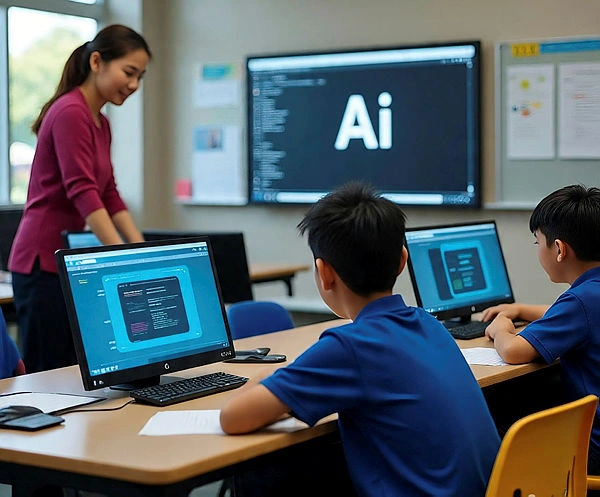
THE artificial intelligence (AI) bloom is rewarding people who build AI faster than those who question it. Schools are teaching programming in younger classes.
Industries promote “build an app in one day” courses. Parents start replacing arts and music lessons with coding programmes.
Most curricula focus on technical ability – what tools to use, how to code and how to generate smarter output. But that is not enough. True digital readiness requires developing critical AI literacy and this goes beyond technical know-how.
There is a difference between accepting a chatbot’s answer and asking why it might be wrong. It is understanding why certain advertisements appear on social media following a Google search. It is recognising when a video call from a “family member” may not be real.
AI is already shaping what people read, believe and purchase. As scams become more rampant, even well-educated individuals are being caught out by its capability to mimic reality. Without the understanding, they are left to rely on instinct to navigate the complex technology.
Schools play a critical role, yet limiting digital skills to programming risks treating complex judgement issues as simple technical work. Instead of beginning with tools, digital literacy should begin with thinking.
In Finland, media literacy is incorporated into its national curriculum. As early as age six, children are taught to question what they see online, such as spotting deepfakes and misinformation, analysing sources and using digital tools safely.
AI education should not be confined to STEM students or those seeking upskilling. While public programmes like “AI untuk Rakyat” aim to broaden access, it directly competes with commercial courses promising competent skills and certifications.
Scale and reach matter as much as content. In the UK, courses like “Living with AI” are delivered through partnerships with government, education institutions and local councils, allowing them to reach the community beyond classrooms.
Covering various topics on human well-being, misinformation, job security and environment, citizens learn how technology shapes everyday decisions.
Malaysia’s initiatives in nurturing talent are a step forward but driving a future-ready workforce goes beyond technical capability. It is not just about producing more engineers or adopting more tools but building a society that can question, challenge and make informed decisions about AI.
In practice, this means software teams begin testing for unintended harms of a product, rather than just technical bugs.
Action cannot wait for perfect policy.
Singapore offers a different model, combining national initiatives such as AI Singapore, alongside a flexible regulatory framework and public education.
AI ethics is embedded across schools, workplaces and public programmes, rather than waiting for a comprehensive regulation.
A society that knows how to use technology will move faster but a society that can question it will decide the future.
Real AI literacy is understanding how it works, how to use it and how it affects people. Tools will get better at answering but the real question is whether we get better at thinking.
Valeryn
Johor



