




PETALING JAYA: Malaysia’s banking and development finance sector is rapidly adopting artificial intelligence (AI), but many institutions remain cautious about using AI for high-impact business decisions, according to a study by the Asian Institute of Chartered Bankers (AICB), Ecosystm and the AICB Chief Risk Officers’ Forum.
The “AICB-Ecosystm AI in Practice: How Malaysia’s Banks and DFIs are Adopting and Governing AI” Report said that while AI is increasingly being deployed in areas such as Know Your Customer onboarding, fraud detection, anti-money laundering and counter financing of terrorism and employee productivity, only 25% of respondents trust AI-generated outputs enough to act on them in key business decisions.
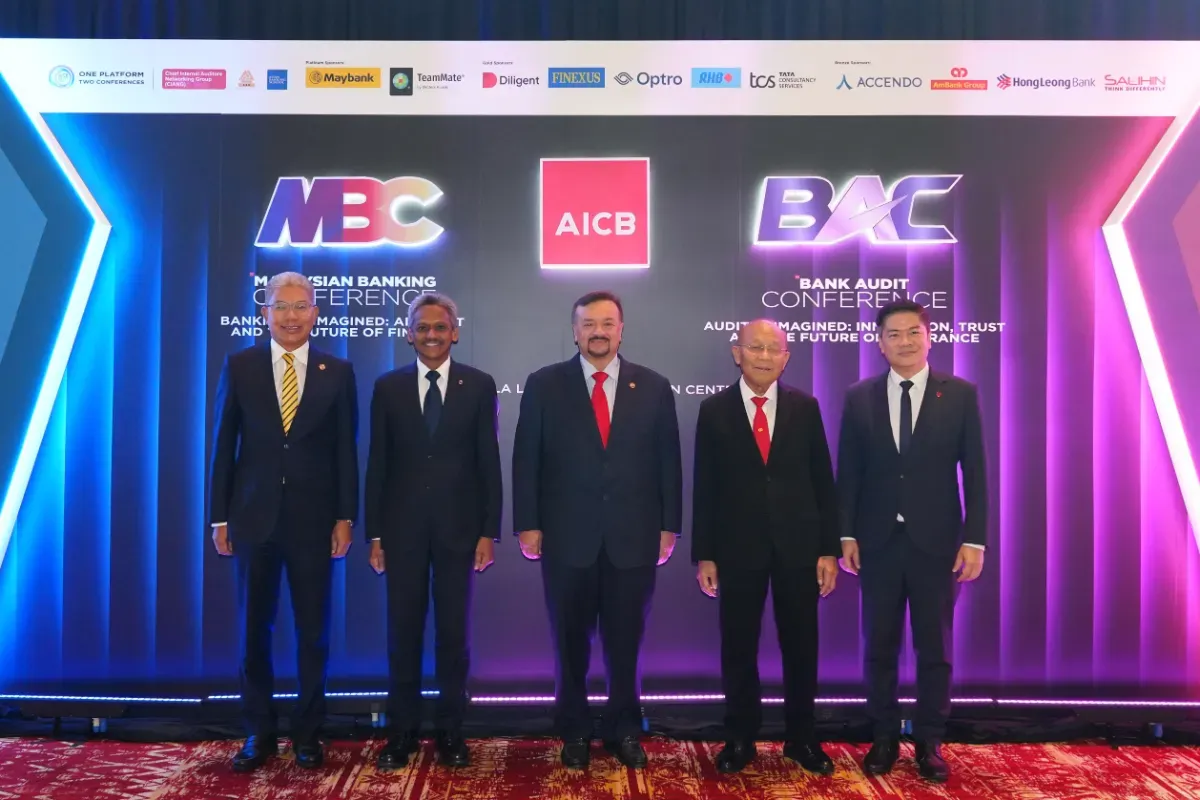
Launched on the sidelines of AICB’s 4th Malaysian Banking Conference and 2nd Bank Audit Conference, the study draws on responses from 87 senior leaders across Malaysian commercial banks, digital banks, Islamic banks and development financial institutions, supported by insights from executive roundtables and interviews.
AICB chief executive Edward Ling said: “Malaysia’s banks and DFIs are no longer asking whether AI has a role in financial services. The question now is whether institutions have the judgement, ethics, governance and professional capability to use AI responsibly in decisions that affect customers, risk and institutional performance.”
According to the study, 44% of Malaysian banks and DFIs are in the developing stage of AI readiness, having moved beyond experimentation but still facing fragmented capabilities across data, skills and operating models. Only 15% have reached an established level of readiness, while just 2% are categorised as advanced, where AI is fully integrated into decision-making and contributes directly to competitive differentiation.
The study also found out where organisations are struggling more to establish AI readiness. Only 26% of institutions have a defined strategy linking AI to business goals, while 44% are already developing custom AI solutions, increasing the risk of fragmented initiatives that are difficult to scale or replicate.
Meanwhile, 79% report shortages in specialised AI technical skills, while only 20% actively promote AI-driven decision-making across the workforce, highlighting organisation-wide AI capability gaps.
AI governance remains another major constraint. Around 53% of organisations still rely on fragmented or ad hoc governance rather than consistent, risk-based frameworks to determine the appropriate controls, approvals, and oversight for different AI use cases. Only 33% have established structured AI governance and model risk management, while just 27% apply formal AI risk tiering to tailor oversight according to the level of risk.
AICB chief risk officers forum chairman and RHB Malaysia chief risk officer Dr Chong Han Hwee said: “AI introduces a new dimension of complexity because its risks do not reside solely within the model. They emerge across the entire ecosystem, from data quality and human usage patterns to the decisions informed by AI and how these factors evolve over time.”
Ecosystm vice-president for industry insights Sash Mukherjee said: “As AI expands into higher-risk use cases, financial institutions want greater clarity on model risk management, explainability, third-party AI, and data governance. But regulation alone will not keep pace with the technology.
“Ongoing collaboration between industry and regulators will be equally critical to ensure governance frameworks evolve alongside AI innovation.”
AICB said the findings provide an important benchmark for the financial sector as institutions move from AI pilots to responsible, enterprise-wide implementation while underscoring the Institute’s mandate and commitment to building industry capacity for the future of banking.
The study was jointly undertaken by AICB, AICB’s Chief Risk Officers’ Forum and Ecosystm



