





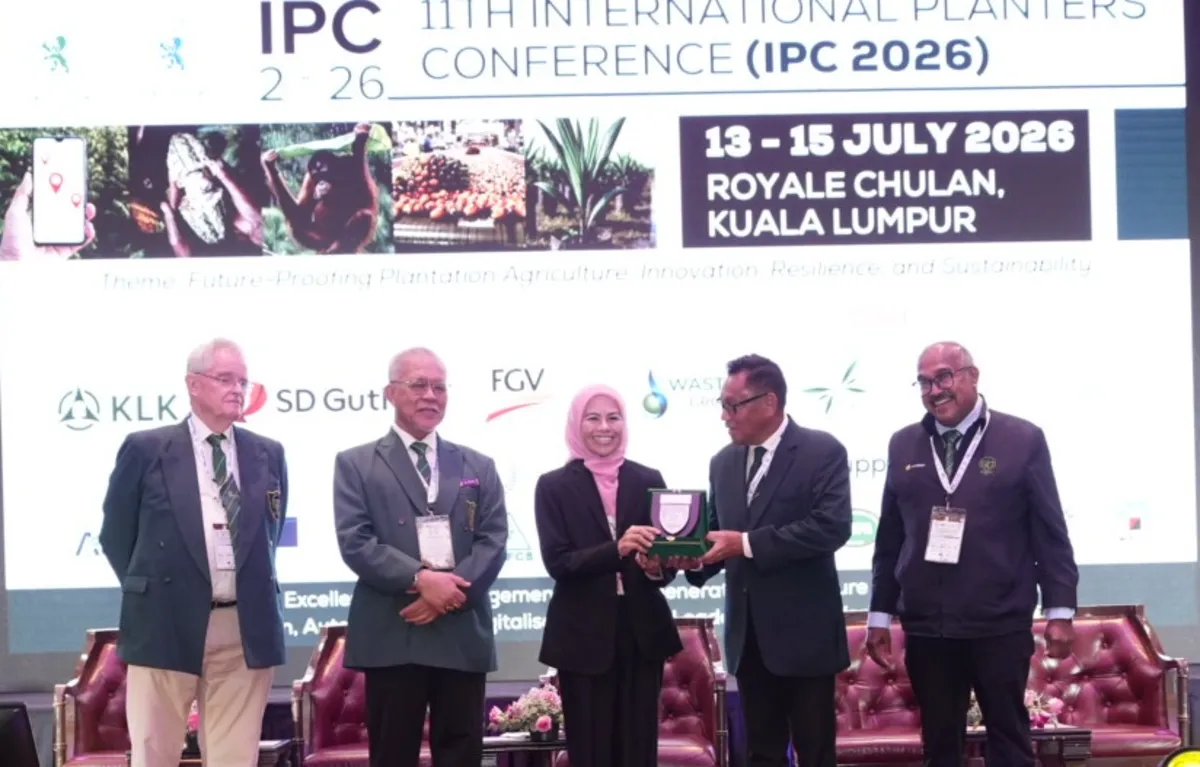
KUALA LUMPUR: Palm oil industry players must seize the opportunity to excel in research and development (R&D) and upskilling and to encourage innovation amid the current global economic and geopolitical challenges.
Plantation and Commodities Minister Datuk Seri Dr Noraini Ahmad said the industry continues to navigate climate change, labour shortages, rising production costs, supply chain disruptions and geopolitical uncertainties that affect economies worldwide.
“As one of the world’s leading producers of palm oil and a nation with a long history in plantation agriculture, we recognise that our continued success cannot depend solely on increasing production.
“It must also be driven by innovation, sustainability and our ability to respond confidently to a rapidly changing global landscape.
“This is why our aspiration goes beyond remaining a reliable producer of quality commodities. We aspire to position Malaysia as a global reference for sustainable plantation agriculture,“ she said at the 11th International Planters Conference organised by The Incorporated Society of Planters today.
Noraini said Malaysia remains committed to strengthening R&D, encouraging technology adoption and investing in talent development across the plantation ecosystem. “Because the future of our industry will not be determined solely by artificial intelligence. It will also be determined by human intelligence.”
Touching on sustainability, Noraini said sustainability has become one of the defining expectations of modern agriculture worldwide.
Consumers are becoming more discerning, and investors are paying closer attention to environmental, social and governance performance. Trading partners are introducing more comprehensive sustainability requirements. These developments are reshaping international markets, she said.
Noraini said Malaysia welcomes this evolution because it believes sustainable practices are fundamental to the industry’s long-term success.
“This commitment is reflected through the Malaysian Sustainable Palm Oil (MSPO) certification scheme. MSPO represents Malaysia’s national commitment towards responsible production, environmental stewardship and social accountability throughout the palm oil value chain.
“More importantly, it reflects our belief that sustainability should be practical, inclusive and capable of helping every stakeholder, including independent smallholders.
“We will therefore continue strengthening MSPO, improving its implementation and enhancing international confidence in Malaysia’s sustainability credentials,“ she said.
With the theme “Future-Proofing Plantation Agriculture: Innovation, Resilience, and Sustainability”, the conference serves as a platform for industry leaders, researchers, policymakers and stakeholders to exchange insights, foster collaboration, and showcase cutting-edge technological advancements that promote sustainable development in the industry.
Noraini said that as Malaysia moves forward, the government has reaffirmed five commitments that will continue to guide the national agenda for the plantation sector.
First, the government will continue to strengthen sustainability as the foundation of long-term competitiveness, ensuring that economic growth goes hand in hand with environmental responsibility and social inclusion.
Second, the government will accelerate innovation by supporting research, digitalisation and the adoption of advanced technologies that improve productivity, efficiency and resilience throughout the value chain.
Third, Malaysia will continue to empower smallholders and plantation communities.
Fourth, the government will continue to promote greater value creation by encouraging downstream industries, commercialisation of research, bio-based products, and the circular economy, enabling domestic commodities to contribute to higher-value industries and new sources of economic growth.
Finally, Malaysia will continue to strengthen international cooperation because the future of sustainable plantation agriculture depends on stronger partnerships, greater knowledge sharing and mutual trust among nations.
“These commitments reflect not only our national priorities. They also reflect our confidence in the future of this industry,“ Noraini said.
The conference will be structured around three key thematic areas.
The first is pperational excellence and management, which will focus on optimising plantation operations through best practices, data-driven decision-making, risk management, and compliance to enhance efficiency and sustainability.
Second, it will touch on mechanisation, automation and digitalisation/talent, leadership and workforce of the future, highlighting technological innovations such as automation and digital tools to increase productivity, as well as developing leadership and attracting talent to support industry readiness.
Third, the regenerative agriculture and sustainability topic aims to promote environmentally friendly practices, such as soil health, biodiversity, and water management, to ensure ecological preservation and sustainable resource use.
Over 1,000 delegates from various sectors and diverse expertise will engage in enriching discussions on driving excellence through innovations in mechanisation, automation and digitalisation.
Additionally, immersive site visits on the third day will showcase industry advancements at prominent locations including Carey Island (SD Guthrie), the Advanced Agriculture Research Centre in Damansara, and Minsawi Industries in Kuala Kangsar, featuring innovations such as artificial intelligence-powered smart palm oil mills and eco-friendly plantation techniques.



