




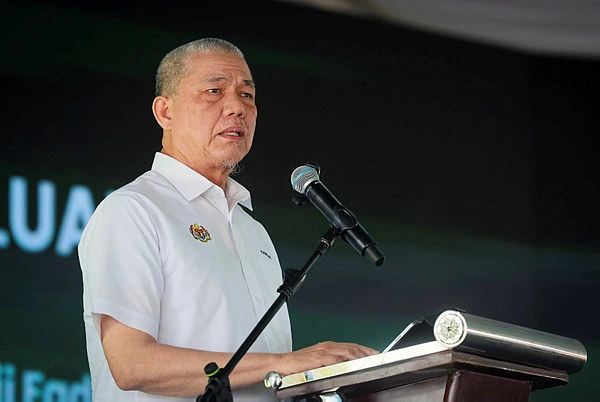
Malaysia’s renewable energy installed capacity reaches nearly 32%, keeping it on track for its 35% target by 2030, says DPM Fadillah
PASIR MAS: Malaysia’s renewable energy installed capacity stood at nearly 32 per cent as of June, putting the country firmly on course to achieve its 35 per cent target by 2030, said Deputy Prime Minister Datuk Seri Fadillah Yusof.
He said this achievement reflects the nation’s steady progress in driving its energy transition agenda under the National Energy Transition Roadmap (NETR).
He added that Malaysia had already achieved 31 per cent RE installed capacity by December 2025, meeting the government’s target, with the next milestones set at 35 per cent by 2030 and 70 per cent by 2050.
“Through the NETR, the government has laid out a clear roadmap to transform the country’s energy sector.
“Energy transition is not an option. It is a strategic necessity to ensure our energy security, strengthen economic resilience, attract high-quality investments, and uphold Malaysia’s commitments to the global climate change agenda,” he said in his speech at the launch of the Large-Scale Solar Project (LSS5) here today.
Fadillah, who is also Minister of Energy Transition and Water Transformation (PETRA), said the government remains committed to ensuring the nation’s energy transition is carried out in a balanced manner, grounded in the principles of energy security, cost affordability, and sustainability.
At the same time, he added, it will strengthen access to competitive green electricity supply to support the national energy transition agenda and attract more high-quality investments.
He said the LSS5 in Pasir Mas is a clear sign of investor confidence in the country’s energy policies, and proof of the strong collaboration among the Federal and state governments as well as the private sector in driving a sustainable, competitive low-carbon economy.
According to him, the project is also expected to contribute to the national electricity supply, create job opportunities, stimulate the local economy, boost the growth of support industries and benefit the communities in Pasir Mas and Kelantan as a whole.
Fadillah noted that Kelantan holds significant potential to further increase its renewable energy capacity, particularly solar power, driven by its vast suitable land, state government support and active private sector participation.
He also encouraged homeowners, mosques, places of worship, and commercial premises in the state to take advantage of the Solar ATAP Programme offered by PETRA to expand the use of rooftop solar systems.
Meanwhile, Kelantan Menteri Besar Datuk Mohd Nassuruddin Daud said the LSS5 project, launched in Kampung Serongga here, is poised to become a benchmark for renewable energy development in the state and a catalyst for attracting even more quality investments in the years ahead.
He said the project’s success would solidify the state’s standing as a destination for investment driven by sustainability, innovation and green technology.
“The success of LSS5 will set the gold standard for renewable energy development in Kelantan, and pave the way for a stronger influx of high-value investments in the future,” he said.
He added that the state government remains fully committed to fostering a conducive, transparent, and investor-friendly ecosystem, in line with its vision to position Kelantan as a competitive state capable of drawing more high-impact investments.
Mohd Nassuruddin expressed hope that the project would stay on track, with due emphasis on safety, environmental protection and strong community relations.
He emphasised that the LSS5 project reflects investor confidence in Kelantan’s potential, and proves that the state has what it takes to emerge as a leader in new economic development anchored in sustainability, innovation and green technology.
The state government, he said, always welcomes high-impact investments that accelerate economic growth and also generate jobs, empower local enterprises, and deliver lasting value to the people.



