




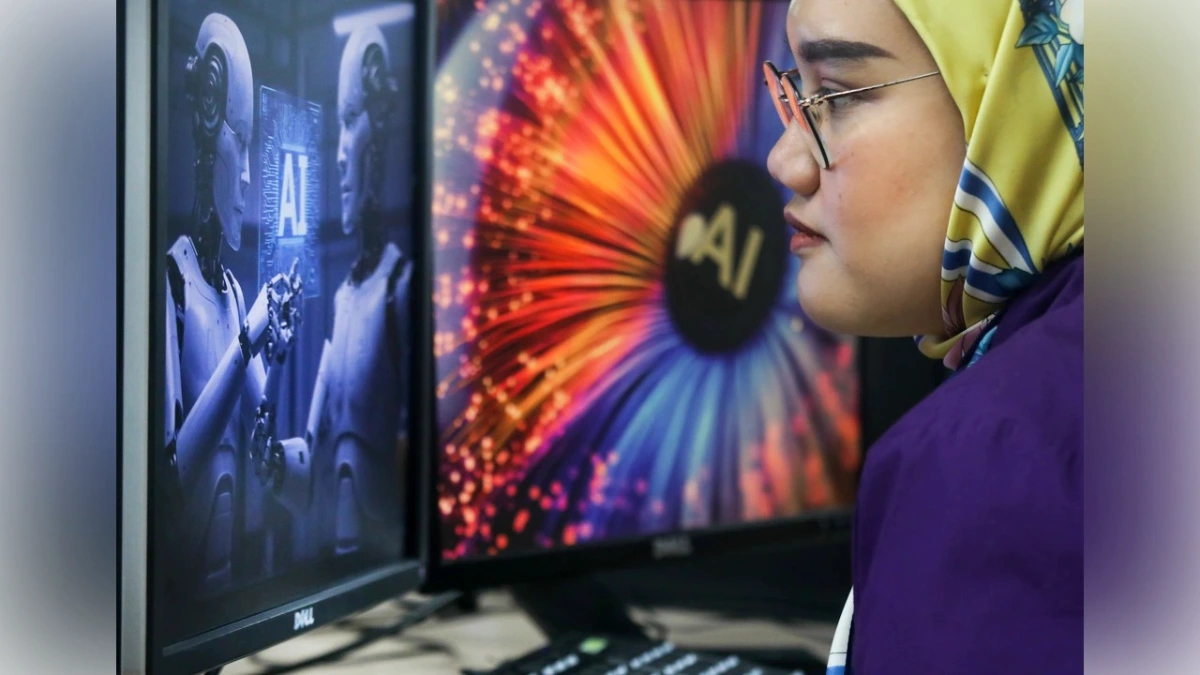
PM Anwar warns that AI and digital reforms must not widen the education gap between privileged and underserved students.
PUTRAJAYA: Malaysia’s rapid push towards artificial intelligence (AI), digitalisation and STEM education must not come at the expense of equity, with Prime Minister Datuk Seri Anwar Ibrahim warning that education reforms should narrow rather than widen the gap between privileged and underserved students.
He said every policy introduced by the Education Ministry must ensure equal opportunities for students regardless of their backgrounds, stressing that technological advancement should not leave rural and disadvantaged communities further behind.
“We cannot allow AI, STEM and digitalisation to create an even wider divide. We already have disparities between urban and rural communities, and between the privileged and those who are underserved.
“Every policy must be sensitive to this and ensure equitable access and shared opportunities,” he said during the Education Ministry’s monthly assembly today.
Anwar said the launch of the National AI Office marked a major step in Malaysia’s digital ambitions, but emphasised that its success would ultimately depend on strengthening the country’s education system from the ground up.
“The National AI Office will only succeed if we prepare our children from primary school.
“That is why we are introducing mathematics transformation, strengthening STEM education and embedding AI readiness in schools,” he said.
He said Malaysia must embrace technological change while ensuring no child is left behind, adding that schools remained the foundation of the country’s future workforce.
Anwar also called for education policies to be guided by the principle of “justice as fairness”, arguing that meritocracy alone is insufficient when students begin from unequal circumstances.
“It is unfair to expect students from schools in Kapit or Manek Urai to compete on equal footing with those from well-equipped schools in Kuala Lumpur.
“A student who scores 6As in a remote rural school may have demonstrated the same potential and determination as a student who obtains 10As in one of the country’s best schools. These realities must be considered in government decisions,” he said.
He stressed that while merit remained important, opportunities must also take into account the different challenges faced by students from poorer and rural communities.
On language policy, Anwar reaffirmed that Bahasa Melayu must remain the nation’s primary language, while English proficiency should continue to be strengthened to improve Malaysia’s competitiveness.
At the same time, he said students should also be given opportunities to learn additional languages such as Mandarin, Tamil, Arabic and French, describing multilingualism as an increasingly valuable asset in the global economy.
“Fifty years ago, Mandarin was largely seen as a language for the Chinese community. Today, it is one of the most important languages for regional trade and business.
“There is no contradiction in strengthening Bahasa Melayu, improving English proficiency and allowing our children to master other languages,” he said.
Anwar also acknowledged that education reforms often face resistance but urged educators to embrace change, saying Malaysia could not afford to fall behind in an increasingly technology-driven world.
He described schools as institutions with the greatest impact on society, noting that no other sector touches the lives of nearly every Malaysian family in the same way as education.



