



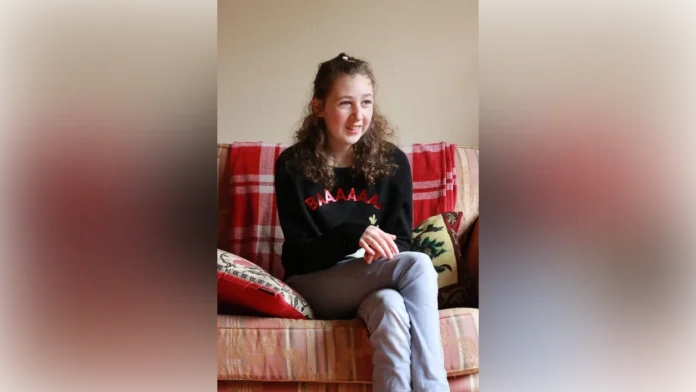
French investigation into Nora Quoirin’s death stalled, family claims Malaysian authorities not cooperating; case remains open
PETALING JAYA: Malaysian authorities were alleged to have refused to cooperate with French judicial investigators looking into the 2019 death of teenager Nora Quoirin, despite six years of persistent requests for assistance, the victim’s family revealed this week.
The Quoirin family disclosed on December 19 (Friday), that the authorities continue to deny all requests for mutual legal assistance, citing an ongoing local investigation as justification for non-cooperation.
Meeting with their appointed judge at the Courts of Justice in Paris, Nora’s parents Sebastien and Meabh Quoirin learnt that the Attorney General’s office has determined that sharing information would “prejudice the criminal matter in Malaysia.”
Nora Anne Quoirin, a 15-year-old French-Irish teenager from Balham, south London, vanished in August 2019 whilst on family holiday at a resort in Seremban. Her unclothed body was discovered 10 days later beside a stream in dense jungle approximately 1.9 kilometres from the resort.
The teenager, who attended a school for young people with learning difficulties, had limited verbal communication and struggled with balance and mobility. Whilst she could walk on flat surfaces, uneven terrain posed significant challenges.
On June 16, 2021, in a significant development to the unsolved case, the Seremban High Court had previously overturned an inquest coroner’s conclusion that Nora died from “misadventure” – a finding that suggested she had wandered into the jungle alone.
Then-High Court judge Azizul Azmi Adnan instead issued an open verdict, which leaves room for possible criminal involvement and could enable further investigations.
“The balance and coordination issues she faced, together with the fact she tired easily, establish in my view that it would have been unlikely that the death was result of misadventure,” Azizul reportedly stated.
The judge had reportedly noted that Nora was “a shy and retiring child who was incurious and unadventurous and who was strongly attached emotionally to her parents.” She was also described as uncomfortable with unfamiliar situations.
Azizul had also highlighted several factors that cast doubt on the misadventure theory. The resort sat on a steep hill that would have been extremely difficult for Nora to navigate in darkness. To exit the compound, she would have needed to climb over damaged fencing or squeeze through gaps in the resort’s gate.
The terrain beyond the resort was equally challenging. “In order to get to the location where she was eventually found she would have had to have crossed rocky streams and to have gone up and down steep slopes,” the judge observed, noting that even able-bodied, well-equipped adults found the site difficult to access during court proceedings.
Nora was barefoot when she disappeared. The judge also questioned how she could have evaded detection for six days, the period she is believed to have survived in the jungle.
During the course of the case, resort owner Haanim Bamadhaj previously acknowledged that the chalet window was broken and could have been opened from outside. Some fencing around the property was also damaged.
Nora’s parents reported hearing muffled sounds in their holiday chalet the night their daughter vanished. They have criticised police for what they perceived as a slow response, noting that fingerprints were not taken from the chalet until several days after Nora’s disappearance.
The police maintained throughout their investigation that they found no evidence of criminal activity or abduction. An autopsy determined that Nora likely died from starvation and stress. A British pathologist who conducted a second post-mortem examination concurred with these findings, though noted that severe decomposition made it impossible to completely rule out sexual assault.
France opened a parallel investigation in 2019 to examine the possibility of kidnapping, given Nora’s French citizenship. Over six years, French authorities have conducted extensive enquiries, interviewing friends, neighbours, and teachers to establish a comprehensive factual background.
Despite these efforts, the Malaysian authorities has consistently refused all requests for judicial cooperation.
In their statement, the Quoirin family expressed frustration: “Once again, we are faced with a refusal to search for and deliver the truth. Preferring silence and obscuring of international justice, over the defence of an innocent child.”
However, they vowed to continue seeking answers, thanking their French lawyer Maître Charles Morel and the French justice system for ongoing support.
Responding to the earlier court ruling, Meabh Quoirin had told the BBC: “Nora was always going to be worth fighting for and this is the verdict we wanted. It was really the only reasonable verdict open to us in the sense that the proof that we had could only really lead to this road as a credible one.”
The case remains open in both Malaysia and France, though the lack of international cooperation continues to frustrate efforts to establish what happened to Nora Quoirin in August 2019.



