



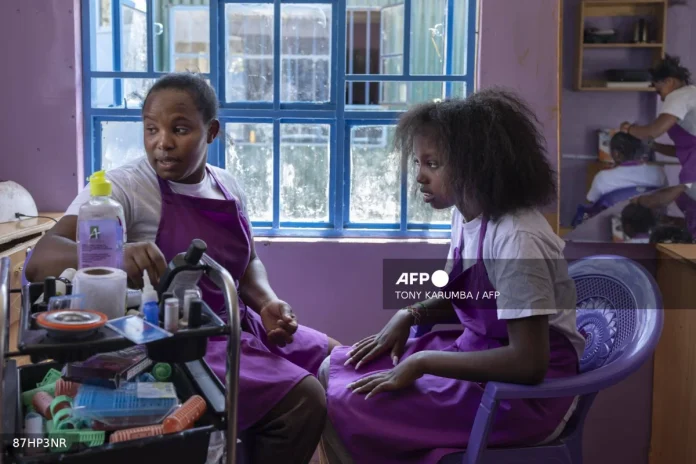
Female genital mutilation remains widespread in parts of Kenya, with activists rescuing girls and facing community resistance years after the 2011 ban.
NAROK: Female genital mutilation remains an entrenched practice in remote Kenyan communities despite being outlawed over a decade ago.
A local nurse in Narok county estimates that roughly 80% of girls in the area are still subjected to FGM, contradicting national survey data showing a decline.
Community elder Moses Letuati initially claimed the practice had stopped before admitting one of his own daughters had been cut.
Women in Entasekera village openly challenged elders during a community meeting, accusing them of dishonesty about the ongoing ritual.
The practice persists not only among the rural Maasai but also in Kenya’s northeast and some urban areas, with campaigners noting a rise in medicalised FGM.
Activist Patrick Ngigi runs a shelter that has rescued approximately 3,000 FGM victims since 1997, supported by the United Nations Population Fund.
Ngigi said his work creates many enemies, with community elders cursing him for opposing traditional practices.
He argued that ending FGM requires education, dialogue, and tackling corruption where police accept bribes to ignore the illegal cuttings.
Police officer Raphael Maroa denied corruption allegations but acknowledged FGM’s entrenchment, with girls often taken across the Tanzanian border for the procedure.
Maroa admitted his own two daughters were cut to avoid conflict with his parents, highlighting deep cultural pressures.
Many families believe girls must undergo FGM before marriage, facing ostracism if they refuse the procedure.
Cynthia Taruru, now 23, described being cursed by her father when her sister rescued her from FGM at age 11.
She paid her father a cow to lift the curse, illustrating the powerful social control mechanisms that sustain the practice.
Local health officials link FGM to serious medical complications including fistulas and obstructed labour during childbirth.
Nurse Loise Nashipa at Entasekera Health Centre called FGM “a monster” that causes bleeding, pain, and infection in unsanitary conditions.
Many victims opt for dangerous home births to protect their families from arrest, though exact mortality data remains unavailable.
At Ngigi’s shelter, graduate Cecilia Nairuko celebrated qualifying as a psychologist after escaping FGM and forced marriage at 15.
Her father and three brothers have not forgiven her for rejecting tradition, a common consequence for those who defy the practice.
Nairuko believes financial success might eventually reconcile her with her family, stating, “If I can earn enough money, he’ll forgive me.”



