




Table of Contents
Vince Staples delivers scathing critique of American power, hypocrisy
VINCE Staples’s seventh album delivers a forceful critique of American violence, although its restrained production cannot always match its anger.
Staples has never needed to raise his voice to sound threatening. His clipped delivery and dry observations have often made his bleakest stories more unsettling. On Cry Baby, however, restraint no longer appears sufficient.
The Long Beach rapper’s seventh studio album exchanges much of the subdued production of 2024’s Dark Times for distorted guitars, heavy bass and punk-influenced rhythms. It is his most openly rock-oriented release, but the direction is not entirely new.
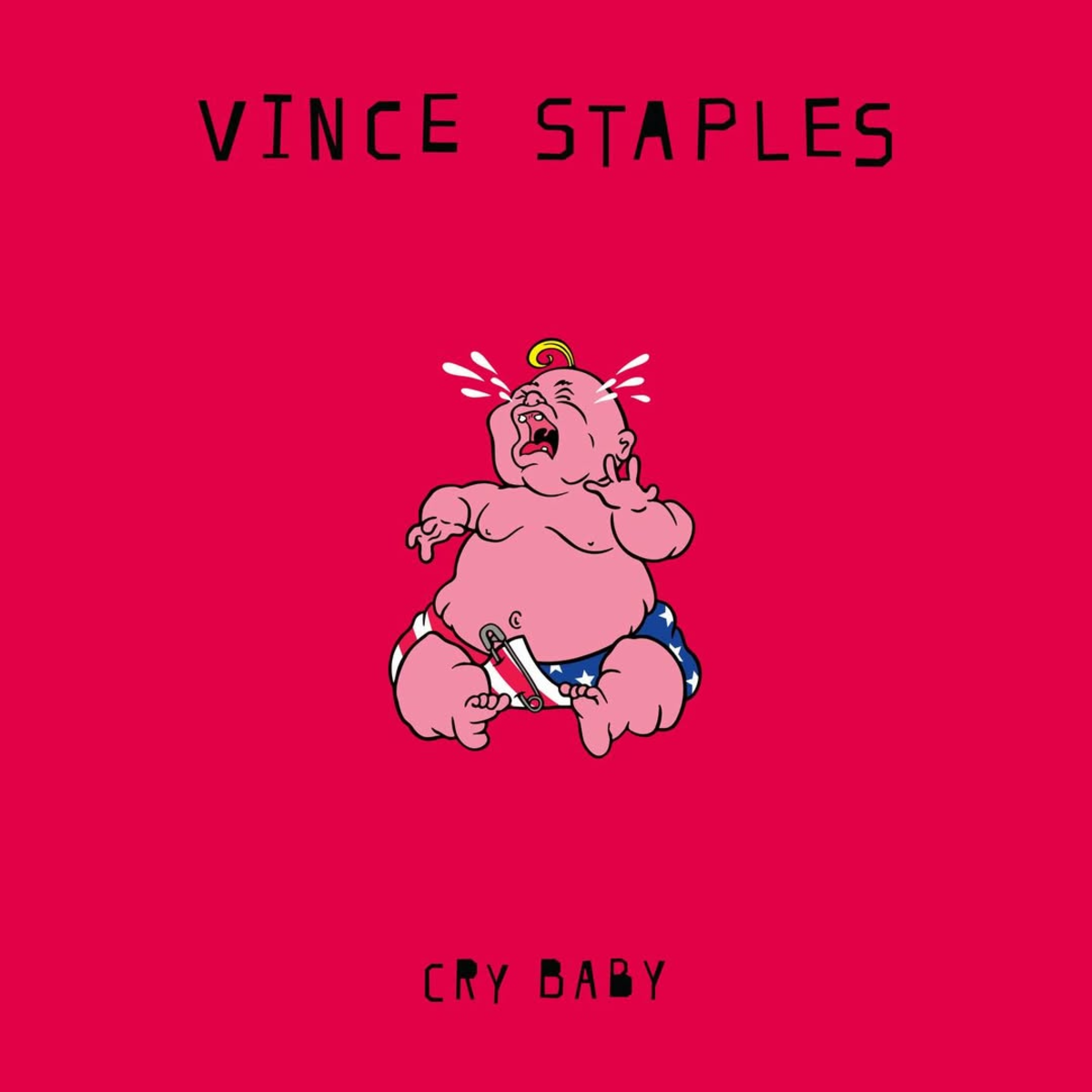
The electronic experimentation of Big Fish Theory and the live instrumentation heard across parts of Dark Times had already shown his interest in moving beyond conventional rap production. Released through Loma Vista after his departure from Def Jam, Cry Baby gives Staples room to pursue those instincts across a complete album.
Violence by design
Vince Staples’s earlier records frequently examined violence through personal memories of Long Beach, tracing the connections between neighbourhood loyalty, poverty and survival. Cry Baby widens its focus to the American systems surrounding those experiences.
Go! Go! Gorilla connects the Great Depression, redlining, the civil rights movement and mass incarceration before Staples recalls being attacked by police when he was 12. The personal account arrives after the historical argument, presenting the incident as part of a structure built across generations rather than the isolated actions of one officer.
Police violence remains a central concern, but Vince Staples also targets capitalism via Cotton and The Running Man, war on 7 in the Morning and propaganda on TV Guide.
His writing is blunter than on many of his strongest previous releases. There are fewer layered narratives and extended character studies, with Staples frequently addressing racism and exploitation in broad, direct terms.
The simplicity occasionally makes his verses sound like explanations intended for listeners encountering these subjects for the first time. Even so, the approach suits an album frustrated by how easily the US ignores its own history.
Rebellion through rock
Framing these arguments through rock music carries its own significance. Rock and hip-hop emerged from Black musical traditions, despite an industry that has often separated the genres along racial lines.
Blackberry Marmalade is the album’s strongest expression of that history. Its buzzing guitar, restless drums and confrontational performance produce one of the record’s most energetic moments. Staples describes a society where violence hides behind ordinary faces, creating a quiet sense of horror that also runs through TV Guide and Do You Know the Devil.
The Big Bad Wolf is another highlight. A chopped sample from Slick Rick’s Children’s Story connects contemporary police violence with warnings delivered decades earlier. The memorable guitar riff and loose swagger result in one of the album’s most convincing combinations of rap and rock.
Cotton also benefits from a stronger musical identity. Its dramatic chords and hypnotic groove reinforce Staples’s portrait of people being absorbed into systems designed to exploit them.
Missing live intensity
The main weakness is that much of Cry Baby cannot maintain this musical force.

Vince Staples performed the album with a full band during its promotional cycle, revealing louder and rougher versions of the songs. Several studio recordings feel overly controlled by comparison.
The guitars are frequently reduced to simple repeating figures, while the drums settle into predictable loops rather than producing the disorder suggested by the lyrics. Only in America is particularly flat, with instrumental parts that feel assembled around Staples instead of reacting to his performance.
There is an obvious tension between lyrics calling for resistance and production that sometimes resembles polished alternative-rock playlist material. The anger remains clear, but the music does not always make it physical.
Cry Baby is therefore an admirable but uneven experiment. Vince Staples sounds energised by his creative freedom and remains one of rap’s sharpest observers of American hypocrisy. Yet the album’s most exciting potential can be heard more clearly in its live performances than in the studio recordings themselves.
The political argument is urgent. The guitars occasionally sound as though they are holding back.
READ MORE:
Thundercat’s funk overload in new album Distracted
Album Review: Don’t Be Dumb marks A$ap Rocky return
Tame Impala explores fatherhood in new album Deadbeat
The Mountain album review: New peak for Gorillaz



